SteelMint Events

Tag: coal

  • 2023 Indonesia Coal Outlook Conference

    2023 Indonesia Coal Outlook Conference

    The government is committed to achieving net zero emission target by 2060 by reducing its dependency on coal and at the same time developing renewable energy generation.

    The government has prohibited the construction of new coal power plants and will terminate the operation of coal power plants in stages that will make coal demand in the general electricity sector start to decline to only 150.0 Mt in 2040 and only 19.0 Mt in 2050 before down to zero in 2060.

    In 2022, Indonesia is eying to produce 663 million tons with domestic coal use up to 165.7 million tons. Most of coal for the domestic utilization, around 100 million tons, is dedicated for electricity generation.

    Many still believe that during energy transition period, coal as reliable and affordable energy source is still required to generate electricity for most emerging countries in Asia, including Indonesia. The government encourages domestic coal utilization for industrial purposes, such as local smelter and cement industries and the development of domestic coal downstream projects such as coal to dimethyl ether (DME) and coal to methanol to support domestic gas and chemical industries.

    In the meantime, Indonesia’s coal export to traditional export market of China and India continue to increase this year.

    The Central Statistics Agency (BPS) reported Indonesia’s coal export to Europe also jumped by 143.7 percent to US$191.2 million in the second quarter of this year compared to $78.4 million in the first quarter with the largest coal export destinations of Italy, the Netherlands, Poland and Switzerland.

    The conference would explore the critical factors on will the coal survive amid global energy transition?

    The conference would also highlight the future of traditional markets of China, India, Japan, Taiwan and Korea as well as the European countries as well as the issues that will shape the future of metallurgical and coking coal.

    Register button

  • India’s coal production set to breach 900 mnt-mark in FY’23 – Coal Minister

    India’s coal production set to breach 900 mnt-mark in FY’23 – Coal Minister

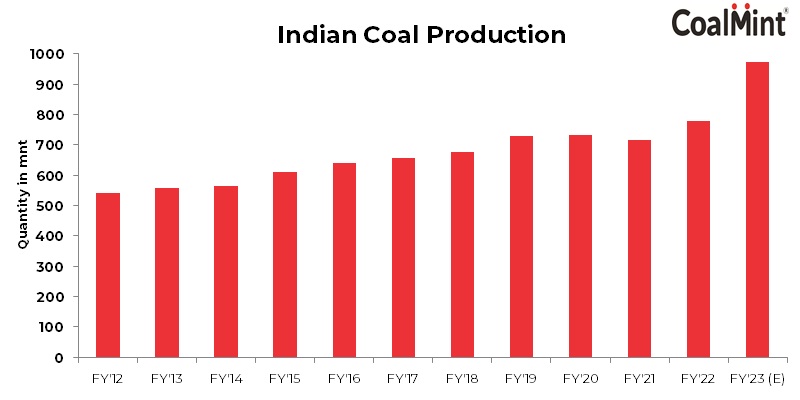
    The Minister for Coal, Mines & Parliamentary Affairs, Pralhad Joshi, said on Tuesday that India’s coal production is set to cross the 900 million tonnes (mnt)-mark in financial year (FY)’23, as the country ramps up efforts to meet a phenomenal surge in power demand.

    Speaking at the 6th National Conclave on Mines and Minerals, the minister stated: “Coal production in FY’22 was around 777 mnt. In the current fiscal we are trying to increase production to 900-920 mnt. Challenges are multifold but the government’s affirmative policies have boosted coal output from around 570 mnt in 2014-2015 to over 760 mnt in 2021.”

    Joshi underlined the fact that international geopolitical disruptions have fuelled energy prices to historic highs and supply and price of natural gas has been gravely affected due to the ongoing turmoil in Russia.

    This, coupled with sanctions on Russian exports, are driving energy prices higher at a time when domestic coal supplies are falling short of satisfying the exponential growth in industrial and domestic electricity demand.

    Production outlook

    The minister, however, had earlier pointed out that state-owned Coal India Ltd. (CIL) has the potential to jack up output to around 760-780 mnt, while the captive power producers could increase production to around 120-130 mnt, with additional production expected from the mines auctioned under the commercial auctions – which should be around 5 mnt.

    The policy enablers have mainly been the amendments that the government brought about as regards revising the MMDR Act, with respect to erasing the end-user distinction for allocation of blocks, and also enabling 50% of sales of minerals after satisfying end use requirements and relaxing exploration norms.

    Further relaxations have been mooted in the form of allocating mines to the private sector, especially the coking coal blocks. Measures to enhance production are in place, the minister said, with the abandoned coal blocks being sought to be operationalised.

    Production climb 32% in Q1

    India’s coal production increased by 32% y-o-y to 205.56 mnt in the first quarter of FY’23 (Apr-Jun’22) against 155.85 mnt in the corresponding period of FY’22.

    CIL produced 159.75 mnt of coal during Q1FY’23, thereby registering a steep rise of 29% y-o-y.

    Notably, this is the highest output recorded by the company in the first quarter of a fiscal – a period during which it usually tends to lower production in view of surplus inventory available at mines.

    However, in order to keep pace with soaring power demand, the company has recorded production in excess of 50 mnt in each of the first three months of FY’23. In contrast, the production mark of 50 mnt was first touched in November of last fiscal.

    In addition, a substantial growth was witnessed from the captive and commercial mines that have been allocated. Overall production from these blocks jumped 79% y-o-y to 27.7 mnt in Q1FY’23, supported by operationalisation of new mines.

    At present, a total of 36 mines are operational. The Ministry of Coal has informed that 12 additional mines will start production this fiscal year.

  • India: Sponge iron producers eye alternative Mozambican coal amid tight domestic supply

    India: Sponge iron producers eye alternative Mozambican coal amid tight domestic supply

    At a time when sponge iron manufacturers in India continue to deal with domestic coal shortage, quality issues regarding imported coal, and rampant volatility in prices, a new alternative is likely to emerge in the form of coal shipments from Mozambique.

    Mozambican coal is heard to be of good quality and cost-competitive against South African coal.

    One of India’s leading steel manufacturers, Jindal Steel and Power Ltd. (JSPL) has taken the initiative to experiment with Mozambican VT 1 grade coal (from Vulcan Energy formerly Vale Mozambique), which has shown positive results in sponge iron kilns of 500 TPD (tonnes per day), 350 TPD and 100 TPD capacities, wherein no mixing or blending is required.

    The coal that has already been used has resulted in average consumption of 800 kg/tonne (t) of sponge iron.

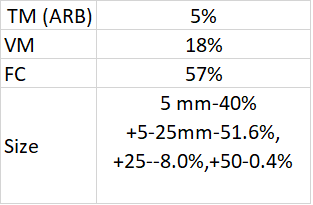
    VT 1 grade specifications:

    The advantages of VT 1 grade over South African RB2 (5500 kcal/kg NAR) used for sponge-making are as under:

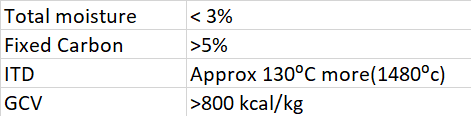
    The trial data for 100% usage of VT 1 grade coal in different designs of sponge iron kilns are as follows:

    According to market participants, Mozambican coal is likely to gain more significance in the domestic sponge iron industry as Europe’s strong demand continues to keep South African coal prices high.

    Coal sourced from other origins such as Australia and Russia, however, are unlikely to be utilised as a full substitute for South African or Mozambican stocks.

    JSPL has proposed to maintain approximately 300,000 t of Mozambican coal at key ports around the country including Paradeep, Dhamra, Haldia, Kandla, Gandhi Dham, Raigarh, Angul and Ranchi from where sponge iron manufacturers can buy the coal in their local currency.

    This would mitigate the risk of opening LCs, handling bulk imports, inventory management, etc. The proposal has been suggested till the time coal supplies from domestic miner Coal India normalises.

    India’s coal imports from Mozambique

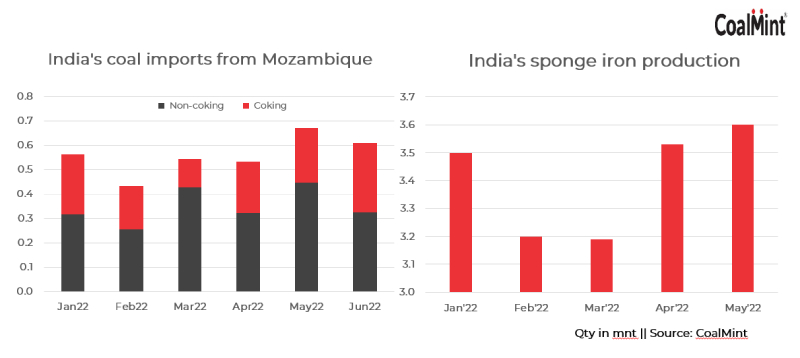
    Major steel and cement companies are the biggest buyers of coal from Mozambique, with the share of thermal coal standing at around 2% and that of coking coal at 1% of India’s total imports in June.

    As per data maintained with CoalMint, the country’s total thermal coal imports from Mozambique was 2 mnt during the first six months of the year, up 109% y-o-y, while coking coal imports stood at 1.3 mnt, up 40% y-o-y.

    To know more about the changing trend of coal usage in the domestic sponge iron industry join us at India Coal Outlook Conference. CoalMint will be hosting the India Coal Outlook Conference on 3-4 August 2022 at The Lalit, New Delhi, to discuss the key issues pertaining to domestic coal production and supply, the government’s objective of controlling imports and domestic supply gap affecting many industries, the need to increase the purchasing power of Indian steel companies in the volatile global coking coal market as well as issues related to decarbonization of the coal value chain.

  • Europe switching back to coal as energy crisis looms large; aggressively seeks non-Russian supplies

    Europe switching back to coal as energy crisis looms large; aggressively seeks non-Russian supplies

    Amid concerns surrounding Russian gas supplies post-the August sanctions, several parts of Europe have been relying upon coal-fired power generation as the only viable option.

    Germany, Austria, Poland, the Netherlands, and Greece are among the first European nations to have reopened coal-powered plants in a bid to secure energy supply in the upcoming winter.

    The use of coal attains higher significance at a time Russian energy firm Gazprom announced plans to cut down 60% of its LNG flow via the Nord Stream 1 pipeline to Germany recently.

    European countries are now looking at ways to replace the LNG supply gap with alternate sources, mainly coal.
    Coal demand in Europe is likely to remain higher going ahead as it gears up for the 10 August deadline to implement a complete ban on Russian energy imports.

    Coal exports to EU in 2022

    Europe has emerged as a major export destination for coal by countries such as Australia, South Africa, the US, and Indonesia owing to its strong demand for high-CV coal, prices of which have remained sharply higher since last year amid limited supply.

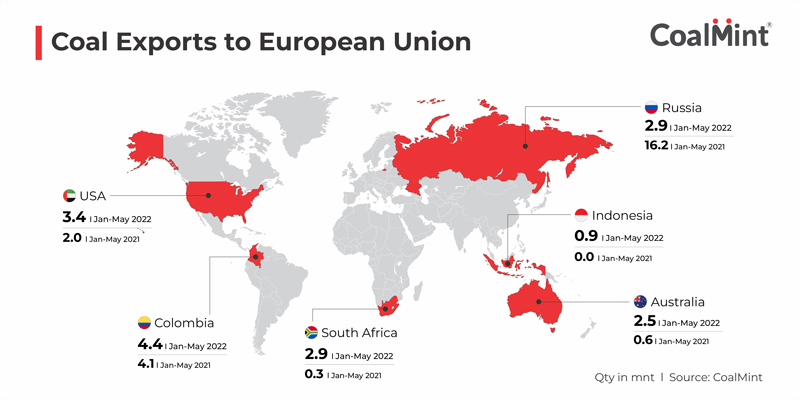
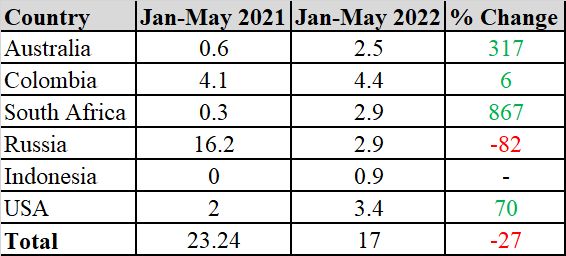
    As per data compiled by CoalMint, exports by six major countries – Australia, Colombia, Russia, the US, South Africa, and Indonesia – have risen to 17 mnt during January-May, 2022 as against 23.24 mnt during the same period last year.

    *Qty in mnt

    As per the data, the decline in total exports is evident from the gap in shipments from Russia this year. However, the extent of demand is being observed from the hefty rise in imports from Australia, South Africa, and USA so far this year.

    Restarting coal-powered stations

    So far, Germany and Austria have announced an emergency restart of coal-powered stations. Germany’s capital Berlin has been working on a new law to temporarily bring back up to 10 gigawatts (GW) of idled coal-fired power plants for up to two years, which would account for just under 5% of total German production capacity.

    Austria, which depends on Russia for 80% of its LNG imports, is also set to restart the Merrach coal plant which was shut down in 2020.

    The Netherlands, on the other hand, has activated the “early warning” phase of an energy crisis plan by lifting restrictions on generation from coal-fired power stations to 2024, making the power stations run at full capacity as against the previous maximum of 35%.

    Other EU countries, including Italy, are expected to start up their old coal-fuelled power stations too as the energy crisis worsens.

    To know more about the key drivers in the coal economy join us at India Coal Outlook Conference. CoalMint will be hosting the India Coal Outlook Conference on 3-4 August 2022 at The Lalit, New Delhi, to discuss the key issues pertaining to domestic coal production and supply, the government’s objective of controlling imports and domestic supply gap affecting many industries, the need to increase the purchasing power of Indian steel companies in the volatile global coking coal market as well as issues related to decarbonization of the coal value chain.

  • Indian buyers lapping up cheaper Russian coal, imports exceed 2 mn t in June

    Indian buyers lapping up cheaper Russian coal, imports exceed 2 mn t in June

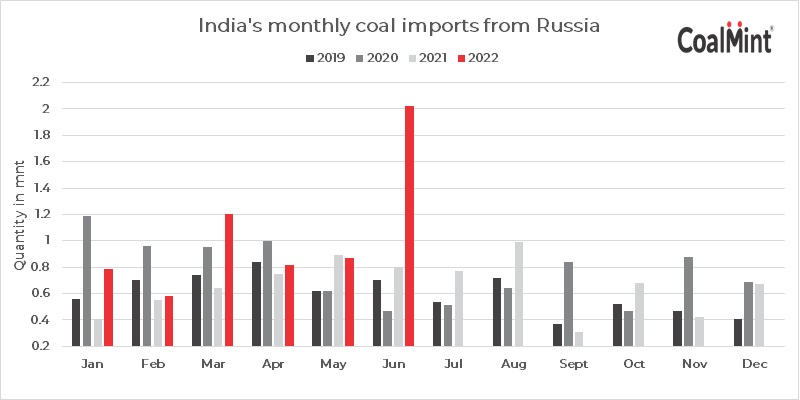
    The Russia-Ukraine conflict that commenced in end-February, 2022 has been altering coal trade dynamics in more ways than one. India, whose coal imports from Russia rarely touched the 1 million tonne (mnt) mark in the past, imported about 2.02 mnt of coal from Russia in June.

    The reason, of course, was that Russian coal was available at discounted rates to India buyers after the USA, EU and Asian countries such as South Korea, Japan and Taiwan slapped sanctions on Russia.

    Of all types of coal coming in from Russia in June, thermal coal had the highest share at 1.03 mnt, followed by PCI (0.45 mnt), coking coal (0.28 mnt) and anthracite at 0.25 mnt.

    Thermal coal

    An analysis of the buying pattern of thermal coal shows that the power and cement sectors accounted for the majority of imports. India hardly imported thermal coal from Russia previously as evidenced by data gathered in previous years, with the highest imports standing at 0.87 mnt in January, 2020.

    According to market participants, Russian coal is suitable for the cement and power sectors in India given its high GCV and low sulphur content. With thermal coal prices from Indonesia, Australia and South Africa trending at very high levels, cheaper Russian coal provides cost benefit to Indian users.

    Coking coal

    Coking coal imports of 0.28 mnt, however, are similar to pre-war levels. In fact, looking at past data, India imported very little Russian coal. In 2021, the country’s monthly average Russian coal imports stood at 0.12 mnt. Top buyers of Russian coal were JSW Steel and Visa Steel.

    Australian coking coal prices, trending at an average of $400/t on FOB basis in June, have pushed a select few Indian steel mills to opt for Russian coal, which is available at just half the price compared to Australian material. However, Indian steel major Tata Steel has shunned imports from Russia due to the war and thus no vessels for the company arrived from that country in June.

    PCI coal

    India has been a regular buyer of Russian PCI coal and its monthly average in 2021 stood at 0.22 mnt, whereas in January-May 2022 imports stood at 0.46 mnt; about 0.45 mnt of PCI is expected to be imported in June. The top buyer in June is JSW Steel followed by JSL, Rawmet and AM/NS India.

    Anthracite

    Like PCI coal, India imported anthracite coal from Russia in the past but in small quantities, with the monthly average standing at around 0.10-0.12 mnt. But June has recorded the highest imports thus far of 0.21 mnt from Russia amid low prices. Rawmet and Carbon Resources were the top buyers of Russian anthracite coal during the month.

    Outlook

    CoalMint vessel data shows that Russian coal imports will be around 0.52 mnt between 1-12 July. While the next quarter may see a decline in imports due to bearish sentiments in the steel and cement sectors during the monsoon, after the rainy season the share of Russian shipments in India’s total coal imports is likely to rise.

    Will Russian coal imports rise further in H2 2022?

    Learn more from the experts at India Coal Outlook Conference 2022 on 3-4 Aug, at The Lalit, New Delhi (India).