SteelMint Events

Tag: power

  • India: Record coal production in FY23 fails to rein in imports

    India: Record coal production in FY23 fails to rein in imports

    • Govt mandates imports to meet peak power demand
    • Shipments from Indonesia, Russia increase sharply
    • Imports likely to remain high in Q1FY24

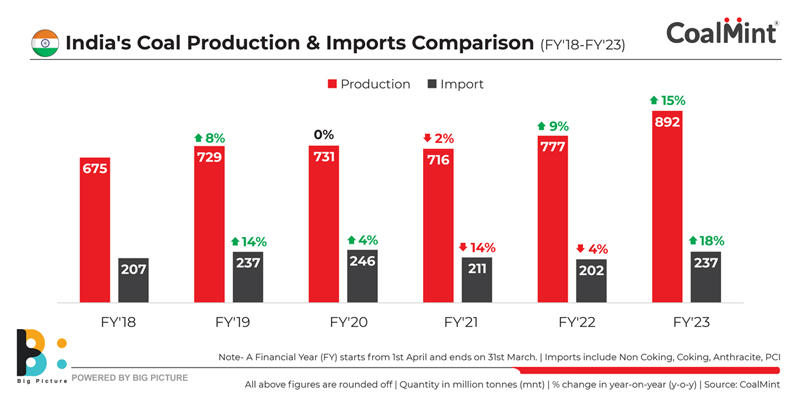
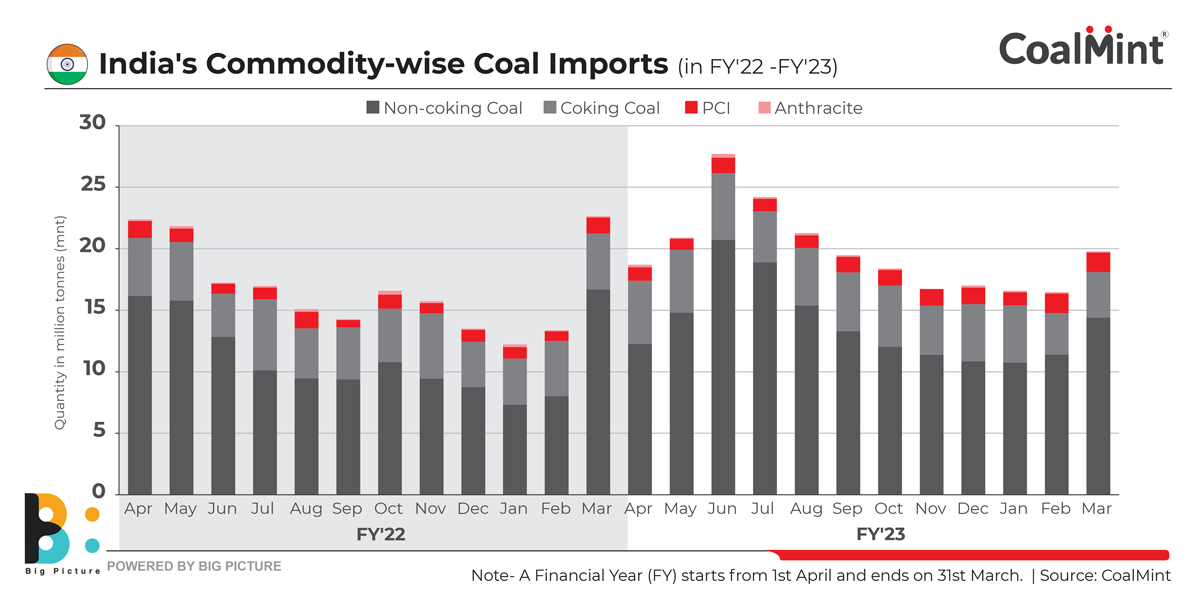
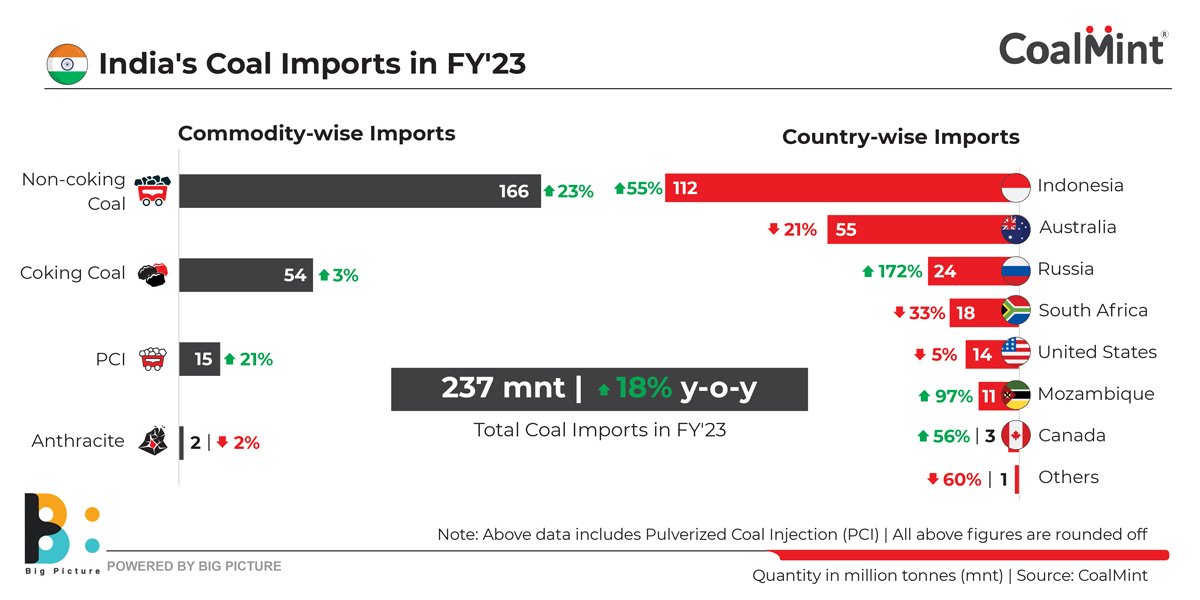
    India’s coal imports increased sharply by around 18% y-o-y to over 237 million tonnes (mnt) in financial year 2022-2023 (FY23) from 202 mnt in FY22, data maintained with CoalMint reveals.

    Interestingly, imports surged despite record domestic coal production in FY23. The country recorded historic growth in its coal output at 892.21 mnt in FY23, Union Coal Minister Pralhad Joshi informed recently. Total coal production was 15% higher from 777 mnt in FY22.

    Out of total import shipments in the recently concluded fiscal, those of non-coking or thermal coal stood at over 166 mnt, which is roughly 70% of total imports. Non-coking coal imports edged up by 23% y-o-y on higher demand from power producers and with the government mandating imports to meet peak power demand.

    On the other hand, total imports in FY23 of coking coal and PCI coal stood at over 69 mnt compared with 65 mnt in FY22. While hard coking coal imports increased by just around 3% y-o-y, imports of PCI coal for usage mainly in blast furnace steelmaking rose sharply by 22% on the year.
    Why imports increased?

    *High power demand: Government data shows India’s power consumption surged 10% to 1,375.57 billion units (BU) during the April-February period in FY23, thereby already surpassing the level of electricity supplied in FY22.

    Power consumption in April-February of FY22 stood at 1,245.54 BU. In FY22, power consumption was 1374.02 BU, which is less than 1,375.57 BU recorded during the April 2022- February 2023 period. So, the imported coal-based power plants had to raise imports.

    *Govt mandates imports: To ensure adequate power availability, the Ministry of Power (MoP) has instructed power plants to import 6% (by weight) of their coal needs for blending purposes till September, 2023. A similar mandate had been issued last year too. That time, the blending ratio was kept at 10%. As a result, India’s State-owned power producers as well as major miners raised coal imports till June-July 2022 although shipments fell post September as peak summer demand subsided along with monsoon-related logistical disruptions.

    This year, too, the government has asked the imported coal-based (ICB) power plants to carry on operations at full capacity. In addition, a tender has been floated to procure electricity from ICB plants for April-May when power availability is expected to be less than demand.

    *Steel production rises: India’s steel production edged up to nearly 125 mnt in FY23, as per government data, from around 118 mnt in FY22, an increase of 6% on the year. In the absence of quality domestic coking coal reserves, imports naturally increased. Besides diversifying import sources amid historic-high coking coal prices, Indian steelmakers also ramped up usage of PCI coal to increase furnace efficiency even while reducing the usage of costly metallurgical coke. This saw volumes from Russia increasing sharply y-o-y.

    Trade flows

    The top exporter to India was Indonesia, with total shipments standing at 112 mnt -up 55% on the year. Indonesia is the world’s largest seaborne exporter of coal, accounting for 32.3% of the global seaborne coal market in 2022. The country has set an export target of over 500 mnt of coal in 2023. India purchases mainly high-to-low-CV non-coking coal from Indonesia.
    With the rise in Russian supplies, it is expected that only low-CV Indonesian coal will henceforth be attractive for Indian buyers, said a miner source based in Indonesia. After persistent pandemic disruptions and temporary export bans, Indonesian exports surged in FY23.

    Imports from Australia, however, fell by over 20% to around 55 mnt, out of which over 36 mnt was coking coal. Even coking coal imports from Australia dropped 13% on the year as a result of India’s efforts to diversify coking coal sourcing amid record-high global prices following the outbreak of the Russia-Ukraine war in February last year.

    Similarly, India increased its met coal imports from the US and Canada sharply to around 10 mnt from less than 5 mnt in FY22. Marked growth in Canadian coal production and easing of disruptions in key US coal terminals supported higher shipments.

    Notably, imports from Russia surged by over 170% on-year as the country stepped up shipments of cheaper cargoes to Asian consumers to amid sanctions imposed by the EU and US as well as G7 allies. Imports from South Africa, on the other hand, decreased by 33% as Mozambican and Russian exports to India surged. Imports from Mozambique rose by 97% y-o-y to nearly 11 mnt in FY23, with Indian DRI producers ramping up sourcing due to record-high South African coal prices amid global energy inflation.

    However, with subsequent correction in global coal prices, trade flows seem to be returning to settled patterns.

    Outlook

    Experts say power consumption is expected to grow in double digits in the coming months in view of forecasts of unprecedented high demand, especially in summer. The power ministry has estimated peak power demand in the country at 229 GW during April this year, which is higher than 215.88 GW recorded in the same month a year ago.

    Following the government’s mandate, NTPC, India’s largest power producer, has decided to import around 5.4 mnt of coal during the first half of FY24. So, imports are expected to remain high through till July-August this year.

    Interestingly, India’s coal imports have returned to the pre-Covid levels of around 240 mnt seen in FY19 and FY20.

    Despite the government’s aim of augmenting domestic washery capacity and achieving coking coal production of 140 mnt by FY30, imports are likely to grow parallelly with India’s fast-expanding steelmaking capacity. Imports are projected to reach 75-80 mnt by 2025-2026.

    Logistical bottlenecks and high freight rates have increased dependency on imports by impeding pit to plant coal transport. Total coal loading by the Indian Railways in FY23 increased by over 11% to 653.36 mnt and total freight earned rose by 22% y-o-y. The allocation of more rakes, special lines and dedicated freight corridors for coal transportation and rationalization of freight rates are expected to increase domestic availability of coal.

    2nd Asia Coal Outlook & Trade Summit

    There has been no let-up in India’s coal imports of late and 2023 may be another year likely to witness sustained growth. How is the government planning to rein in imports by 2025-26? To follow the discussion, book your seat at CoalMint’s 2nd Asia Coal Outlook & Trade Summit in Bangkok, Thailand, on 24-25 April, 2023.

  • Global coking coal trade volumes rise nearly 8% in 2022. Know why?

    Global coking coal trade volumes rise nearly 8% in 2022. Know why?

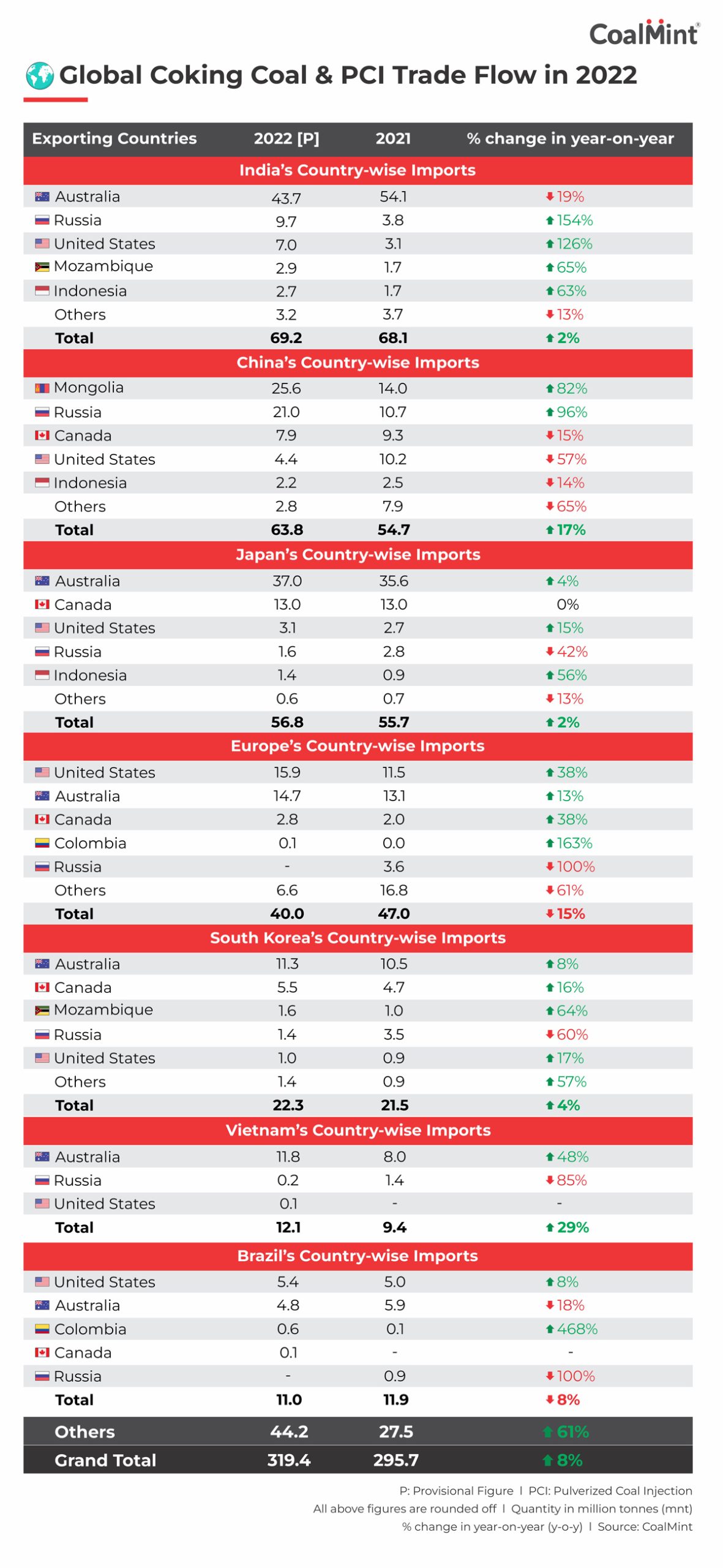
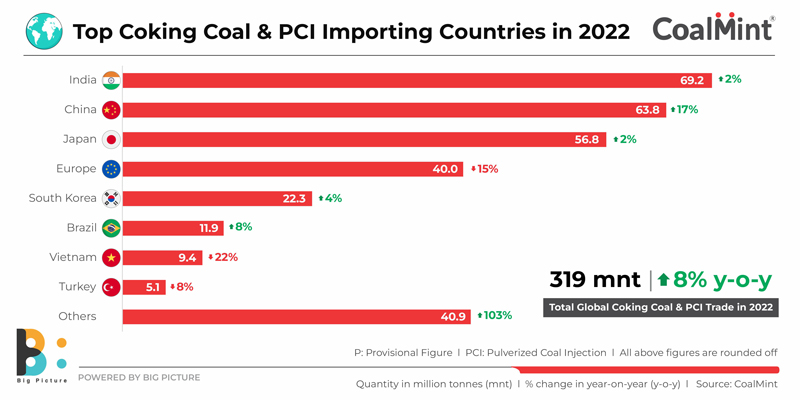
    Despite the slump in world crude steel production in 2022, global seaborne trade in coking coal remained strong with imports of Coking coal and PCI increasing by 8% y-o-y to around 319 million tonnes (mnt) from 295 mnt in 2021, as per provisional data maintained with CoalMint.

    Leading importers

    India was the leading coking coal importer at 69 mnt in 2022, accounting for 22% of total global imports. India’s imports were almost stable y-o-y compared to 2021 China was the second-largest importer at 63 mnt. Imports by China rose 17% y-o-y, although crude steel production fell around 2%. Imports by Japan and South Korea remained largely stable y-o-y at 57 mnt and 22 mnt, respectively. Sentiments remained bearish on a gloomy global steel export outlook amid high inflation, supply chain problems in the auto industry and natural disasters. Europe’s coking coal imports fell by 15% y-o-y due to high energy inflation affecting steel production and demand following the outbreak of the Russia-Ukraine conflict. After Europe imposed a complete ban on Russian coal imports from 10 August global trade flows altered. The EU traditionally sourced 55-60% of its coking coal requirement from Russia and Australian and US coking coal made their way into the continent.

    Top exporters

    Australia was the largest coking coal exporter in CY22, although its share in global exports fell by 8% compared to 2021 due to bad weather. The La Nina event in the country led to heavy rains in the mining regions which affected operations, leading to supply disruptions. In addition, strikes by mine workers and unavailability of labour weighed on production. The US and Canada emerged as an alternative to Australian coal due to supply disruptions. Russia emerged as the second largest exporter with 47 mnt, an increase of 48% y-o-y. The war between Russia and Ukraine affected seaborne trade dynamics of coking coal. As more Russian coal found its way into China and India, Japan and South Korea reduced sourcing of Russian coal in response to Western sanctions.

    Why trade volumes increased?

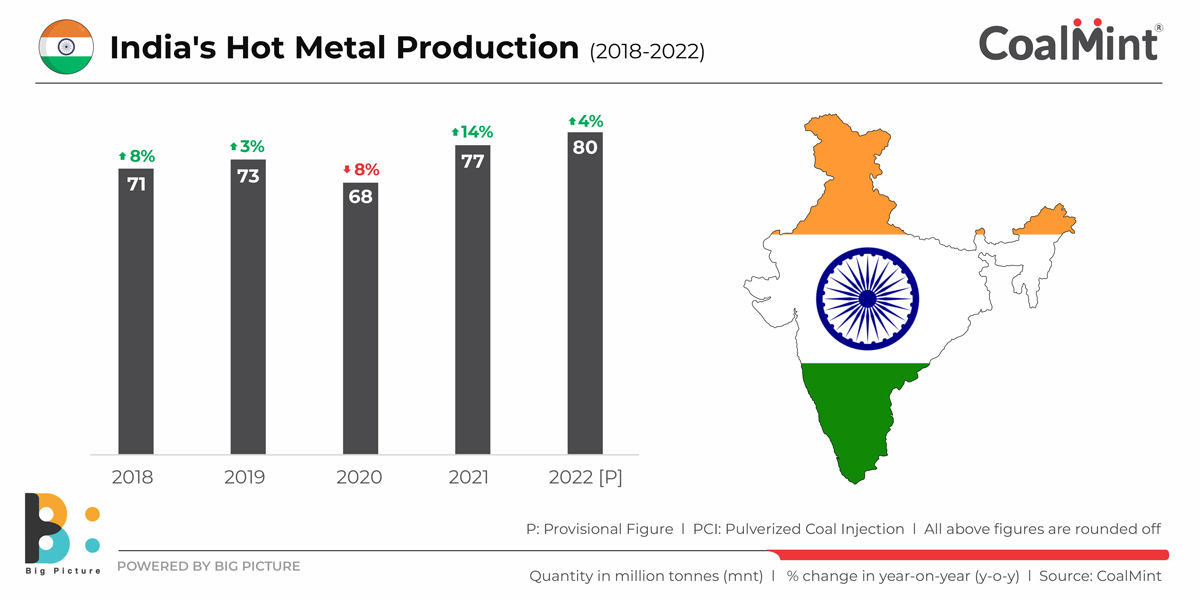
    1. India’s crude steel production increased by around 6% y-o-y to over 124 mnt. Similarly, hot metal production also increased by 4% to 80 mnt from 77 mnt in 2021. For Indian importers of coking coal there was no major change in the demand scenario. Demand did not fluctuate much since the steel export duty fiasco but remained generally steady.

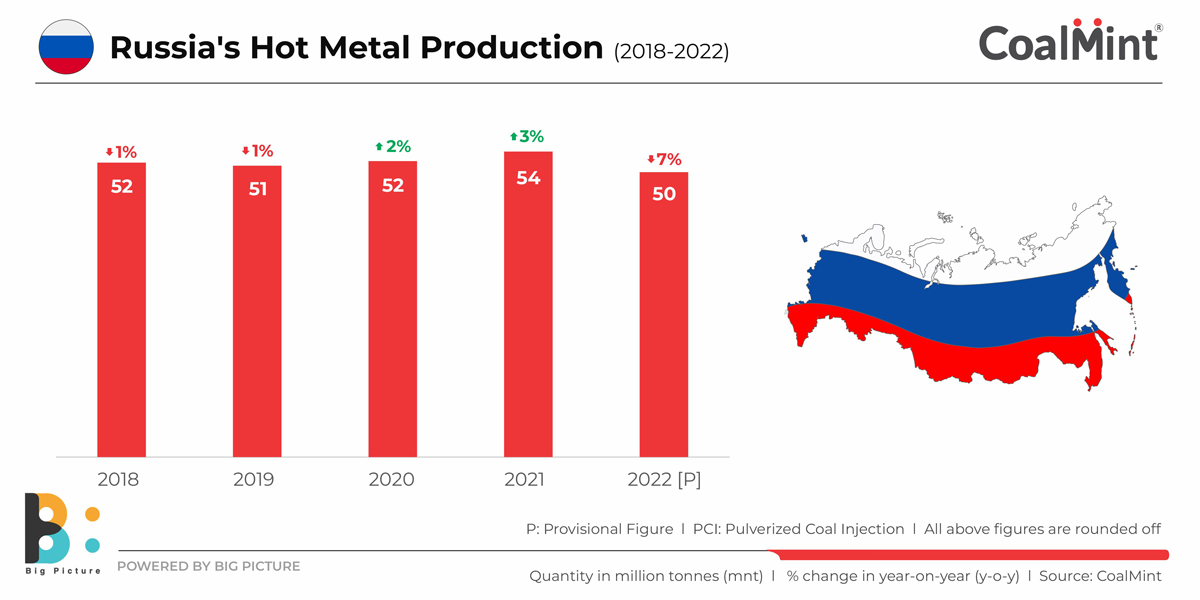
    2. The war with Ukraine took a toll on Russia’s steel production as well as exports. Data show that hot metal production in 2022 decreased by over 7% y-o-y to 50 mnt from 54 mnt in 2021. This left Russian miners with higher volumes for exports. After sanctions were imposed by the European countries on Russia following its invasion of Ukraine, the country started exporting coal at cheaper prices to Asian countries like China and India, resulting in a hike in export volumes. It may be mentioned that India imported 9.7 mnt of Russian coking coal in 2022, up 154% on-year, while China imported 21 mnt, an increase of 90% y-o-y.

    3. Global energy inflation drove steam coal prices to record highs across the globe, while steel production in many parts of the world suffered owing to high inflation and currency volatility. So, thermal coal prices soared way above coking coal prices globally forcing thermal coal users to switch to coking coal in many cases. This, in part, contributed to higher coking coal trade volumes.

    4. Although China’s crude steel production declined 2% 2022, domestic production of coking coal also fell marginally, thereby creating room for exports. Moreover, pandemic restrictions impeded the movement of domestic scrap for steelmaking, impacting EAF steel production. Higher shipments by Russia and Mongolia also account for higher imports by China. Mongolian shipments doubled y-o-y in 2022 as COVID-related restrictions were eased enabling truck movement across the border, while Russian cargoes were available at much cheaper rates since sanctions against Russia came into force in August.

    Outlook

    WSA has predicted steel demand to increase by 1% in 2023 to over 1.8 billion tonnes. Steel markets are expected to normalise in 2023, excluding China. Fitch expects global steel consumption to shrink by 60-65 mnt in 2022, with capacity utilisation dropping from 80% to 77%. China’s targeted reduction of steel production will account for 20-30 mnt of this, with the rest coming from demand destruction outside China. Incremental growth in steel consumption in 2023 is expected in India, Southeast Asia and the US.
    Therefore, coking coal demand will remain stable. Coking coal imports by India from Australia are also expected to remain stable in 2023, with the FTA between the countries leading to duty-free inflow of coal. Prices remained strong after a bumper 2022, driven largely by global energy prices and shortages cause by the Russia-Ukraine war. The other big-ticket item in January was the news that China is set to end its unofficial ban on importing coal from Australia, which is largely positive for global coking coal prices.

    Three central government-backed utilities and China’s top steelmaker would be allowed to resume imports. A recent report in the Australian Financial Review also indicates that Australian coking coal imports might displace lower quality and higher cost Chinese domestic or US coking coal, particularly for Chinese steelmakers in the southern region. Note that China’s proposed import duty on coal leaves Australia and Indonesia unaffected.

    Australia had diversified its coal exports to non-traditional buyers and ramped up supplies to traditional ones in the absence of China from the seaborne market. But now Chinese inquiries are expected to rise which may push prices higher. However, the continuing recovery of supplies from Australia will lead to an eventual correction, even if not significantly.

    Interestingly, Mongolia’s recent move to auction coal through the country’s stock exchange instead of direct sale by producers and traders at the border will directly impact Chinese buyers of Mongolian coking coal. We have to wait to see whether auction sales by Mongolia result in rationalisation of prices. Also, easing coal supplies via road from Mongolia after the withdrawal of pandemic restrictions and new investments in railway infrastructure are expected to reduce logistics costs and, therefore, coal prices.

  • Bangladesh banking on coal imports as energy demand soars

    Bangladesh banking on coal imports as energy demand soars

    The ever-growing demand for electricity has increased the reliance on coal globally, especially in emerging economies with underdeveloped renewable energy infrastructures and pressing energy security concerns. Bangladesh is a case in point.

    The country has increased procurement of imported coal in a significant way to make up for domestic scarcity of the fuel. Besides, commissioning of new coal-fired power plants has also pushed up demand for coal.

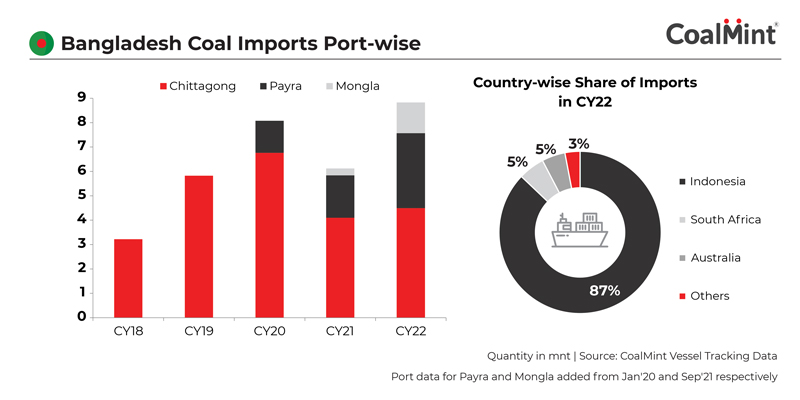
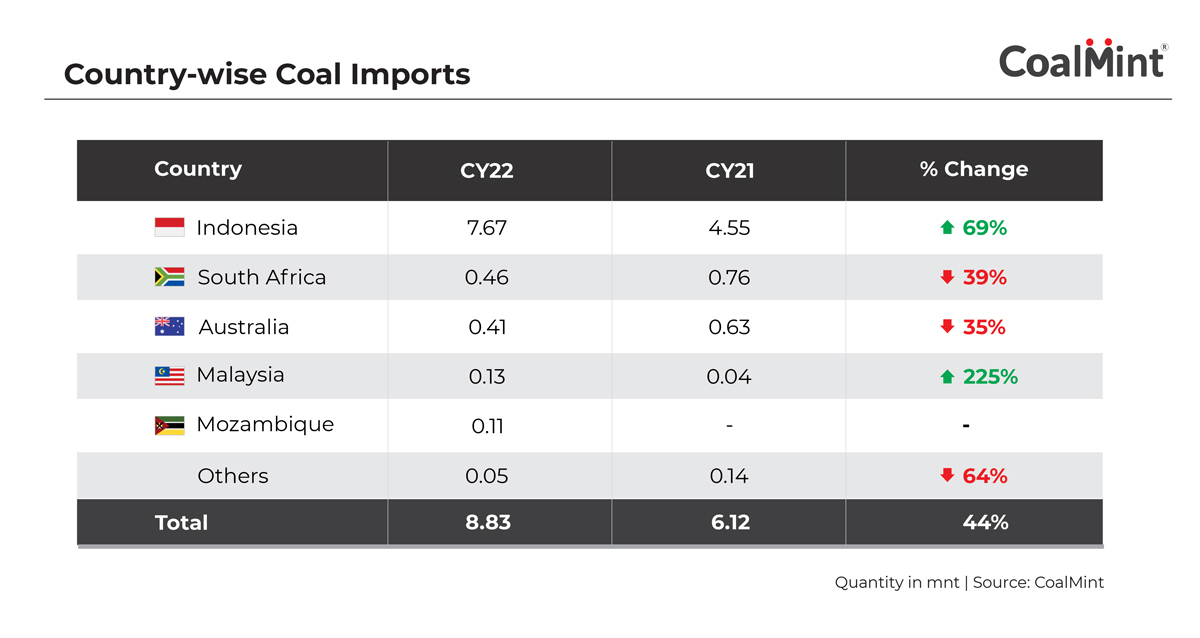
    As per data compiled by CoalMint, the country’s coal imports surged 44% y-o-y to 8.83 million tonnes (mnt) in CY22. Indicating strong demand, the total volume of imports in CY21 was already surpassed during the first 10 months of CY22.

    At the same time, tight supply and high prices of coal in the global market forced Bangladesh to re-work its procurement strategy.

    The sharp growth in imports was mainly driven by higher sourcing from Indonesia in CY22. On the other hand, intake from other traditional markets such as South Africa and Australia plunged 39% and 35%, respectively.

    Inadequate domestic supplies

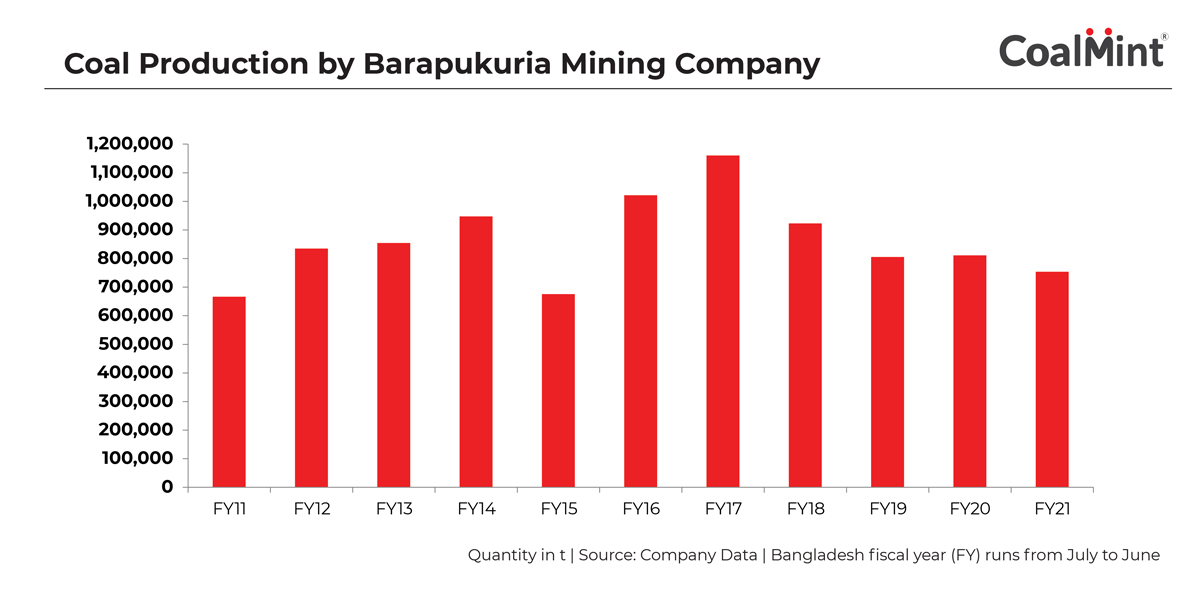
    The Barapukuria Coal Mining Company (BCMCL), operator of the first and sole coal mine in Bangladesh, reported a decrease of 7% in annual coal production in FY21 (July 2020-June 2021). The company recorded 753,973 t of output in FY21 as against 811,137 t in FY20, thus attaining its lowest output in the past six fiscals.

    Given this subdued performance, the company suspended sales to local buyers from 19 March, 2018, in order to secure supplies for the power units of the state-run Bangladesh Power Development Board (BPDB).

    Of the total output, almost the entire volume was delivered to BPDB, while a nominal 610 t was supplied externally during FY21, as per the company’s report.

    In a fresh setback to the fuel security of power plants, the company is mulling to increase its coal pricing to compensate for the upward revision in royalty payable on coal. Moreover, the price hike was also necessitated to adhere to the proposed mining agreement that will require additional land acquisition to extract coal from the northern part of the mine.

    It is important to note that BCMCL has been selling coal at a fixed price of $130/t to BPDB since May 2015.

    Coal: A cheap option

    Due to availability of gas reserves, the gas-based plants in Bangladesh hold a majority share in total power generation capacity.

    Total installed capacity of BPDB-owned plants was 22,482 MW in FY22, of which gas-based plants’ capacity was 11,476 MW, whereas capacity of coal plants stood at a mere 1,768 MW. Plants based on diesel, furnace oil, renewables, etc. made up for the remaining share of power capacity.

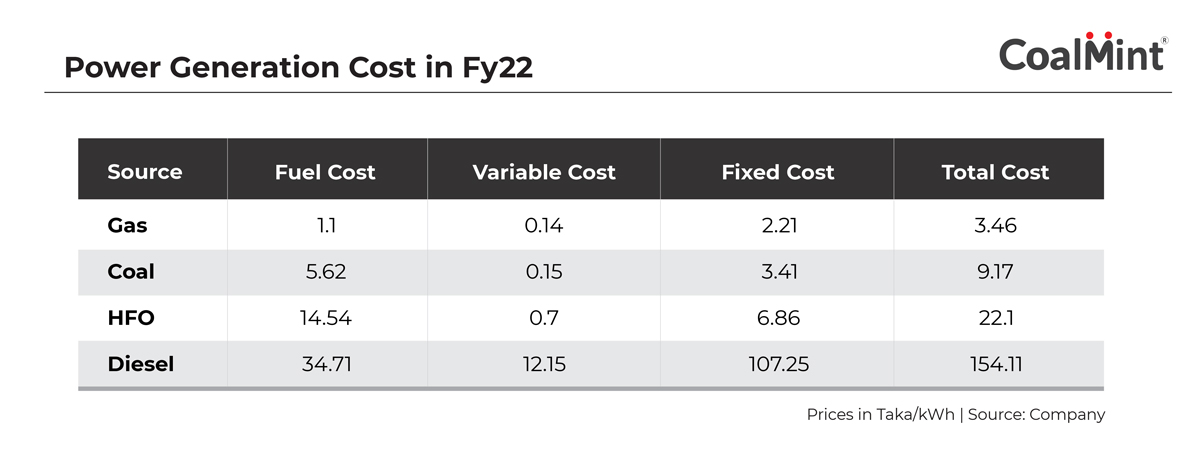
    A comparative cost analysis indicates that gas is the cheapest source of power generation. However, coal was still economical than other

    alternative power sources – another reason for the country’s growing reliance on coal.

    Coal demand accelerates

    Fuelled by the commissioning of the two 660 MW units of the Payra power station, coal imports have started increasing at Payra port, which was established in order to facilitate coal imports for the power sector.

    Meanwhile, at least six other coal-fired power projects are expected to be commissioned, three of which, with a total capacity of 2,800 MW, are expected to be completed soon.

    As per a study by the International Energy Agency (IEA), coal consumption in Bangladesh declined by 0.8 mnt to 3.8 mnt in CY21 but is expected to grow by 2.8 mnt in CY22.

    The report suggests that the country’s coal power fleet would increase to around 5,000 MW by CY25, boosting annual coal demand to 19 mnt.

    2nd Asia Coal Outlook & Trade Summit

    Is Bangladesh’s energy security at a crossroads with the withdrawal of foreign investments from the country’s power sector? Does the country share this predicament with other emerging economies in Asia that are grappling with energy security concerns amid global inflation and depleting investments in coal-based assets? Want to be a part of the discussion? Check out registration details for CoalMint’s 2nd Asia Coal Outlook & Trade Summit to be held at Grand Hyatt Erawan in Bangkok, Thailand on 24-25 April, 2023.