SteelMint Events

Author: SteelMintEvents

  • India’s coal production set to breach 900 mnt-mark in FY’23 – Coal Minister

    India’s coal production set to breach 900 mnt-mark in FY’23 – Coal Minister

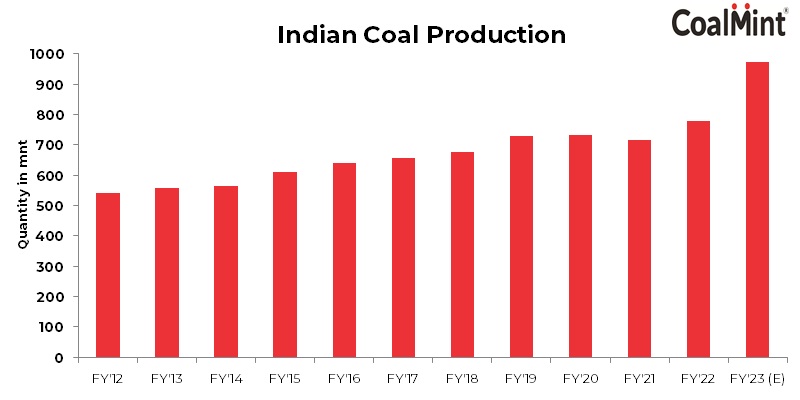
    The Minister for Coal, Mines & Parliamentary Affairs, Pralhad Joshi, said on Tuesday that India’s coal production is set to cross the 900 million tonnes (mnt)-mark in financial year (FY)’23, as the country ramps up efforts to meet a phenomenal surge in power demand.

    Speaking at the 6th National Conclave on Mines and Minerals, the minister stated: “Coal production in FY’22 was around 777 mnt. In the current fiscal we are trying to increase production to 900-920 mnt. Challenges are multifold but the government’s affirmative policies have boosted coal output from around 570 mnt in 2014-2015 to over 760 mnt in 2021.”

    Joshi underlined the fact that international geopolitical disruptions have fuelled energy prices to historic highs and supply and price of natural gas has been gravely affected due to the ongoing turmoil in Russia.

    This, coupled with sanctions on Russian exports, are driving energy prices higher at a time when domestic coal supplies are falling short of satisfying the exponential growth in industrial and domestic electricity demand.

    Production outlook

    The minister, however, had earlier pointed out that state-owned Coal India Ltd. (CIL) has the potential to jack up output to around 760-780 mnt, while the captive power producers could increase production to around 120-130 mnt, with additional production expected from the mines auctioned under the commercial auctions – which should be around 5 mnt.

    The policy enablers have mainly been the amendments that the government brought about as regards revising the MMDR Act, with respect to erasing the end-user distinction for allocation of blocks, and also enabling 50% of sales of minerals after satisfying end use requirements and relaxing exploration norms.

    Further relaxations have been mooted in the form of allocating mines to the private sector, especially the coking coal blocks. Measures to enhance production are in place, the minister said, with the abandoned coal blocks being sought to be operationalised.

    Production climb 32% in Q1

    India’s coal production increased by 32% y-o-y to 205.56 mnt in the first quarter of FY’23 (Apr-Jun’22) against 155.85 mnt in the corresponding period of FY’22.

    CIL produced 159.75 mnt of coal during Q1FY’23, thereby registering a steep rise of 29% y-o-y.

    Notably, this is the highest output recorded by the company in the first quarter of a fiscal – a period during which it usually tends to lower production in view of surplus inventory available at mines.

    However, in order to keep pace with soaring power demand, the company has recorded production in excess of 50 mnt in each of the first three months of FY’23. In contrast, the production mark of 50 mnt was first touched in November of last fiscal.

    In addition, a substantial growth was witnessed from the captive and commercial mines that have been allocated. Overall production from these blocks jumped 79% y-o-y to 27.7 mnt in Q1FY’23, supported by operationalisation of new mines.

    At present, a total of 36 mines are operational. The Ministry of Coal has informed that 12 additional mines will start production this fiscal year.

  • India: Karnataka iron ore sales drop to over 2-year low in June. What to expect next?

    India: Karnataka iron ore sales drop to over 2-year low in June. What to expect next?

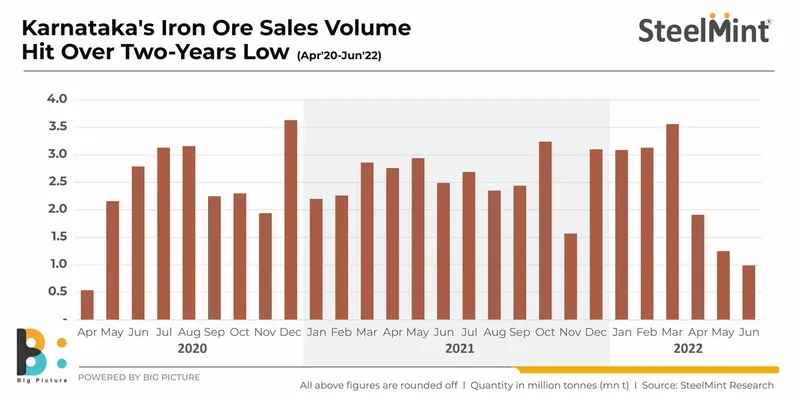
    Iron ore sales in Karnataka dropped to their lowest level in over two years to a little under 1 million tonne (mnt) in June 2022 due largely to the confusion surrounding sales and dispatches following the Supreme Court’s verdict in late May that lifted curbs on exports as well as restrictions on sales of iron ore that had been in place for over a decade.

    Sales drop sharply

    SteelMint provisional data reveal that sales plummeted to just under 1 mnt in June – a drop of over 20% from 1.25 mnt in May. Compared to April, moreover, sales at auctions edged lower by nearly 50%.

    State-controlled NMDC was the leading seller at auctions in June with a share of roughly 75% of the total volumes sold, followed by Vedanta at around 12% and the Karnataka State Mineral Corporation Ltd. (KSMCL) at 11%.

    It needs to be mentioned that NMDC’s sales from the Donimalai mine comprised around 55% of total sales in Karnataka auctions in May, while the Kumaraswamy mine accounted for roughly 20% of total sales.

    While a majority of miners chose the tried-and-tested MSTC platform for auctions, a few others resorted to direct contract/spot sales of iron ore. However, the volume of direct sales was assessed at roughly less than 1/10th of sales via auctions.

    JSW Steel was the leading buyer accounting for a lion’s share of 55% of total sales in e-auctions, followed by BMM Ispat at 7%. Kalyani Steel Ltd. and Mukand Ltd. had a share of 5% each in total sales.

    Uncertainty grips market

    The Supreme Court on 20 May lifted curbs on exports of iron ore from Karnataka and eased all restrictions on sales from the districts of Bellary, Chitradurga and Tumkur where mining activity had been prohibited following environmental violations in 2011.

    Setting aside its 2011 order of direct disposal of the accumulated iron ore through the process of e-auction conducted by the Central Enforcing Agency (CEC)-appointed Monitoring Committee, the apex court ruled that direct contract sales and/or spot sales would henceforth be allowed.

    However, despite the court order, and prior to the issuance of the interim guidelines by the state government, market participants were unsure of the modalities of iron ore evacuation and dispatch, which resulted in a deadlock situation where the mineral for which confirmed orders had been received and advance payments made was not allowed to be lifted for want of requisite permission from the state government.

    SteelMint reported that Vedanta, NMDC and KSMCL had conducted auctions via MSTC post the SC order, while a few private miners had commenced direct sales. However, volumes remained low as well as buying interest in auctions – partly due to the prevailing gloomy steel outlook and, in some measure, because of the relatively lower grades being offered.

    The apex court had lifted the five-year-old ceiling on production from 30 mnt to 35 mnt for A and B category mines in 2018. So, there is still a cap on total production in the state, although subject to judicial review.

    Amidst iron ore shortage, pellet prices in Bellary remain supported compared to other regions in central and eastern India. Iron ore pellet (Fe 63%) prices in Bellary moved up to INR 9,800/t exw as assessed on 08 July as against INR 9,400/t on 5 July, as per SteelMint assessment. Prices have hit over a month-high since end-May’22.

    Outlook

    The Karnataka government has issued guidelines that allow miners now both to sell iron ore through direct contracts/spot sales as well as e-commerce platforms such as MSTC. Further guidelines on disposal of old stocks mined prior to 2011 and stocks at expired leases and cancelled stockyards will be issued shortly.

    Therefore, clarity regarding dispatches of old stocks as well as freshly-mined ore is slowly emerging that is likely to lift the uncertainty that affected production and sales in Karnataka. Also, amidst rising pellet prices, interest in iron ore auctions has seen a gradual recovery of late.

    Therefore, SteelMint expects sales in the state to witness steady growth in July.

    Join us in our event, to know more about Karnataka iron ore production & demand outlook

    SteelMint Events will be hosting the 5th Indian Iron Ore & Pellet Summit on 3-4 August, 2022 at The Lalit, New Delhi. The conference will discuss key issues being faced by the iron ore and pellets industry in India. The focus will be on market dynamics, policy-related changes, growth challenges and enablers, sustainability and decarbonisation goals, the way forward and many more talk points.

  • India: Sponge iron producers eye alternative Mozambican coal amid tight domestic supply

    India: Sponge iron producers eye alternative Mozambican coal amid tight domestic supply

    At a time when sponge iron manufacturers in India continue to deal with domestic coal shortage, quality issues regarding imported coal, and rampant volatility in prices, a new alternative is likely to emerge in the form of coal shipments from Mozambique.

    Mozambican coal is heard to be of good quality and cost-competitive against South African coal.

    One of India’s leading steel manufacturers, Jindal Steel and Power Ltd. (JSPL) has taken the initiative to experiment with Mozambican VT 1 grade coal (from Vulcan Energy formerly Vale Mozambique), which has shown positive results in sponge iron kilns of 500 TPD (tonnes per day), 350 TPD and 100 TPD capacities, wherein no mixing or blending is required.

    The coal that has already been used has resulted in average consumption of 800 kg/tonne (t) of sponge iron.

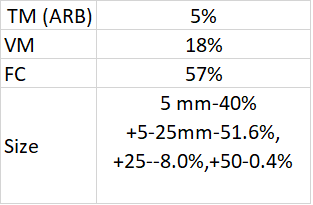
    VT 1 grade specifications:

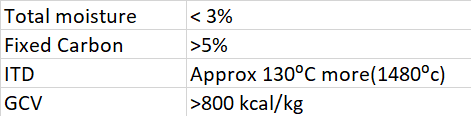
    The advantages of VT 1 grade over South African RB2 (5500 kcal/kg NAR) used for sponge-making are as under:

    The trial data for 100% usage of VT 1 grade coal in different designs of sponge iron kilns are as follows:

    According to market participants, Mozambican coal is likely to gain more significance in the domestic sponge iron industry as Europe’s strong demand continues to keep South African coal prices high.

    Coal sourced from other origins such as Australia and Russia, however, are unlikely to be utilised as a full substitute for South African or Mozambican stocks.

    JSPL has proposed to maintain approximately 300,000 t of Mozambican coal at key ports around the country including Paradeep, Dhamra, Haldia, Kandla, Gandhi Dham, Raigarh, Angul and Ranchi from where sponge iron manufacturers can buy the coal in their local currency.

    This would mitigate the risk of opening LCs, handling bulk imports, inventory management, etc. The proposal has been suggested till the time coal supplies from domestic miner Coal India normalises.

    India’s coal imports from Mozambique

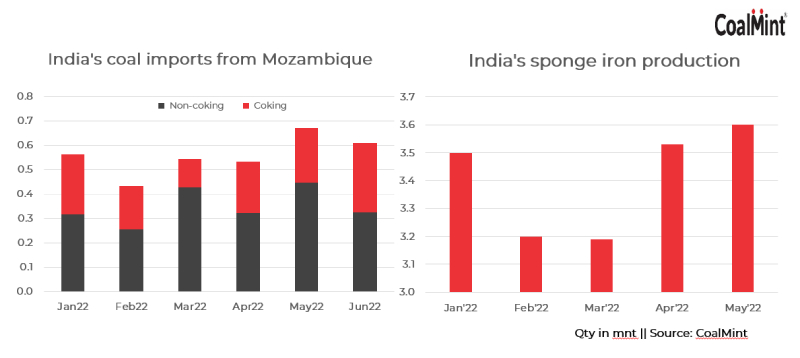
    Major steel and cement companies are the biggest buyers of coal from Mozambique, with the share of thermal coal standing at around 2% and that of coking coal at 1% of India’s total imports in June.

    As per data maintained with CoalMint, the country’s total thermal coal imports from Mozambique was 2 mnt during the first six months of the year, up 109% y-o-y, while coking coal imports stood at 1.3 mnt, up 40% y-o-y.

    To know more about the changing trend of coal usage in the domestic sponge iron industry join us at India Coal Outlook Conference. CoalMint will be hosting the India Coal Outlook Conference on 3-4 August 2022 at The Lalit, New Delhi, to discuss the key issues pertaining to domestic coal production and supply, the government’s objective of controlling imports and domestic supply gap affecting many industries, the need to increase the purchasing power of Indian steel companies in the volatile global coking coal market as well as issues related to decarbonization of the coal value chain.

  • Indian iron ore and pellet export shipments fall 90% in June

    Indian iron ore and pellet export shipments fall 90% in June

    • Iron ore and pellet export shipments fall 90% in June,hits 7-month low
    • With export duties in place, shipments to remain low
    • Iron ore and pellet production to get impacted

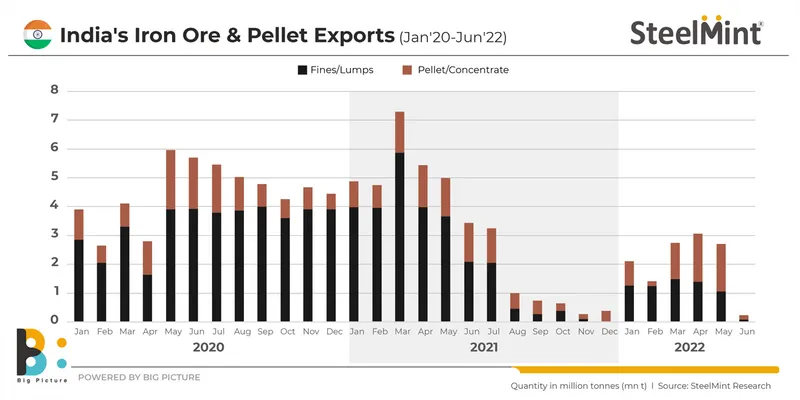
    India’s exports of iron ore and pellets have plummeted to the lowest level in seven months, SteelMint data reveals. Export shipments dropped to just a little over 230,000 tonnes (t) in June 2022 – a new low since November last year when total exports stood at around 250,000 t.

    While China’s steel production curbs in the second half of 2021 had cast a shadow over India’s export prospects, the government’s overnight imposition of stringent export duties on steel, iron ore and pellets towards the end of May 2022 adversely impacted export volumes, SteelMint notes.

    Out of total exports in June, about 146,000 t comprised iron ore, while around 84,000 t of pellets were shipped out by Indian mills during the month. Strikingly, iron ore exports declined by over 91%, month-on-month, in June from around 1.64 million tonnes (mnt) in May, while pellets exports fell sharply by 92% on the month from 1.05 mnt in the preceding month.

    Reckoned on a year-on-year basis, India’s combined exports of iron ore and pellets fell by over 93% in June from over 3.4 mnt in June 2021.

    While Indian suppliers shipped around 53,000 t iron ore fines to China in June, volumes fell sharply from over 1.5 mnt in both May and April. Total exports to China fell over 97% m-o-m, data shows. Indonesia was the leading recipient of India ore in June at over 56,000 t even as Malaysia bought around 36,000 t.

    Oman and Malaysia were the only importers of pellets from India in June at around 51,000 t and 33,000 t, respectively.

    State-owned KIOCL and eastern India-based steel producer BRPL were the sole exporters of pellets in June at 51,000 t and 33,000 t, respectively, with the other leading suppliers such as AM/NS India, Godawari Power & Ispat and Rashmi Metaliks all recording zero shipments.

    Why exports dropped so drastically?

    • Govt imposes export duty: In the third week of May, the government imposed a 50% export duty on iron ore of all grades from the previous 30% levied only on ore of grade Fe58% and above. At the same time, it fixed a steep 45% duty on exports of pellets from the country. These trade policy measures directly hit export volumes. Steep duties are meant to discourage exports and ensure enough raw material availability for the domestic producers of iron and steel.

    • Decline in global prices: Iron ore prices globally have slumped rapidly over the last 15 days or so due to the lingering COVID-19 disruption and lockdowns in China and low steel demand. By some estimates, China may cut steel production in 2022 from 2021 levels; demand for steel from the downstream sectors remains weak, while producers’ margins continue to shrink. Property investments and home sales are down y-o-y, while steel inventories are piling. Benchmark Fe62% Australian iron ore has dropped to $110/t CNF China, as per SteelMint assessment on 5 July – down 25% from around $147/the month back. Declining prices are naturally discouraging exports.

    • Karnataka producers await clarity: The Supreme Court on 20 May lifted curbs on exports of iron ore from Karnataka and eased all restrictions on sales from the districts of Bellary, Chitradurga and Tumkur where mining activity had been prohibited in 2011. Despite the court order, and prior to the issuance of the interim guidelines by the state government, market participants were unsure of the modalities of iron ore evacuation and dispatch, which resulted in a deadlock situation where the mineral for which confirmed orders had been received and advance payments made was not allowed to be lifted for want of requisite permission from the state government. Lack of clarity on the operational part of the court order affected production and sales. Karnataka miners, as per the state government’s interim guidelines, can now both sell iron ore through direct contracts/spot sales as well as e-commerce platforms such as MSTC. However, due to cap on production and with iron ore consumption being almost equal to production (of around 40 mnt) in the state, prospects for exports from Karnataka are slim.

    Outlook

    India exported over 15 mnt of iron ore and more than 11 mnt of pellets in FY’22 – over 26 mnt combined. SteelMint expects exports to fall this year, although industry insiders believe that the export duties are a temporary phenomenon and will be subsequently waived once inflation subsides.

    Although domestic mills are seeking to diversify supply destinations, at current tariff rates, and given subdued global prices, exports are plainly unviable.

    Indian Iron ore and Pellet Summit, 3-4 Aug’22, New Delhi

    Join us in our event, to know more about Indian iron ore production & demand outlook

    SteelMint Events will be hosting the 5th Indian Iron Ore & Pellet Summit on 3-4 August, 2022 at The Lalit, New Delhi. The conference will discuss key issues being faced by the iron ore and pellets industry in India. The focus will be on market dynamics, policy-related changes, growth challenges and enablers, sustainability and decarbonisation goals, the way forward and many more talk points.

  • South Africa: Thermal coal exports to India falls 31% in June, overall exports rise marginally

    South Africa: Thermal coal exports to India falls 31% in June, overall exports rise marginally

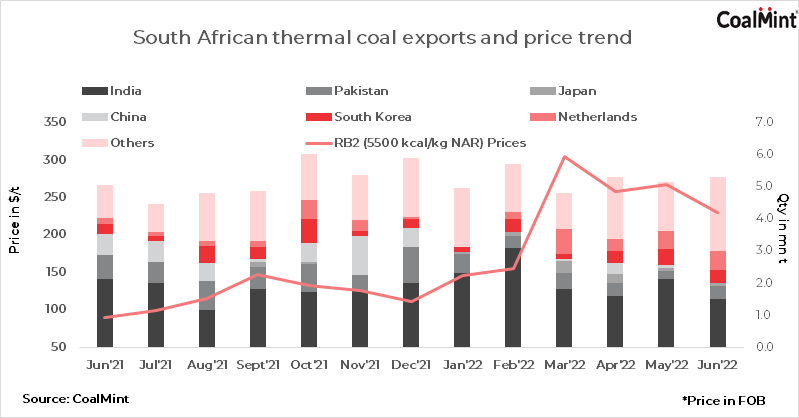
    South African thermal coal exports to India have recorded a steep decline of 30% m-o-m to 1.5 mnt in June, CoalMint vessel line-up data revealed.

    This fall in exports came as the demand from its top consuming sector, sponge iron had turned sluggish after the Indian government announced its decision to impose a hike in export duty on steel in the last week of May.

    While this decision has come with an intention to curb inflationary pressure in the domestic market, the same has made Indian steel less competitive in the export market.

    The domestic sponge iron prices in India, since then have eased by INR 3,000/t and again recovered and are currently assessed at INR 33,300/t exw-Raipur.

    The country’s overall thermal coal exports, however, rose marginally by 2% m-o-m to 5.3 mnt last month as increased demand from Europe offset lower exports to the Asian market.

    Shipments to the European market

    *Qty in mnt

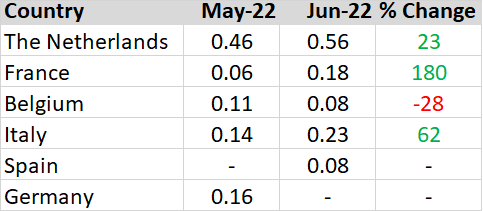
    With the approaching deadline for Russian sanctions to come into effect on Aug 10, European countries have increased their usage of thermal coal wherein South Africa forms a major destination for imports.

    Shipments from the country to Europe have seen a significant rise as exports to The Netherlands have risen by 23%, while that to France by a whopping 180%.

    Shipments to the Asian markets

    *Qty in mnt

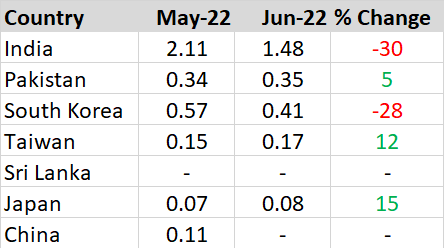
    South African coal exports to most Asian markets have remained under pressure over its elevated coal prices.

    Shipments to South Korea fell sharply by 28% last month, while there were no exports to China last month. The strong demand for Russian coal in the Chinese market has led to the decline in imports from other origins.

    Exports to Pakistan recorded a slight rise of 5%. However, a major rise was capped as its local industry focused on importing coal from its neighboring country, Afghanistan.

    Shipments to Taiwan, however, rose by 12% due to their rising demand for coal following Russian sanctions.

    Short-term outlook

    Low-CV (4800 nar) South African coal demand has emerged strongly in the Indian market owing to its competitive prices over mid-to-high CV grades (5500 NAR) that may result in increased vessel arrival in the country in July.

    European demand, on the other hand, remains strong as several countries within the bloc including Germany, Austria, and The Netherlands have announced their plans to increase their coal usage for power generation. This may lead to an increase in South African total coal exports in the near-term.

    To know more about South African coal demand in India and its overall coal export trajecotry for the second half of the year join us at India Coal Outlook Conference. CoalMint will be hosting the India Coal Outlook Conference on 3-4 August 2022 at The Lalit, New Delhi, to discuss the key issues pertaining to domestic coal production and supply, the government’s objective of controlling imports and domestic supply gap affecting many industries, the need to increase the purchasing power of Indian steel companies in the volatile global coking coal market as well as issues related to decarbonization of the coal value chain.