SteelMint Events

Category: Blog

  • Indian Iron Ore Mines Auction – Ground Zero

    Indian Iron Ore Mines Auction – Ground Zero

    With the iron ore mine auctions – 2020 edging closer to their end, Indian steel industry is tightening its seat belts to factor in the biggest transition in the history of Indian mining. To understand the changing demand-supply dynamics, current inventories and to analyze scope of imports a team of journalists from SteelMint visited mining belt of Odisha.

    Key Highlights

    • Indian iron ore production in FY20
    • Iron ore stocking by selective players
    • Current iron ore inventory scenario
    • How will auctions impact prices
    • Details of mines coming up for auction from Odisha in 2020
    • India iron ore supply-demand dynamics post-mining auction

    Will Indian iron ore industry face supply disruption ?

    GET THE REPORT

    To learn about the latest advancements in the mines auction 2020, be a part of SteelMint Events’ 4th Indian Iron ore, Pellet and DRI Summit which is scheduled on 2-3 March 2020, in Hotel LaLiT, New Delhi.

  • Indian Sponge Iron Exports Up 27% in CY19 On Increased Buying from Bangladesh Mills

    Indian Sponge Iron Exports Up 27% in CY19 On Increased Buying from Bangladesh Mills

    Indian sponge Iron (DRI) exports to Bangladesh have witnessed a sharp  growth in CY 2019, on the back of rising steel melting capacities in Bangladesh consistently pulling up the DRI demand. On an overall basis, India’s sponge Iron exports increased by 27% Y-o-Y, from  671,124 MT in CY ’18 to  854,251 MT during CY‘19. Bangladesh remained the largest importer of Sponge Iron from India, retaining its share of 54% in total India DRI exports, followed by Bhutan and Nepal, with a share of 20% and 15% respectively.

    On a yearly basis, the DRI exports to Bangladesh from India moved up significantly by 26% Y-o-Y, recording exports of  461,256  MT in CY 2019, as against 365,447 MT in CY’ 18.

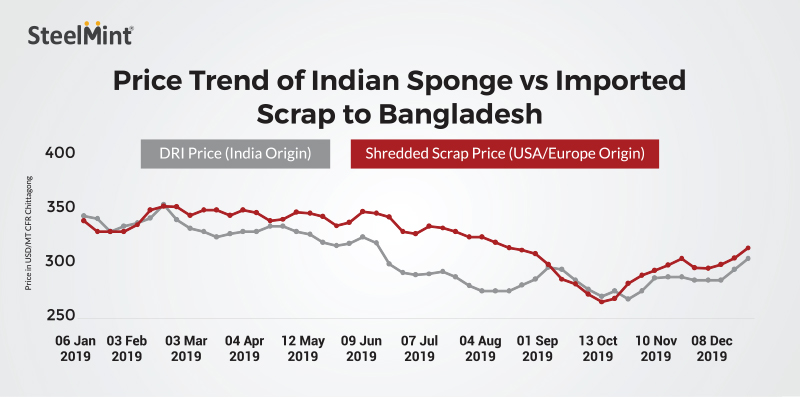
    However, the Indian DRI export volumes to Bangladesh dominated more in H1 2019, when the export offers were in a sharp continuous decline from the beginning of 2019, as compared to the latter half when the offers majorly remained stable for the rest of the year. Starting from USD 340/MT CFR Chittagong levels in Jan’19, the offers to Bangladesh plunged by over USD 60/MT in 6 months and settling down at USD 280/MT CFR levels by the beginning of H2 2019.

    On the contrary, imported scrap offers to bangladesh (from North America/Europe) remained at a significantly higher levels of USD 340-350/MT CFR Chittagong throughout the H1 ’19, before crashing down by USD 70/MT in H2′ 19, thus promoting Bangladeshi buyers towards more active DRI bookings in the first half of the year and giving more preference to imported scrap in the latter half of 2019.

    Another reason for higher average imports by Bangladesh in H1 ’19 as compared to H2′ 19 is the aggressive restocking before the country’s annual budget in Jul‘19, on an anticipation of major tax policy changes in the same. Although,even after the budget concerns getting resolved and monsoon slowdown passing by, the domestic steel sales of bangladesh refused to improve all through the 2019 on persistently slow construction sector, thus affecting the raw material procurement towards the end of the year.

    With many steel manufacturers in Bangladesh expanding their capacities and steel production, the DRI imports by Bangladesh from India are poised to rise further, likely increasing its share in Indian exports even further.

    To know more on the trade dynamics of Bangladesh sponge iron imports, book your seat at SteelMint’s 3rd Steel and Raw Material Conference, Bangladesh and get a chance to hear views of renowned industry participants from across the globe. The conference is being organized on 23rd-24th March 2020 in Chittagong, Bangladesh.

  • GPH Ispat Commissions Operation at its Quantum EAF Furnace

    GPH Ispat Commissions Operation at its Quantum EAF Furnace

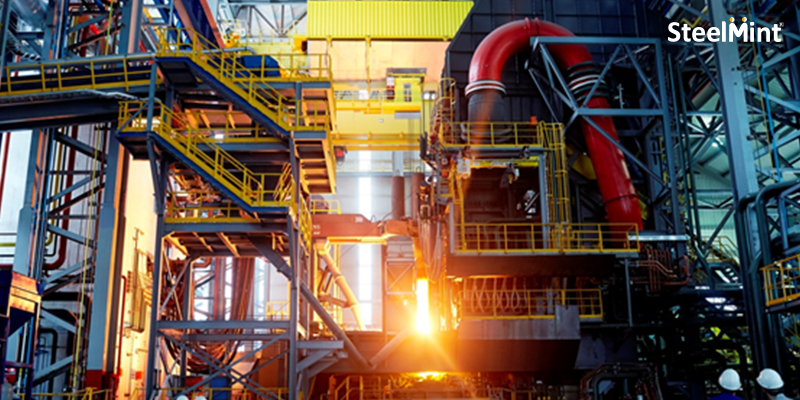
    GPH Ispat, one of the major steelmakers based in Chittagong, Bangladesh was long waiting the operationalizing of their Quantum Electric Arc Furnace, the first of its kind the region, at their new steel plant in Sitakunda region. The steelmaker yesterday, on 15th January 2020 finally performed its 1st heat at their new furnace. This was successfully conducted right up to the rolling stage, putting GPH Ispat right on the cusp of becoming the 3rd largest steelmaker in Bangladesh, once the production is scaled up after test phase.

    Supplied by the global engineering solutions provider “Primetals Technologies” the new plant includes an 80 T Quantum EAF Furnace with a preheating system, which provides a staggering 36 heats per day for steelmaking, on account of a low tap-to-tap time of just 40 minutes, ensuring an annual steel melting capacity of 840,000 MT/year. Along with the existing melting capacity of 170,000 MT via its older Induction furnaces, the combined steelmaking capacity of GPH Ispat breaches 1 MnT per year.
    The other advantages of this Quantum EAF are reduction in flicker and electrical grid network disturbances, Minimized furnace movements along with the permissibility of taphole refilling under Power-On condition with automation, ensuring the safer operation of the furnace.

    The new plant also expands the steelmakers rolling capacity, adding an additional 640,000 MT/year to the already existing 150,000 MT rolling capacity from the previous mill. The new WinLink Flex installed in this plant ensures a rolling speed of up to 27 meters per second, in addition to which, the new three-strand continuous billet caster with a high casting speed of up to six meters per minute, allows two of the three strands to feed the downstream rolling line almost continuously, thus eliminating the need for the usual reheating furnace and reducing operational costs.

    GPH Ispat is confident that post the testing phase as the full scale production at their new plant commences in the coming months, it will help them in producing higher grade of steel products and meeting the international standards.

    To know more about the expansions and upcoming capacities in the Bangladesh Steel Industry, book your seat at SteelMint Events’ 3rd Steel and Raw Material Conference, Emerging Bangladesh and get a chance to hear the views of renowned industry participants from across the globe. The conference is being organized on 23rd-24th March 2020 in Chittagong, Bangladesh.

  • Bangladesh Commissions its First Imported Coal Based Power Plant

    Bangladesh Commissions its First Imported Coal Based Power Plant

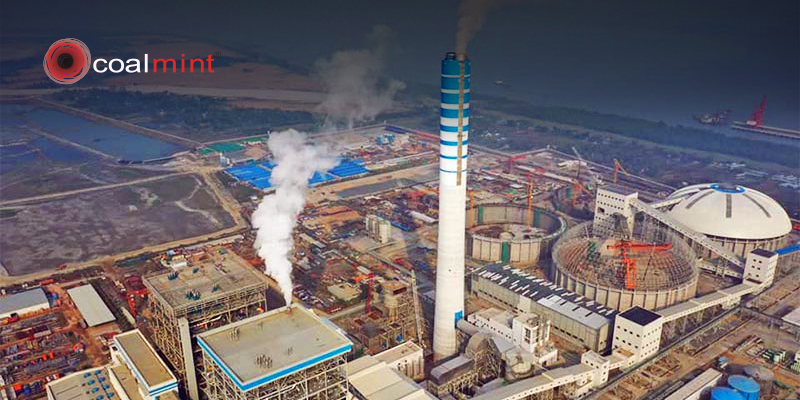
    Bangladesh has started operations at its newly constructed Payra coal-fired plant, which is envisaged as the first power project to run on imported coal in the country.

    The Payra Plant has been implemented under Bangladesh-China Power Company (BCPCL), a special joint venture company of Bangladesh’s state-owned NWPGCL and China’s state-owned China National Machinery Import and Export Corporation.

    The company carried out successful synchronization of 660 MW power unit with the national grid of electricity, wherein test production of 120 MW was delivered to the grid on 13 Jan’19 at 11:05 AM BDT.

    Payra plant with a capacity of 1320 MW consist of two 660 MW power units, of which the first unit has been successfully commissioned. The company is likely to initiate the second unit by Jul’20.

    Incidentally, it is the second coal-fired power installed in the country, wherein the only operationalised plant was the Barakupuria 524 MW capacity power station designed to run on domestic coal.

    Media reports had informed that that the partial commissioning of Payra plant was delayed for physical and technical constraints, caused by non-availability of transmission lines needed to evacuate electricity generated by the plant.

    Incidentally, after commencement of 400 KV (Payra Power Plant – Gopalganj – Dhaka) transmission line, the company was able to put the plant in operation.

    The power plant based on Ultra Supercritical technology would cater its imported coal requirements from PT Bayan Resources, Indonesia, against which it has started to receive coal shipments through Payra port.

    Officials from the company have highlighted that there was an adequate coal stock for 45 days, which would enable them to run the plant continuously.

    After the implementation of its first phase of 1,320 MW power plant, BCPCL is going to execute an additional 1320 MW power plant project which would be developed at the same location. Besides, the company also intends to build renewable energy-based power plants by Dec’22.

    To know more, participate in the Bangladesh Coal Conference 2020.

  • Oldendorff Carriers Inks Pact to Deliver Coal in Bangladesh

    Oldendorff Carriers Inks Pact to Deliver Coal in Bangladesh

    Bangladesh’s rapid economic growth has increased the demand for electricity. But the country’s power generation plants have been unable to meet customer demand over the past decade.

    Bangladesh has a population of about 165 million, and in the rural areas, 13 million households still lack access to electricity. For this purpose, The Bangladesh Chinese Power Company Limited (BCPCL), a joint venture between North West Power Generation Company Limited (NWPGCL) and China National Machinery Import and Export Corporation (CMC), has constructed a 2 x 660 megawatt thermal power plant in Payra district of southern Bangladesh.

    Last November, Oldendorff Carriers, a Germany-based dry bulk shipping company, reported to have signed a 5-year coal transportation agreement with the Bangladesh Chinese Power Company limited (BCPCL), to transport 20-25 million tonnes of coal to the country’s new power station at Payra port.

    Oldendorff provides a full transportation solution to BCPCL, which includes coal transportation from Indonesia or Australia with transshipment in Andaman and Nicobar to Payra power plant in Bangladesh.

    Oldendorff distinctly underlines the cost advantages of transshipping

    The coal transshipment allows the Bangladeshi consignee company (BCPCL) to take advantage of lower freight costs by using large Capesize vessels (180,000 tdw) to Andaman and Nicobar, while smaller vessels deliver the cargo to BCPCL, due to draft restrictions at Payra port.

    (tdw – Tons deadweight)

    Weather restrictions for transshipment in the Gulf of Bengal, due to northeast and southwest monsoons, make transshipment impossible for at least four months of the year.

    Oldendorff’s contract with BCPCL is split into two phases based on the power plant supply requirements. Initially, there will be direct shipments from Indonesia to Payra Port requiring up to 10 Supramax (50,000 tdw) shipments per month. During the second phase, Oldendorff will perform ocean freight on larger Capesize vessels and transship the cargo onto Supramax vessels in the Andaman and Nicobar Islands. The Supramax vessels will then deliver the cargo to Payra port.
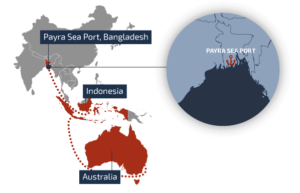
     

    Bangladesh Coal

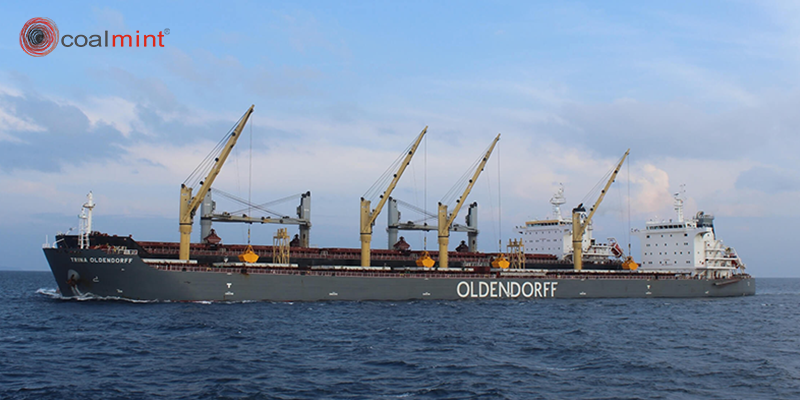
    In January 2018, Oldendorff successfully performed a trial transshipment operation in the Andaman and Nicobar Islands with the vessel Trina Oldendorff (74,600 tdw built 2013); the final destination of the cargo was Haldia in the Indian state of West Bengal.

    The company further stated that its vessel Albert Oldendorff (93,272 tdw built 2010) is being converted to be the transshipment vessel in the Andaman Islands for this project. The vessel will be fitted with 3 x 36 MT side mounted cranes, two hoppers, two inclining cross conveyors and two telescopic booms. It is designed to transship cargo from one ship to another at 1,500 MT per hour.

    Overall, the expected quantity of coal to be shipped ranges from 3.8 to 4.5 million tonnes per year, for a period of 5 years, as per a press release published by Oldendorff Carriers in November 2019.

    Bangladesh’s Coal-fired Power Capacity Additions To Fuel Seaborne Thermal Coal Demand

    Seaborne thermal coal demand is poised to grow in South Asia, as a consequence of the remarkable rise in coal imports in Bangladesh, thus generating opportunities for overseas coal suppliers as well as ocean freight shipping service providers.

    To know more, participate in the Bangladesh Coal Conference 2020.