SteelMint Events

Category: Coal

  • How Barapukuria Can Address Bangladesh’s Rising Coal Demand

    How Barapukuria Can Address Bangladesh’s Rising Coal Demand

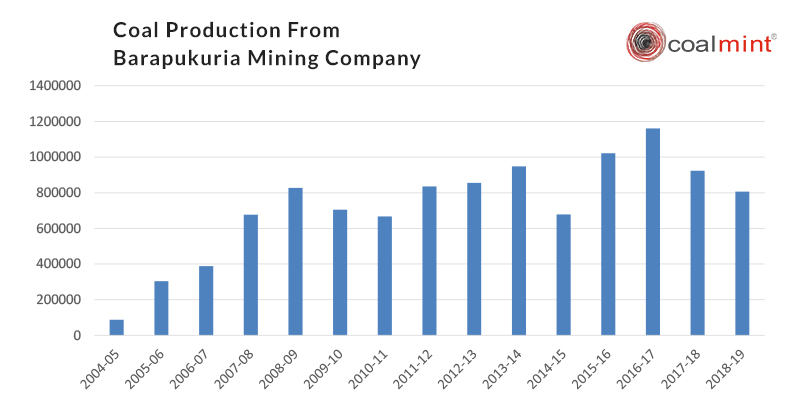
    Barapukuria Coal Mining Company (BCMCL), operator of the first and sole coal mine of Bangladesh, has reported a decrease of 13% in annual coal production during FY19. The company recorded 805,695.63 MT coal output in FY19 as against 923,276.08 MT in FY18, thus attaining its lowest total in past 4 fiscals.

    Primarily envisaged to cater the coal requirement of thermal plant set up by Bangladesh Power Development Board (BPDB), Barapukuria coal was also sold to local buyers at approved price by the board keeping consistency with the international market.

    However, in order to augment coal supplies to the thermal plant, Bangladeshi government has ceased selling of Barakupuria coal to local buyers since 19 Mar’18.

    The gradual affect of the decision resulted in a 5% increase in coal supplies to BPDB’s plant to 828,736.77 MT in FY19, while sale to local industries was merely reduced to 894.19 MT in FY19 as against 274,144.79 MT in FY18, because no supplies were made to them ever since the official order was inflicted.

    At the same time, non-power sector of the country were compelled to cater their coal demand from the overseas market, which had brought significant amount of coal via imports in the period.

    Up till now, BCMCL has fallen short to meet the rising coal demand in Bangladesh amid limited resources; however, it had claimed that its role would be pivotal in national economy by ensuring that the country saves huge foreign currency on coal imports.

    Let us take a look on the short comes and future plans of BCMCL which it would be executing in the coming years.

    Challenges Faced

    The coal deposit at Barapukuria in Dinajpur was found by the Geological Survey of Bangladesh (GSB) in 1985. After undertaking various feasibility studies on the coal site the government had decided to set up the coal mine.

    Upon completion of the development of mine work, BCMCL started commercial seamless production from the mine on 10 Sep’05. Since then, a total quantity of 10,969,690.455 MT has been procured from the mine up to FY19.

    BCMCL has stated that it had faced uphill task to extract coal from underground in an environment friendly manner, which was highly laborious and difficult. The company has faced continuous challenges for coal extraction such as roof fall, coal bump, water inrush, spontaneous combustion, high temperature and humidity etc.

    At present, BCMCL is mining coal from the third slice of central part of Barapukuria coal basin, which has been reported a highly risky job from safety point of view.

    Apparently, it was the root cause for the decline in coal output seen during FY19, as all precautionary measures had to be taken to mitigate the risk and ensure safety at the mine.

    Future Projects:

    BCMCL has completed the feasibility study work for extension of the central part of the Barakupuria mine towards the north-south section.

    The recommendation of the study project reports have suggested that suggests that 3.8 MnT coal could be extracted from Northern part for 6 years and 6.9 MnT from Southern part for 7 years, for which all necessary measures are under process to extract coal from that extended mining area.

    At present natural gas is the main indigenous energy source of Bangladesh that accounts 54% of the total electricity generation. But depletion of natural gas resources provides an uncertainty over its sustainable supply over a long time.

    Therefore, the Bangladeshi government is taking prudent decision to diversify the primary energy sources in the form of coal reserves.

    Apart from expansion of North-South extension part of Barapukuria Coal Mine, the government has also taken suitable measures to extract coal from discovered coalfields at Dighipara, Jamalgonj, Fulbari and Khalaspir.

    Different study reports have revealed that the quality standard of Bangladeshi coal is very good due to its high calorific value and low sulfur content. The astute measures taken to extract coal from these projects would apparently play an important role in meeting up the ever increasing demand of coal.

    (Bangladeshi fiscal year runs for a 12-month period starting from 1st July to 30th June)

    To know more, participate in the Bangladesh Coal Conference 2020.

  • Bangladesh Commissions its First Imported Coal Based Power Plant

    Bangladesh Commissions its First Imported Coal Based Power Plant

    Bangladesh has started operations at its newly constructed Payra coal-fired plant, which is envisaged as the first power project to run on imported coal in the country.

    The Payra Plant has been implemented under Bangladesh-China Power Company (BCPCL), a special joint venture company of Bangladesh’s state-owned NWPGCL and China’s state-owned China National Machinery Import and Export Corporation.

    The company carried out successful synchronization of 660 MW power unit with the national grid of electricity, wherein test production of 120 MW was delivered to the grid on 13 Jan’19 at 11:05 AM BDT.

    Payra plant with a capacity of 1320 MW consist of two 660 MW power units, of which the first unit has been successfully commissioned. The company is likely to initiate the second unit by Jul’20.

    Incidentally, it is the second coal-fired power installed in the country, wherein the only operationalised plant was the Barakupuria 524 MW capacity power station designed to run on domestic coal.

    Media reports had informed that that the partial commissioning of Payra plant was delayed for physical and technical constraints, caused by non-availability of transmission lines needed to evacuate electricity generated by the plant.

    Incidentally, after commencement of 400 KV (Payra Power Plant – Gopalganj – Dhaka) transmission line, the company was able to put the plant in operation.

    The power plant based on Ultra Supercritical technology would cater its imported coal requirements from PT Bayan Resources, Indonesia, against which it has started to receive coal shipments through Payra port.

    Officials from the company have highlighted that there was an adequate coal stock for 45 days, which would enable them to run the plant continuously.

    After the implementation of its first phase of 1,320 MW power plant, BCPCL is going to execute an additional 1320 MW power plant project which would be developed at the same location. Besides, the company also intends to build renewable energy-based power plants by Dec’22.

    To know more, participate in the Bangladesh Coal Conference 2020.

  • Oldendorff Carriers Inks Pact to Deliver Coal in Bangladesh

    Oldendorff Carriers Inks Pact to Deliver Coal in Bangladesh

    Bangladesh’s rapid economic growth has increased the demand for electricity. But the country’s power generation plants have been unable to meet customer demand over the past decade.

    Bangladesh has a population of about 165 million, and in the rural areas, 13 million households still lack access to electricity. For this purpose, The Bangladesh Chinese Power Company Limited (BCPCL), a joint venture between North West Power Generation Company Limited (NWPGCL) and China National Machinery Import and Export Corporation (CMC), has constructed a 2 x 660 megawatt thermal power plant in Payra district of southern Bangladesh.

    Last November, Oldendorff Carriers, a Germany-based dry bulk shipping company, reported to have signed a 5-year coal transportation agreement with the Bangladesh Chinese Power Company limited (BCPCL), to transport 20-25 million tonnes of coal to the country’s new power station at Payra port.

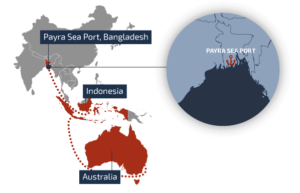
    Oldendorff provides a full transportation solution to BCPCL, which includes coal transportation from Indonesia or Australia with transshipment in Andaman and Nicobar to Payra power plant in Bangladesh.

    Oldendorff distinctly underlines the cost advantages of transshipping

    The coal transshipment allows the Bangladeshi consignee company (BCPCL) to take advantage of lower freight costs by using large Capesize vessels (180,000 tdw) to Andaman and Nicobar, while smaller vessels deliver the cargo to BCPCL, due to draft restrictions at Payra port.

    (tdw – Tons deadweight)

    Weather restrictions for transshipment in the Gulf of Bengal, due to northeast and southwest monsoons, make transshipment impossible for at least four months of the year.

    Oldendorff’s contract with BCPCL is split into two phases based on the power plant supply requirements. Initially, there will be direct shipments from Indonesia to Payra Port requiring up to 10 Supramax (50,000 tdw) shipments per month. During the second phase, Oldendorff will perform ocean freight on larger Capesize vessels and transship the cargo onto Supramax vessels in the Andaman and Nicobar Islands. The Supramax vessels will then deliver the cargo to Payra port.


    Bangladesh Coal

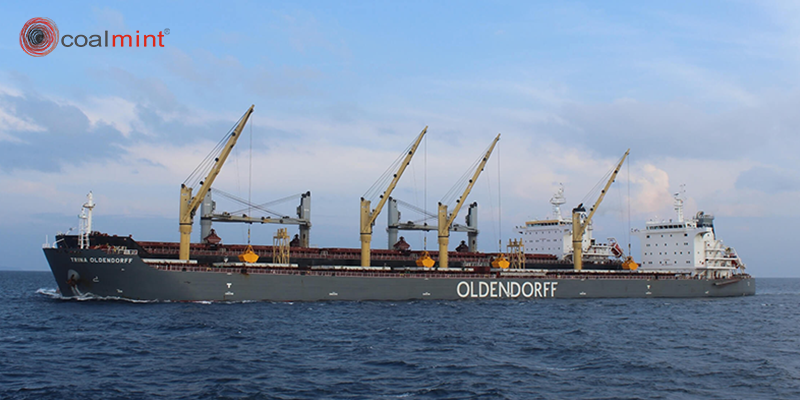
    In January 2018, Oldendorff successfully performed a trial transshipment operation in the Andaman and Nicobar Islands with the vessel Trina Oldendorff (74,600 tdw built 2013); the final destination of the cargo was Haldia in the Indian state of West Bengal.

    The company further stated that its vessel Albert Oldendorff (93,272 tdw built 2010) is being converted to be the transshipment vessel in the Andaman Islands for this project. The vessel will be fitted with 3 x 36 MT side mounted cranes, two hoppers, two inclining cross conveyors and two telescopic booms. It is designed to transship cargo from one ship to another at 1,500 MT per hour.

    Overall, the expected quantity of coal to be shipped ranges from 3.8 to 4.5 million tonnes per year, for a period of 5 years, as per a press release published by Oldendorff Carriers in November 2019.

    Bangladesh’s Coal-fired Power Capacity Additions To Fuel Seaborne Thermal Coal Demand

    Seaborne thermal coal demand is poised to grow in South Asia, as a consequence of the remarkable rise in coal imports in Bangladesh, thus generating opportunities for overseas coal suppliers as well as ocean freight shipping service providers.

    To know more, participate in the Bangladesh Coal Conference 2020.
  • Bangladesh: Payra Port Authority Invites Bids for Developing Coal Terminal

    Bangladesh: Payra Port Authority Invites Bids for Developing Coal Terminal

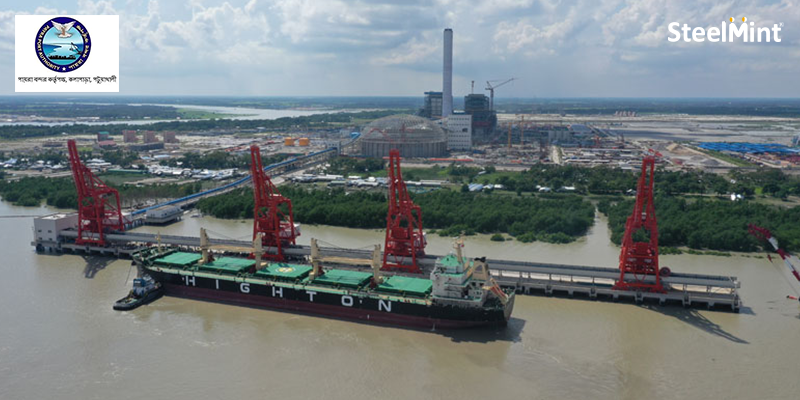
    Government of Bangladesh has intended to develop a coal terminal at Payra port to facilitate coal movement for its upcoming power station, by appointing private participants to carry out the expansion work.

    Payra, the third sea port of Bangladesh situated on the bank of Rabnabad channel under Kalapara, is located in the sub-district of Patuakali. The port was inaugurated 19 Nov’13 to assist in transportation of various commodities including food grain, cement, fertilizer and other bulk containers to Dhaka and other destinations through internal waterways.

    However, in order to cater the anticipated rise in coal demand of the power station proposed by Bangladesh-China Power Company, the government has planned expansion of the port by envisaging a dedicated coal terminal.

    The selection of the private partners for developing the terminal would be carried on the basis of International Competitive Bidding (ICB), for which interested bidders have been asked to give their consent.

    The Payra port authority has stated that the bidders are supposed to design, build, finance, operate and maintain the coal/bulk terminal. In addition, it was specified that the pertaining job should be transferred back to the owner based on the terms and conditions set out in the contract.

    The port authority has highlighted that that bids are to be submitted on or before 1200 hours BST, 17 Feb’2020, and should be accompanied by a bid security amount of BDT 240 Million.

    Recent Development:

    Payra port had received its coal consignment on 19 Sep’19, where a vessel laden with 20,000 MT coal reached the jetty of the Payra port.

    The coal was bought from Indonesia by the Payra power plant which has been build under the flagship of Bangladesh-China Power Company (BCPCL). Incidentally, it was the first ever shipment for coal-based power plant in the history of Bangladesh.

    Officials from the Payra power plant have reported that the first unit of the 1320 MW power station would be commissioned on 27 Jan’2020. The plant is likely to import 40 Lakh Tonnes of coal annually through the Payra port.

    Bangladesh is more dependent on gas for its power generation but are energy equations changing? To know, participate in the Bangladesh Coal Conference 2020.
  • Bangladesh Coal Imports Hit All-Time High in Oct’19 – CoalMint

    Bangladesh Coal Imports Hit All-Time High in Oct’19 – CoalMint

    Domestic coal supplies in Bangladesh has been under scrutiny ever since government’s decision to halt coal sales to the local industries was imposed back in Mar’18, which have paved way for subsequent higher coal imports.

    Incidentally, Coal Shipments taken by the country have recorded a mammoth total during Oct’19, thereby helping the country to overtake the total imports registered in CY18.

    Data compiled by CoalMint research indicates that Bangladesh coal imports had attained its highest-ever total since the period from which vessel line-up information for the country was started.

    Coal Intake in Oct’19 was recorded at 1,061,867 MT rising 148% on the month from 428,585 MT in Sep’19.

    Bangladesh had made a slow start post monsoon, wherein after recording nil imports during May-Jul’19 only 10,000 MT coal was bought in the month of Aug’19. However, the exponential monthly rise in Sep’19 was subsequently followed by relatively superior imports in Oct’19, thereby helping the country to overtake the coal volume acquired in CY18 with two months to spare.

    In the first 10 months of CY19 (Jan-Oct’19), Bangladesh coal imports have reached 4,084,475 MT which was 28% higher than 3,220,882 MT noted in the whole period of CY18.

    There has been no sign of immediate resumption of coal supplies asserted by the latest updates provided by Barapukuria Coal Mining Company. Notably, whole 659.75 MT coal produced under its belt was solely delivered to the coal based station operated by Bangladesh Power Development Board (BPDB) as on 13 Nov’19, thus continuing the trend being followed after the ban was imposed.

    Major Coal Suppliers:

    The record import volume in Oct’19 was majorly catered from Indonesia, which remained Bangladesh’s preferred source for coal demand. Supplies from Indonesia rose 46% M-o-M to 624,690 MT in Oct’19, which was also marked 6% higher on the year from 590,450 MT in Oct’18.

    Coal receipt from South Africa also recorded its highest-ever monthly total in Oct’19, noted at 375,216 MT. Apparently, coal shipment from the country was seen after a gap of 6 months.

    Besides, first coal shipment from Mozambique in CY19 was also reported in October, which had supplied the remaining coal volume during the month.

    Country Oct’19 Sep’19 % Change
    Indonesia 624,690 428,585 46%
    South Africa 375,216
    Mozambique 61,961
    Grand Total 1,061,867 428,585 148%

    Source: CoalMint Research
    Quantity in MT

    Although, major portion of the coal imports are utilized by country’s brick manufacturers, coal demand in Bangladesh is expected to be supported by a series of coal-fired power stations slated to come online in the coming years.