SteelMint Events

Category: 3rd Steel & Raw Material Conference – Emerging Bangladesh

  • SteelMint Reports: South Asia, world’s largest ship scrapping yard, has wind in its sails

    SteelMint Reports: South Asia, world’s largest ship scrapping yard, has wind in its sails

    The global ship-breaking or ship recycling industry has witnessed a major shift in recent years owing to environment concerns. On one hand, ship-breaking is a green process wherein a ship at the end of its life cycle is dismantled for further re-use. On the other hand, it is a complex process of dismantling that includes issues like workers’ safety and health aspects and further challenges to the environment.

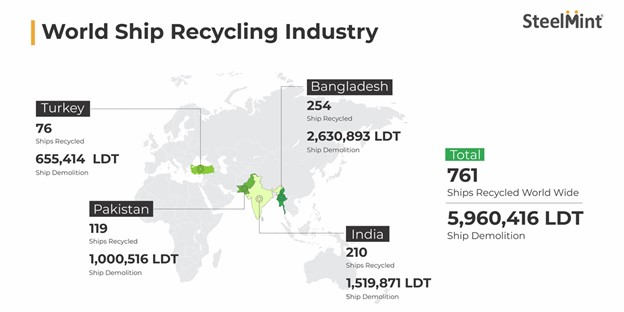
    However, the ship recycling market is gaining momentum annually. A total of 761 ships were broken worldwide in CY2021 against 631 in CY2020, out of which 583 were sold to the beaches in South Asia – the world’s largest ship recycling hub in 2021.

    There has been a noticeable improvement in ship-breaking volumes in 2021. Lockdown restrictions had pulled down import volumes in 2020. Diversion of oxygen for medical purposes also impacted volumes.

    Ships can be classified into six broad categories like general cargo, bulk carriers, oils tankers, passengers ships, drill and war ships. The approximate age or lifespan of a ship is 25-30 years.

    South Asia recycling market

    South Asia has been referred to as the “World’s ship scrapping yard”, with India, Bangladesh and Pakistan collectively dismantling and processing scrapped vessels globally. India, Pakistan and Bangladesh together accounted over 80% share of the global ship recycling market in 2021.

    • India: India, with its natural geographical advantage, recycled 210 ships and demolished 1,519,871 LDT in 2021 as against 203 ships, amounting to 1,757,983 LDT, in the previous year. Similarly, the country demolished 770,000 LDT in H1CY2022 at Alang Port.
    • Bangladesh: Bangladesh recycled 254 ships amounting to 2,630,893 LDT in 2021 compared to 1,843,442 LDT and 144 recycled ships in 2020. In H1CY2022 the country demolished 760,000 LDT of ships at Chittagong Port.
    • Pakistan: Pakistani players recycled 119 ships with a collective tonnage of 1,000,516 LDT in 2021 compared to 778,256 LDT and 99 recycled ships in 2020. In H1CY22 the country demolished 380,000 LDT of ships at Gadani Port.

    Price trends

    • India’s ship-breaking import prices jumped to $525/LDT in 2021 as compared to $360/LDT in 2020, significantly up by $165/LDT.
    • Pakistan’s ship-breaking import prices surged to $544/LDT in 2021 as against $364/LDT in 2020, significantly up by $180/LDT.
    • Likewise, Bangladesh’s ship-breaking import prices rose to $552/LDT in 2021 in contrast to $361/LDT in 2020, significantly up by $191/LDT.

    The average material recovery depends upon the type of material extracted from the ship. Re-rollable ferrous scrap recovery is 67%, meltable ferrous scrap around 12% whereas cast iron is 4% and non-ferrous scrap, 1%.

    HKC and green recycling

    Considering the hazardous nature of the industry, one key obstacle is that there is no fixed legislation to follow. The Hong Kong International Convention for the Safe and Environmentally Sound Recycling of Ships was adopted at a diplomatic conference held in Hong Kong in 2009.

    The convention was adopted to ensure that ships, when being recycled after reaching the end of their functioning lives, do not create any unnecessary hazards to human health, safety and to the environment.

    South Asian countries have decided to ratify and implement the Hong Kong Convention. Towards that, the relevant ministries have drafted regulations to make the ship recycling industry safe for their workers and the environment by implementing the Hong Kong Convention (HKC).

    Outlook

    Amid the current scenario, availability of vessels is limited and prices remain steady due to sluggish economies and low steel demand from end-user industries. As a result, market sentiments are gloomy and buyers cautious.

    But ship-breaking volumes may increase in the short term due to favourable weather conditions which will support increased construction activities. It may be mentioned, a major portion of ship-recycled scrap finds its way into the construction sector.

    SteelMint Events will be hosting the 3rd Steel & Raw Material Conference, Emerging Bangladesh, on 20-21 September, 2022 at Hotel Radisson Blu, Chittagong, Bangladesh. The conference will explore key issues like the country’s steel production and demand outlook, global scrap trade flow changes, especially post-the Russia-Ukraine war, the ship recycling scenario, key emerging sectors, price trends and a lot more.

  • SteelMint analysis: An overview of Turkiye’s steel sector

    SteelMint analysis: An overview of Turkiye’s steel sector

    Turkiye is one of the largest ferrous scrap importing countries in the world. Other key industries that contribute to the country’s economy include textiles, chemicals, cement, motor vehicles and construction. The country provides certain leverages for international trading and is a key destination for trade between Europe and Asia.

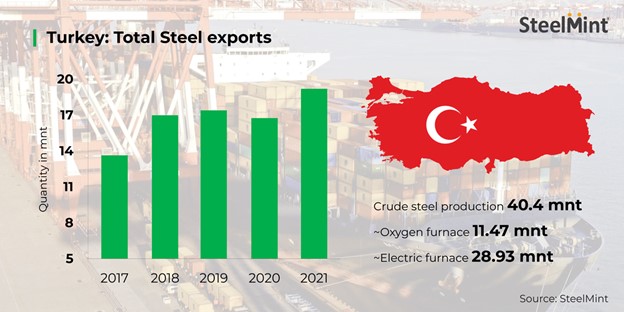
    Turkiye produced 40.4 million tonnes (mnt) of crude steel in CY 2021 out of which 11.47 mnt i.e. 28.4% was churned out from oxygen furnace (BOF) and 28.93 mnt i.e. 71.6% was produced from electric arc furnace (EAF), as per World Steel Association (WSA) report. Higher crude steel output resulted in increased scrap consumption.

    • Pig iron imports up: Turkiye’s pig iron imports stood at 1.2 mnt in 2021 vis-à-vis 1.14 mnt in the corresponding period last year (CPLY), up slightly by 5.3% y-o-y. The country’s entire consumption in 2021 was 11.6 mnt.
    • Steel exports see 15% rise: Total finished steel exports from Turkiye jumped 15% to 19.2 mnt in 2021 compared to 16.75 mnt in 2020.

    Also, according to the Turkish Automotive Manufacturers’ Association (OSD), total car production in CY21 stood at 1,276,140 units wherein exports amounted to 937,005 units, marking an increase of 2% as compared to 916,538 units in CY20.

    Turkiye’s scrap market in 2021

    • Ferrous scrap import shipments increase: Turkiye recorded ferrous scrap imports at 24.37 mnt in 2021, an increase of 10% against 22.18 mnt in 2020, as per SteelMint data. USA accounted for the largest share of 16% in total exports to Turkiye in CY21 followed by the Netherlands at 13% share and the UK at 10%.
      If compared on m-o-m basis, the country’s imports rose by 22% to 2.49 mnt in December 2021 vis-a-vis 2.04 mnt in November. Notably, import volumes in December were the highest in 2021.

    Reasons behind the rise in imports

    • Imported ferrous scrap demand in the Turkish market rebounded in CY21 as mills remained active in booking deep-sea scrap cargoes throughout the year as buying interest picked up slightly.
    • There was an improvement in demand of billets and long steel products in the Turkish market. Market participants believe that strong demand for billets kept scrap bookings active.
    • Freight rates from the US coast to Turkey fell which eased scrap prices, boosting buying interest.

    Imported scrap prices rise in CY21

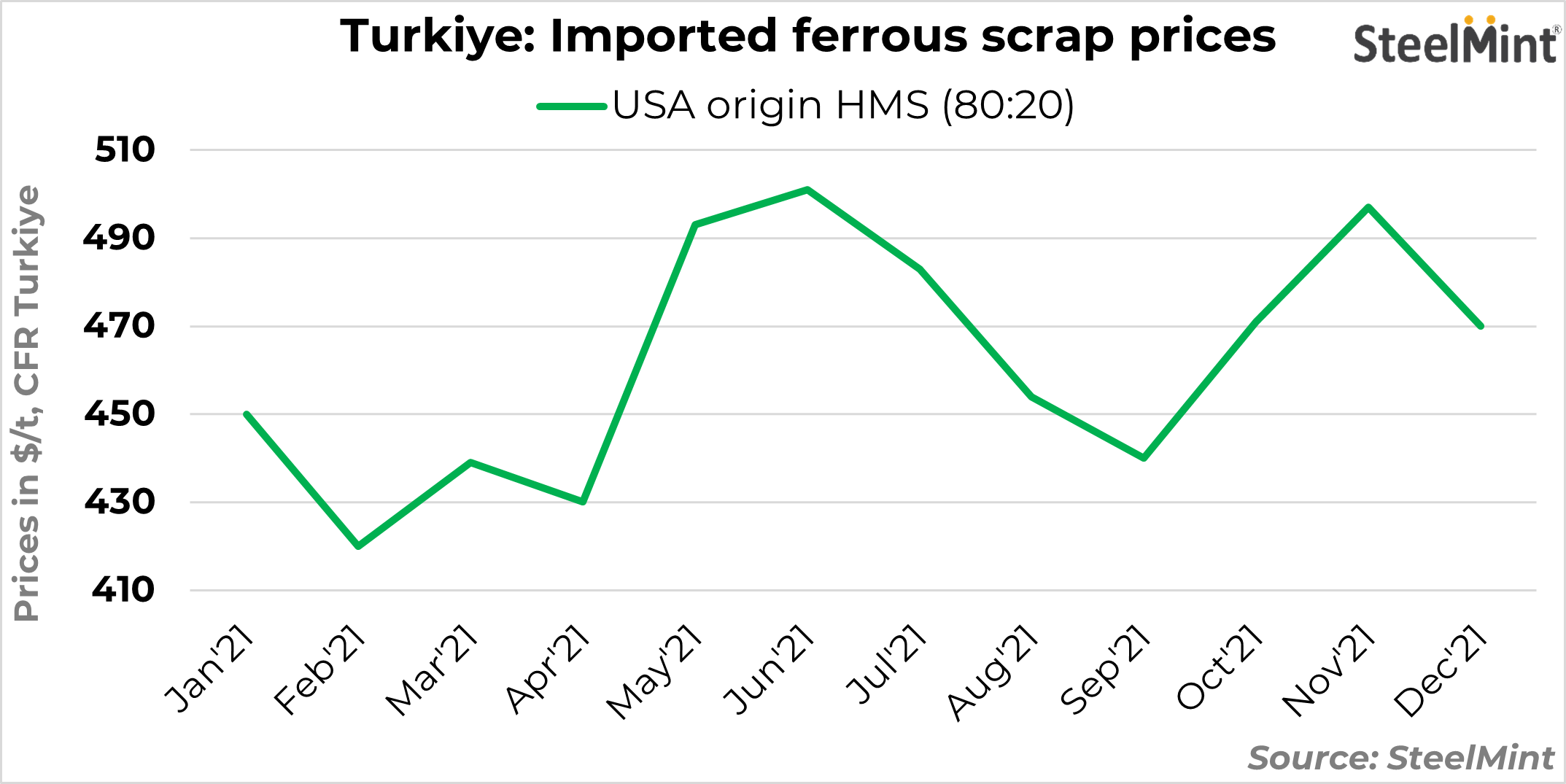
    SteelMint’s assessment of US-origin HMS 1&2 (80:20) stood at $459/t CFR Turkey in January-December 2021 against $291/t CFR in January-December 2020, up by around $168/t CFR Turkey y-o-y.

    Prices surged as Lira eroded against the dollar to settle at TRY 13.31 in 2021 which was at 7.37 towards the end of 2020. The volatile market situation and a sharp fluctuation in the national currency put pressure on steel mills to lower their local scrap prices in 2021. Also, sluggish domestic and overseas demand, especially from China amid the winter months kept Turkish market under pressure.

    Hassles in scrap market:

    • Suspension of operations at mills on higher electricity costs: EAF steelmakers announced suspension of crude steel production in the first few months amid increased electricity costs. As a consequence, buying activities in the regional market decreased. The heavy snowfall also caused logistical problems in the market.
    • Russia hikes scrap export duty: Russia approved an almost three-fold hike in the export duty on ferrous scrap, effective 1 May’22, to support domestic raw material availability and control the rise in steel prices. The minimum duty on exports of ferrous metals outside the Eurasian Economic Union was increased from EUR 100/t to EUR 290/t.
    • Government declares surge in energy tariffs: The start of summer season was accompanied by a sharp rise in energy tariffs. Economic factors and the global hike in energy costs are among the reasons behind it. The Turkish Energy Market Regulatory Authority increased prices depending on the customer category.
    • Rising billet imports: Also, the country’s billet imports in H1CY22 increased sharply as its prices were almost at par with those of imported scrap. Russia was the top exporter with 75% share followed by Ukraine with 5%.

    Way forward:

    The input costs of Turkish steel mills are anticipated to increase further after the country’s Energy Market Regulatory Authority elevated electricity prices for industrial use by 50% on 31 August 2022. State gas distributor Botas also raised natural gas prices for industrial use by 50.8% from September 2022. This may lead in Turkish steel mills opting for production cuts or lift prices despite the sluggish market as their margins are lower.

    SteelMint Events will be hosting the 3rd Steel & Raw Material Conference, Emerging Bangladesh, on 20-21 September, 2022 at Hotel Radisson Blu, Chittagong, Bangladesh. The conference will explore key issues like the country’s steel production and demand outlook, global scrap trade flow changes, especially post-the Russia-Ukraine war, the ship recycling scenario, key emerging sectors, price trends and a lot more.
  • Bangladesh’s sponge iron imports from India to rise further on expanding steel melting capacities

    Bangladesh’s sponge iron imports from India to rise further on expanding steel melting capacities

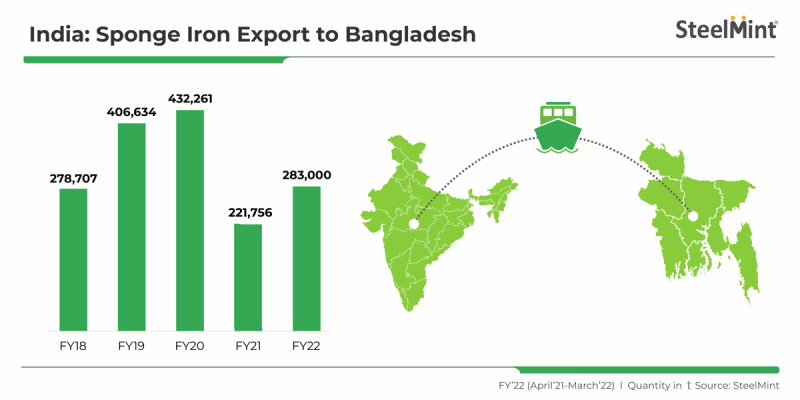
    Sponge iron imports by Bangladesh from India stood at 283,000 tonnes (t) in FY’22 (April’21-March’22). Although Bangladesh’s imports increased sharply from FY’21, volumes were still lower compared to the previous couple of fiscals. Imports, however, are expected to edge up in the coming time on account of rising steel melting capacities in Bangladesh and infrastructure projects in the pipeline.

    Notably, Bangladesh’s financial year starts on 1 July and ends on 30 June. The country’s sponge iron imports were recorded at a meagre 221,756 t in the Indian fiscal year 2021 (FY’21) due to the impact of the COVID-19 pandemic. Meanwhile in the first six months (January-July) of CY’22 the country imported 443,092 t of sponge iron from India, indicating a surge in demand. However, due to LC issues and the liquidity crisis buyers booked limited material during June-July.

    Bangladesh accounts for 41% of Indian sponge exports: Bangladesh has a share of 41% in India’s total sponge exports, with export volumes in FY’22 being recorded at 690,287 t. While Nepal accounts for the largest share – 53% – of India’s exports, Bhutan holds a share of 5%.

    Bangladesh’s sponge import prices: Imported sponge iron prices to Bangladesh stood at an average level of $494/t CNF Chittagong in FY’22.

    Market updates

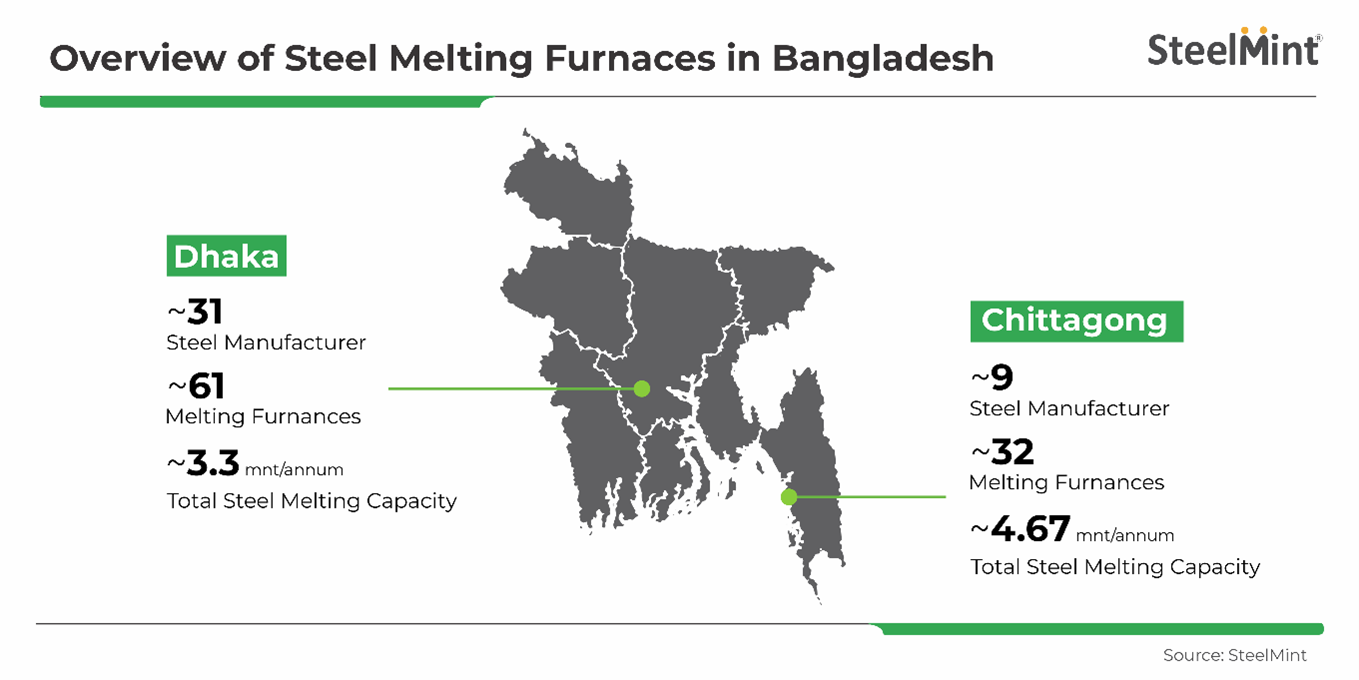
    • Chittagong – home to steel mills: The Chittagong region is the hub of the largest mills in the country, including the top four steelmakers and nine steel companies in all. Mills in the region operate 32 melting furnaces (29 IFs and three EAFs) with a total crude steel capacity of 4.67 mnt (including GPH Ispat’s Quantum EAF).
    • IF mills in Dhaka:  On the other hand, Dhaka has 31 mills in all which are relatively small in size, operating 61 induction furnaces (IF) with a total melting capacity of around 3.3 mnt per annum, while another four induction furnaces are operated by steelmakers in the Comilla region.
    • Furnace sponge-scrap ratio: The ratio of sponge iron in the steelmaking feed depends upon scrap quality. However, the percentage mix of sponge iron in the furnace hovers around 5%.

    As many steel manufacturers in Bangladesh are planning to expand their steel capacities, DRI imports from India are poised to rise further.

    To know more on Bangladesh’s sponge iron imports, book your seat at 3rd Steel & Raw Material Conference, Emerging Bangladesh on 20-21 September, 2022 at Hotel Radisson Blu, Chittagong, Bangladesh, and get a chance to hear renowned industry participants from across the globe on “How are Indian mills managing feed mix of Scrap/DRI/Pig Iron in Induction Furnaces (IF)”.


  • South Asia: Imported ferrous scrap market recovers post Muharram holidays

    South Asia: Imported ferrous scrap market recovers post Muharram holidays

    South Asia’s imported scrap market rebounded in the past days post-Muharram holidays as buyers turned active to replenish the inventory amid limited domestic availability, and recovering demand before the onset of winter season. Meanwhile, imported scrap offers continued their uptrend.

    • India

    India’s imported scrap market remained volatile throughout the week. However, it showed signs of recovery as scrap trade improved towards the weekend. Imported scrap buyers turned active in procurement to build up their inventory as they expect finished steel demand to recover post monsoons.

    Recent trades

    • Around 500 t of Europe-origin HMS (80:20) was traded at $475/t, CFR Nhava Sheva.
    • A trader sold around 2,500 t of Dubai HMS-1 at $510/t Nhava Sheva. Another deal of UK-origin PNS was concluded at $520/t, CFR Mundra basis.
    • Two deals of 500 t each were concluded. Shredded scrap was sold at $510/t CFR Vizag and HMS premium quality at $490/t CFR Mundra.

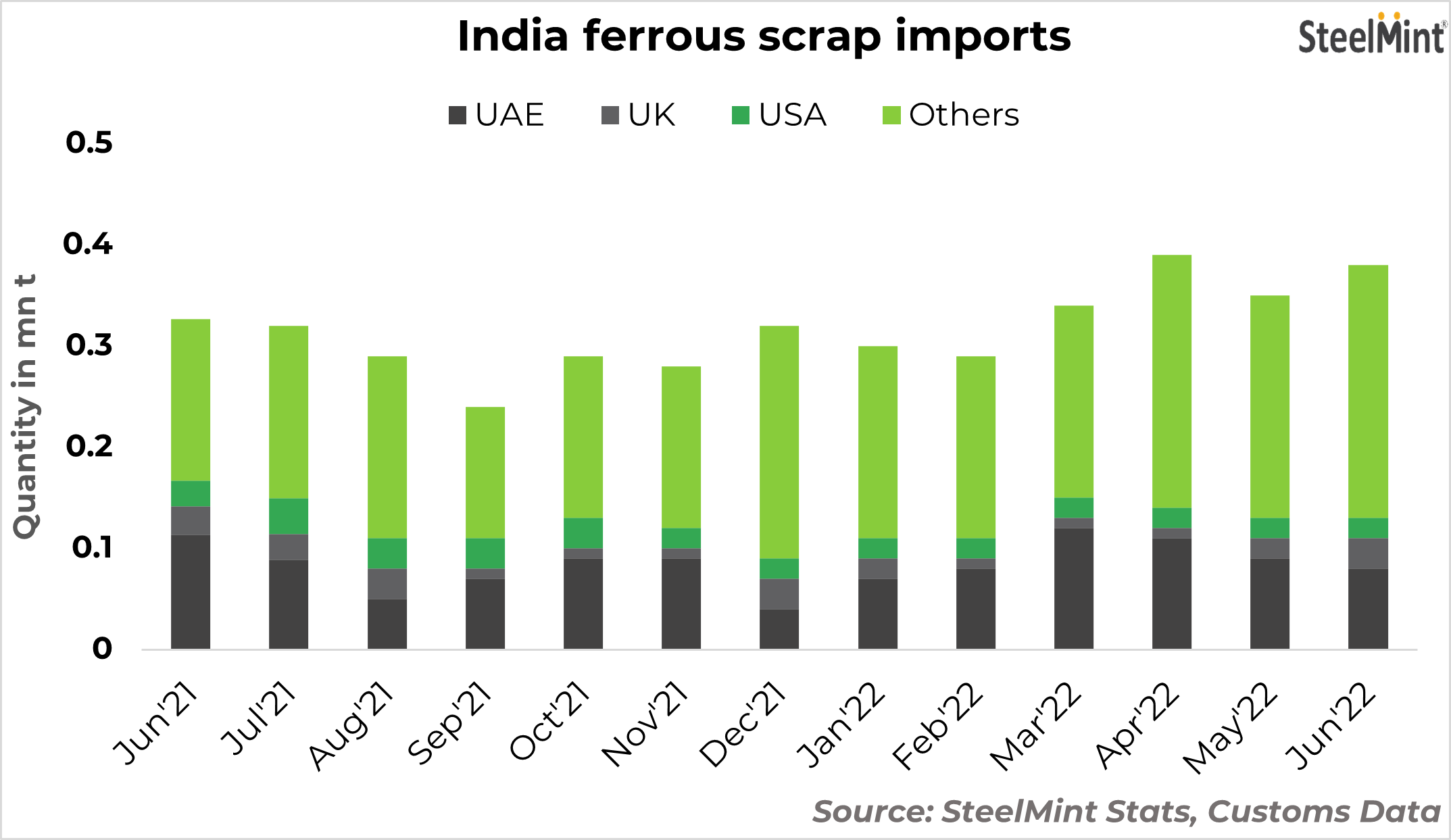
    India’s ferrous scrap imports rose by 16% in July to 0.44 million tonnes (mnt) as compared to 0.38 mnt in June. The UAE continued to be the major exporter at 0.07 mnt, followed by the USA and the UK at 0.05 mnt and 0.03 mnt, respectively.

    • Pakistan

    Pakistani buyers gradually started buying as the rainy season is coming to an end and the national currency also appreciated after declining for the last couple of weeks which brought some relief to scrap buyers after holidays, supporting further bookings.

    Recent trades

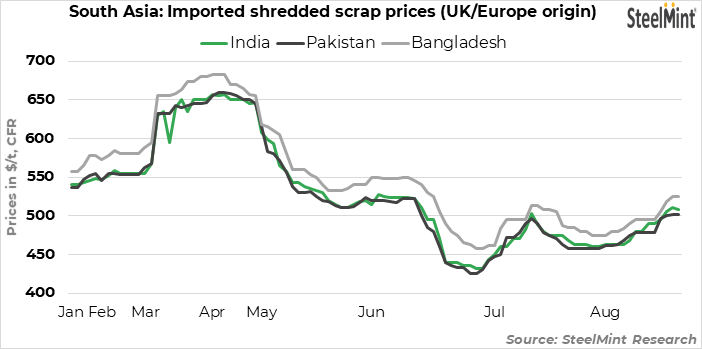
    Around 5,000 t of Europe-origin shredded scrap was booked at $495-500/t, CFR Qasim basis.

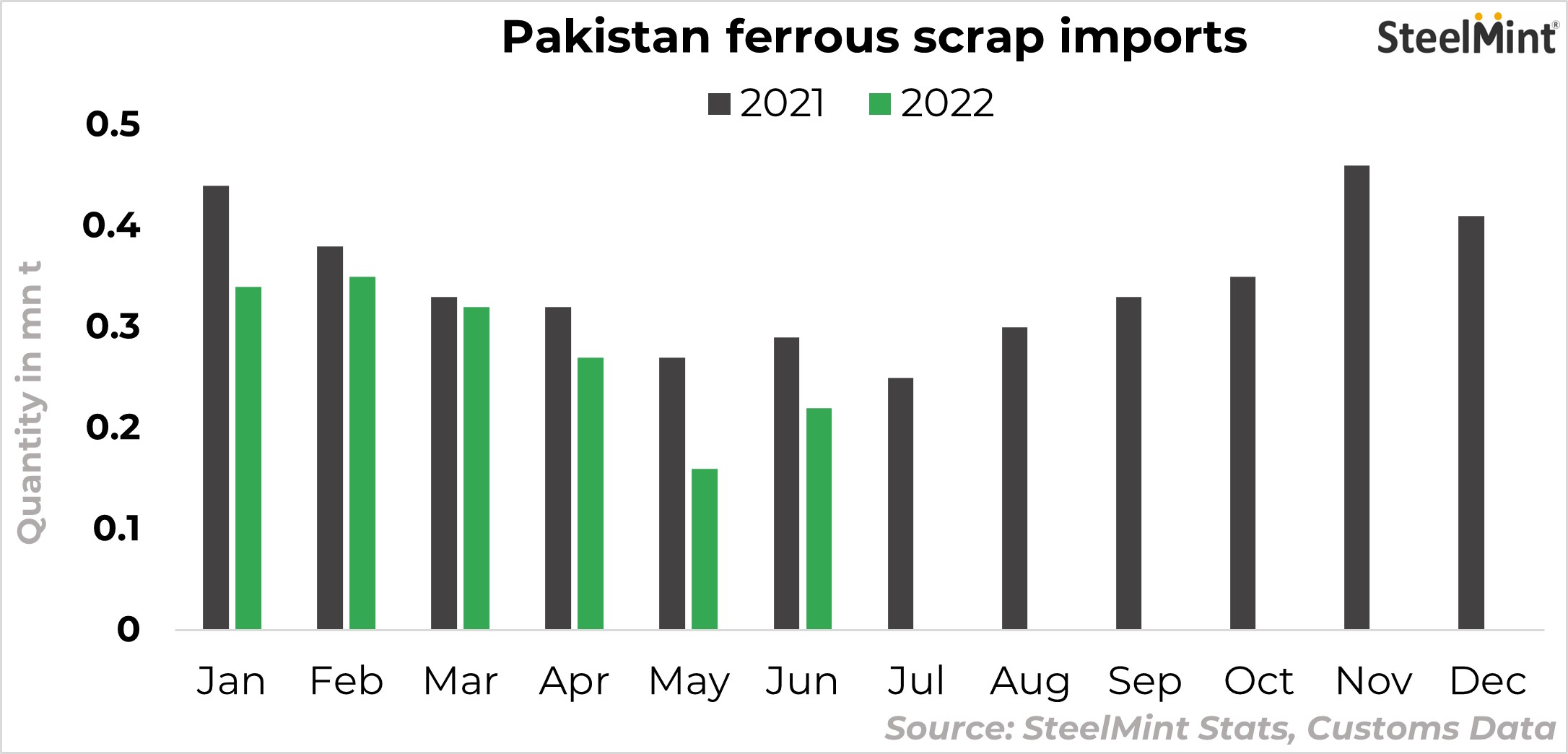
    Pakistan, one of the leading ferrous scrap buyers in South Asia, imported 223,819 t in June 2022 as against 164,699 t in May. Seaborne bookings for June rose significantly by 36% m-o-m. In contrast, on y-o-y basis, scrap imports fell 23% compared to 290,412 t in June 2021.

    • Bangladesh

    Bangladesh’s imported scrap market continues to stay under pressure. Currency depreciation, power cost-push, LC-related issues kept buyers less active in the imported market. Meanwhile, few buyers preferred bulk purchases over containerised scrap due to cost effectiveness.

    Recent trades

    • Bulk: In a recent deal, 30,000 t of US-origin mixed (HMS and shredded) bulk cargo was booked for September 2022 shipment at an average price of $445-450/t CFR Chittagong.
    • Containers: Around 500 t of shredded scrap of UK-origin was traded at $525/t, CFR Chittagong. In another deal, a total of 1,000 t of New Zealand-origin shredded was booked at $520/t.

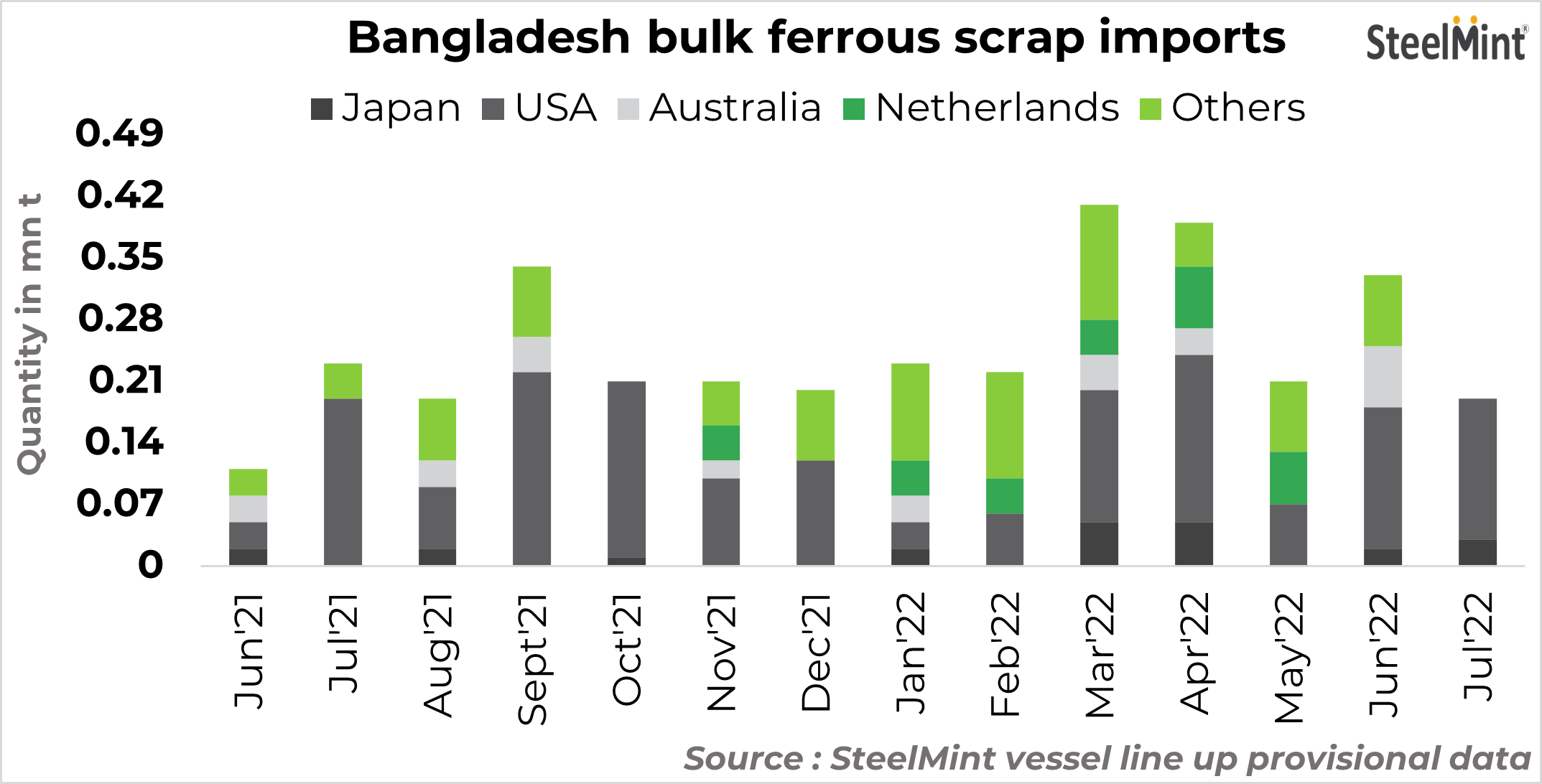
    Bangladesh’s bulk ferrous scrap imports registered a sharp fall of 42% in July 2022 to 0.19 mnt as compared to 0.33 mnt in June. The USA continued to be the top exporter at 0.16 mnt, followed by Japan at 0.03 mnt.

    Factors driving the imported market sentiments:

    • Currency appreciation: The Indian rupee (INR), as with all major currencies, appreciated a little against the dollar. Currently INR is being traded at 79.8 levels.

    Bangladesh currency Taka was mostly stable on a weekly basis and was trading at 95 levels. Market participants believe that buyers will be back in the market if the exchange rate stablises.

    The Pakistani rupee (PKR) bounced back against the US dollar (USD) after plunging to a record low in July. The national currency was traded at 214 in the currency exchange market. Pakistan has a consumption-based economy and relies on imports of commodities including steel and scraps for its manufacturing industry.

    • Increasing steel demand for govt-funded projects: Steel demand in Bangladesh may remain supported mainly due to the government-funded infrastructure projects which were launched to stimulate the economy hit by Covid-19. Projects such as the Ashrayan Project, Metro Rail, Karnafuli Tunnel and elevated expressway from Dhaka Airport to Kutubkhali are expected to boost infrastructure construction. Hence, scrap demand is also likely to remain supported this year as well as in 2023.

    Outlook

    Despite the continue uptrend in prices, industry participants feel the market may pick up next month as the season will start changing and the approaching winter will boost construction activities.

  • SteelMint analysis: Bangladesh likely to improve scrap imports to raise steel melting capacity by 2025

    SteelMint analysis: Bangladesh likely to improve scrap imports to raise steel melting capacity by 2025

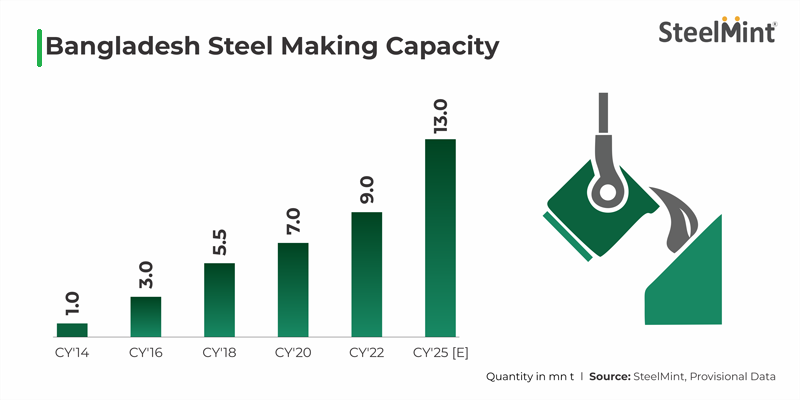
    • Bangladesh set to increase steel melting capacity around 13 mnt by 2025
    • BSRM, AKS, GPH and many other mills are setting up additional capacity
    • Bashundhara, Meghan & Akij entering steel business

    Bangladesh, one of the largest ferrous scrap importers in South Asia, is likely to witness an increase in steel melting capacities from 9 million tonnes (mnt) per annum currently to around 13 mnt by 2025 due to the growing demand for steel, cement, power and upcoming infra projects.

    Renowned steel producers in Bangladesh like BSRM, AKS, GPH, and many other mills are setting up additional capacity and facilities to cater to government-funded infrastructure projects in the coming years.

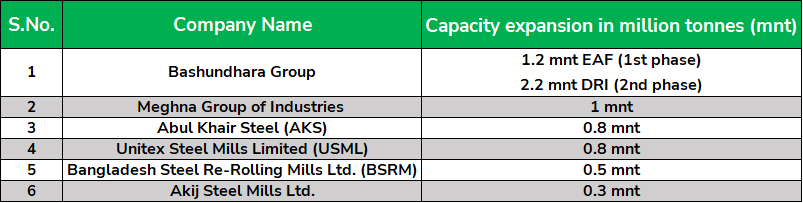
    Bashundhara Group is expanding its capacity to 1.2 mnt (EAF) in the 1st phase and 2.2 mnt (DRI) in the 2nd phase; Meghna by 1 mnt (EAF); AKS and Unitex by 800,000 t; BSRM by 500,000 t; and Akij by 300,000 t.

    Why is Bangladesh an emerging economy?

    • GDP growth rate: The economy of Bangladesh has a projected GDP growth rate of 6.4% for FY’23 as an emerging and fastest growing economy after India in South Asia.
    • Increasing steel demand for govt-funded projects: Steel demand in Bangladesh may remained supported mainly due to the government-funded infrastructure projects which were launched to stimulate the economy hit by COVID-19. Projects such as the Ashrayan Project, Metro Rail, Karnafuli Tunnel and elevated expressway from Dhaka Airport to Kutubkhali are expected to boost infrastructure construction. Hence, scrap demand is also likely to remain supported this year as well as in 2023.
    • Development of port facilities: Due to inadequate port facilities in the country, large ships were unable to enter Chittagong port. However, the Bangladeshi government has started working on projects such as the Matarbari Deep Seaport, which is estimated to be completed by 2026. Once these projected ports are completed, steel manufacturers will be able to import scrap more easily, which will ultimately speed up their production.

    Expert opinion

    Over the past five years, Bangladesh has become an integral part of the ferrous scrap trade in the South Asian region. As new steel capacities come onstream, scrap suppliers are looking forward to continuing the close relationship with the country in the years ahead,” stated Zain Nathani, Director, Nathani Group of Companies, India.

    Sanjoy Ghosh, Head of Supply Chain, BSRM, said: “Steel industries in Bangladesh are entering into a new phase amid higher demand forecast in line with projected economic growth. Despite the current global economic turmoil, all major plants are into enhancing their capacity and also new plants are trying to create a footprint in the market in order to cater to future demand. So, it is challenging time ahead for entire steel industry.”

    Scrap import scenario

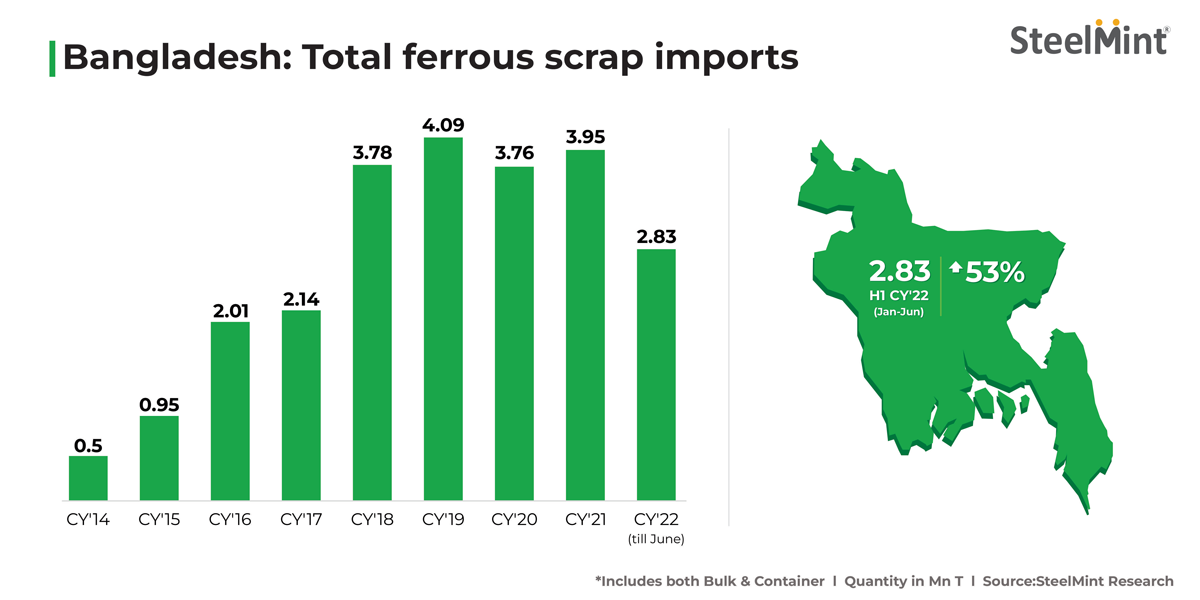
    Bangladesh is a country which is entirely dependent on scrap for steelmaking. The volume of imported ferrous scrap (both bulk and container) into Bangladesh stood at 2.83 million tonnes (mnt), up 53% in the first half (H1) of 2022 as against 1.85 mnt seen in the same period in 2021.


    Bangladesh: Total ferrous scarp imports

    As Bangladesh is eying over 6% GDP growth in the current year, the South Asian nation is making a concerted effort to spearhead infrastructure spending, which is expected to increase steel consumption going forward. However, it will be interesting to see if demand remains supportive against the backdrop of rising steel capacity.

    Join our event to know more on whether Bangladesh’ scrap imports will touch 6 mnt by 2025.

    SteelMint Events will be hosting the 3rd Steel & Raw Material Conference, Emerging Bangladesh on 20-21 September, 2022 at Hotel Radisson Blu, Chittagong, Bangladesh. The conference will explore key issues like the country’s steel production and demand outlook, global scrap trade flow changes, especially post-the Russia-Ukraine war, the ship recycling scenario, key emerging sectors, price trends and a lot more.