SteelMint Events

Tag: coal

  • Russia: Coking coal exports rise nearly 50% in 2022 on higher shipments to China, India

    Russia: Coking coal exports rise nearly 50% in 2022 on higher shipments to China, India

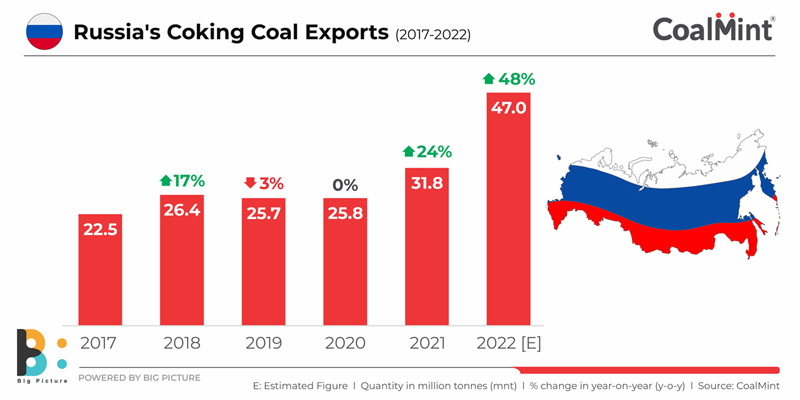
    Russia’s seaborne exports of coking coal and PCI coal are estimated to have increased by a sharp 48% y-o-y to 47 million tonnes (mnt) in 2022 from around 32 mnt in 2021, as per provisional data maintained with CoalMint. Although sanctions on Russia cut off seaborne supplies to traditional importers such as the EU, Japan and South Korea, increased exports to China and India contributed to the growth in export volumes.

    The EU has hitherto been heavily dependent on imports of Russian coal, which accounted for 46.7% of all EU imports of solid fuel last year, according to Eurostat data.

    Leading importers
    Russian PCI and coking coals saw stronger demand in China, and also into India, trading at prices lower than for alternative coals from Australia and North America.

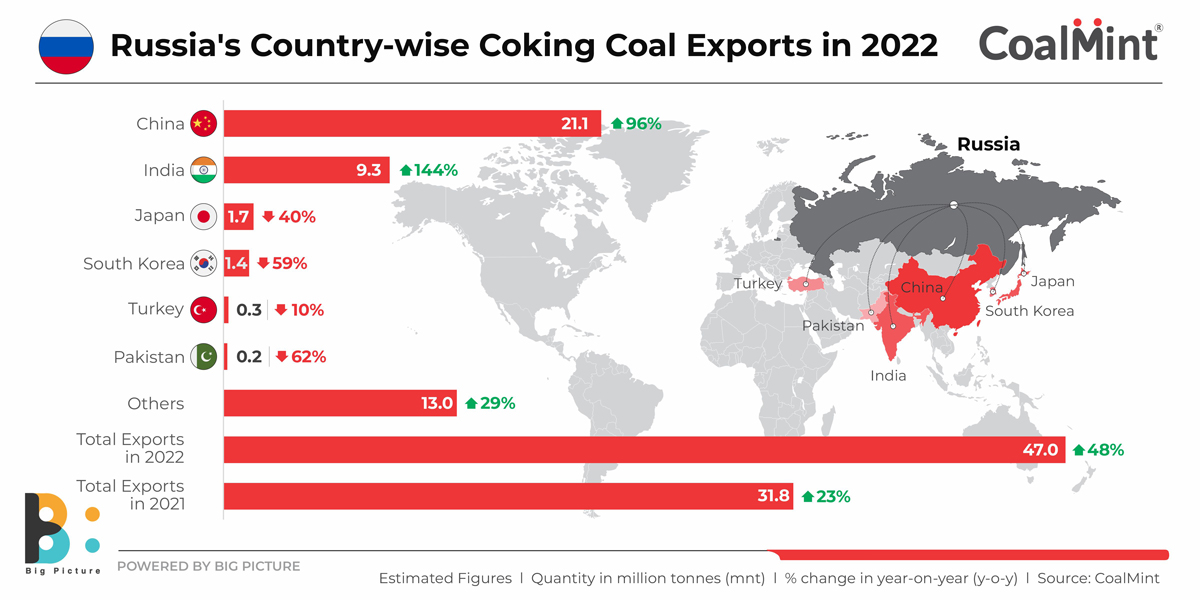
    Data reveal that Russia’s met coal exports to China increased by nearly 100% y-o-y to over 21 mnt in the year gone by. Despite China’s crude steel production falling around 2% y-o-y in 2022 and relatively low domestic coal prices due to extensive COVID-induced lockdowns, imports from Russia surged due to high discounts offered by Russian suppliers post imposition of trade sanctions.

    Russian met coal exports to India edged up even more sharply by over 140% y-o-y to 9.3 mnt. The country’s crude steel production increased by 6% y-o-y to over 124 mnt in 2022 while coking coal imports were stable at around 70 mnt. Cheaper Russian cargoes were lapped up by Indian coal importers amid high global coal prices following the outbreak of the Russia-Ukraine war.

    On the other hand, Russia’s exports to traditional markets such as Japan and South Korea fell by 40% and 59%, respectively amid sanctions.

    Moreover, the ban on the transport of Russian coal was amended in September and allowed for the provision of services like shipping, financing and insurance needed to transfer coal and other products by ship to destinations outside the EU in order to alleviate the energy crisis worldwide. Since then Russia’s seaborne coal exports jumped sharply, with many of the shipments going to Asia.

    Outlook

    Russia’s production of met coal increased by 4.5% to 105 mnt in 2022, as per Rosstat data. However, higher export shipments may not be possible due to logistical bottlenecks. Cancellation of discounts on coal freight levied by the RZD may exert pressure on suppliers to curtail discounts. Also, China’s lifting of an unofficial ban on Australian coal imports, higher shipments by Mongolia and enhancement of domestic production are likely to affect China’s imports of Russian coal.

    However, Russian suppliers looking to ramp up exports to China know that higher discounts are likely to increase the attractiveness of Russian cargoes, even for Indian buyers. Going forward, India’s coking coal demand is likely to increase and – quality considerations apart – if Australian supplies become costlier post China’s re-entry into the Asian seaborne met coal market, Indian buyers may have to fall back on Russia.

    2nd Asia Coal Trade Summit

    Will Russian met coal exports to Asia increase in 2023? How will trade dynamics pan out with the continued sanctions on Russian exports? How is Russia gearing up to consolidate its logistical networks to channel increasing volumes to Asian buyers in the coming years? For in-depth insights on such pressing issues and more, sign in for CoalMint’s 2nd Asia Coal Trade Summit to be held in Bangkok, Thailand on 24-25 April, 2023

  • Indonesia’s coal exports rise 10% in CY22. Will the momentum sustain in CY23?

    Indonesia’s coal exports rise 10% in CY22. Will the momentum sustain in CY23?

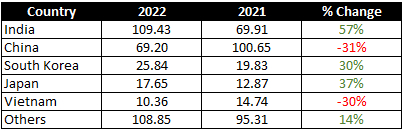
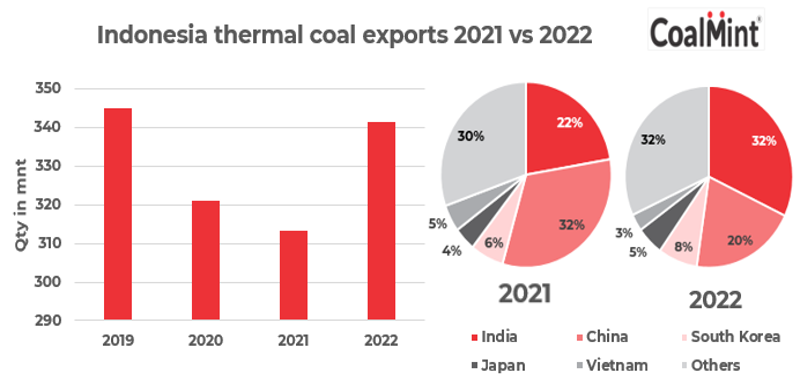
    Indonesia’s thermal coal exports increased by 9% y-o-y to 341.3 million tonnes (mnt) in calendar year 2022 (CY22), CoalMint data shows. Exports to India rose by 57% y-o-y. However, shipments to China and Vietnam recorded a decline in 2022.

    Indonesian shipments to India stood at 109.43 mnt in 2022. India faced a sultry summer in the year gone by, compelling the government to mandate power utilities to import 10% of their coal requirements for blending with domestic coal. Of the total volume of Indonesian coal imported by India last year, about 60% was imported during March-July when summer was at its peak.

    India apart, Indonesian coal shipments to South Korea and Japan increased by 30% and 37% y-o-y to 25.84 mnt and 17.65 mnt, respectively.

    In a significant development, Indonesia turned out to be the preferred destination for thermal coal imports by some Asian countries amid altered global trade dynamics. Sanctions on Russian coal imposed by the European countries resulted in increased demand for Australian coal from Europe. This played a crucial role in keeping Australian coal prices elevated. As a result, key buyers of Australian coal such as Japan and South Korea opted for more Indonesian coal.

    High-CV Indonesian 5800 GAR coal prices averaged $170/t FOB in CY22, an increase of 53% y-o-y. In contrast, Australian 5500 NAR coal prices averaged $196/t FOB in CY22, 14% higher than Indonesian thermal coal prices.

    Indonesian coal exports to Vietnam dropped as the country used more of domestic coal and avoided importing coal due to high prices.

    Outlook

    Indonesian thermal coal exports are likely to remain under pressure in the coming months as rising COVID-19 cases in China – a possible fallout of the Lunar New Year celebrations – may impact logistics, industrial activity and power demand. In India, demand from the power, textiles and cement industries may remain subdued due to increasing domestic production. However, the government’s recent mandate to power plants to import 6% of their overall requirements as a safeguard measure for the peak summer season is most likely to drive imports in the short term.

    2nd Asia Coal Outlook & Trade Summit

    Will Indonesian coal imports grow in the short-to mid-term due to cost competitiveness amid changing global trade flows? Or will rising domestic power generation by PLN tilt the policy focus towards conserving more fuel for domestic use? Follow the discussion at CoalMint’s 2nd Asia Coal Outlook & Trade Summit to be held in Bangkok, Thailand, on 24-25 April, 2023.

  • Bangladesh banking on coal imports as energy demand soars

    Bangladesh banking on coal imports as energy demand soars

    The ever-growing demand for electricity has increased the reliance on coal globally, especially in emerging economies with underdeveloped renewable energy infrastructures and pressing energy security concerns. Bangladesh is a case in point.

    The country has increased procurement of imported coal in a significant way to make up for domestic scarcity of the fuel. Besides, commissioning of new coal-fired power plants has also pushed up demand for coal.

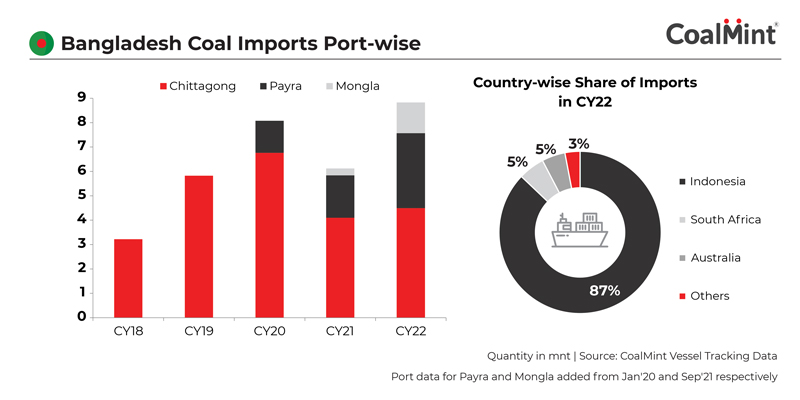
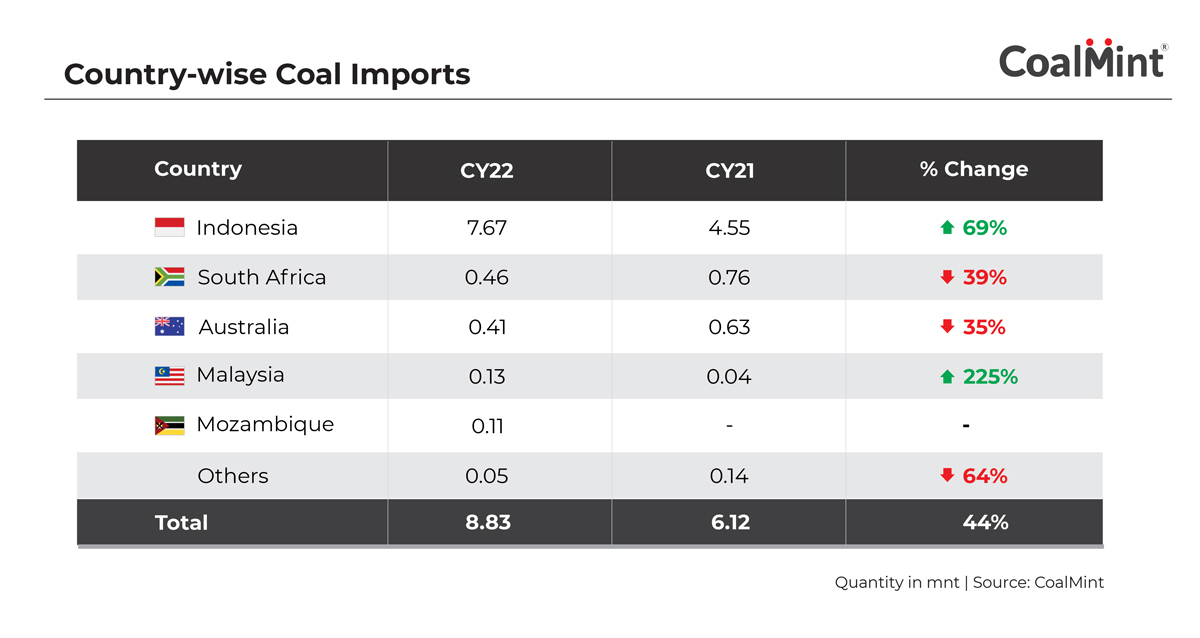
    As per data compiled by CoalMint, the country’s coal imports surged 44% y-o-y to 8.83 million tonnes (mnt) in CY22. Indicating strong demand, the total volume of imports in CY21 was already surpassed during the first 10 months of CY22.

    At the same time, tight supply and high prices of coal in the global market forced Bangladesh to re-work its procurement strategy.

    The sharp growth in imports was mainly driven by higher sourcing from Indonesia in CY22. On the other hand, intake from other traditional markets such as South Africa and Australia plunged 39% and 35%, respectively.

    Inadequate domestic supplies

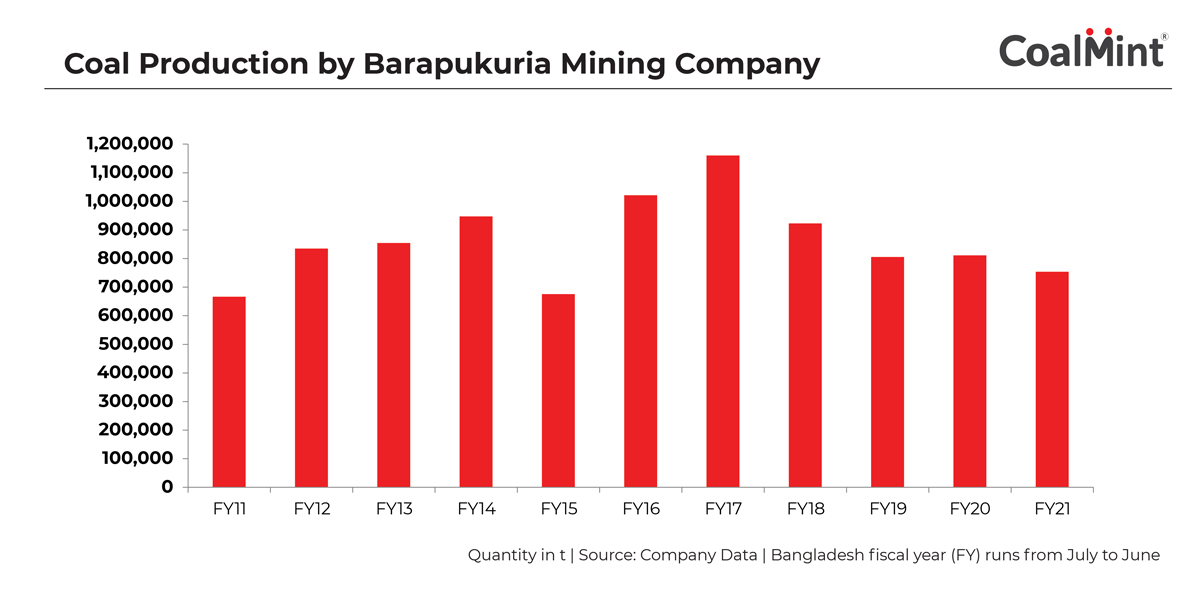
    The Barapukuria Coal Mining Company (BCMCL), operator of the first and sole coal mine in Bangladesh, reported a decrease of 7% in annual coal production in FY21 (July 2020-June 2021). The company recorded 753,973 t of output in FY21 as against 811,137 t in FY20, thus attaining its lowest output in the past six fiscals.

    Given this subdued performance, the company suspended sales to local buyers from 19 March, 2018, in order to secure supplies for the power units of the state-run Bangladesh Power Development Board (BPDB).

    Of the total output, almost the entire volume was delivered to BPDB, while a nominal 610 t was supplied externally during FY21, as per the company’s report.

    In a fresh setback to the fuel security of power plants, the company is mulling to increase its coal pricing to compensate for the upward revision in royalty payable on coal. Moreover, the price hike was also necessitated to adhere to the proposed mining agreement that will require additional land acquisition to extract coal from the northern part of the mine.

    It is important to note that BCMCL has been selling coal at a fixed price of $130/t to BPDB since May 2015.

    Coal: A cheap option

    Due to availability of gas reserves, the gas-based plants in Bangladesh hold a majority share in total power generation capacity.

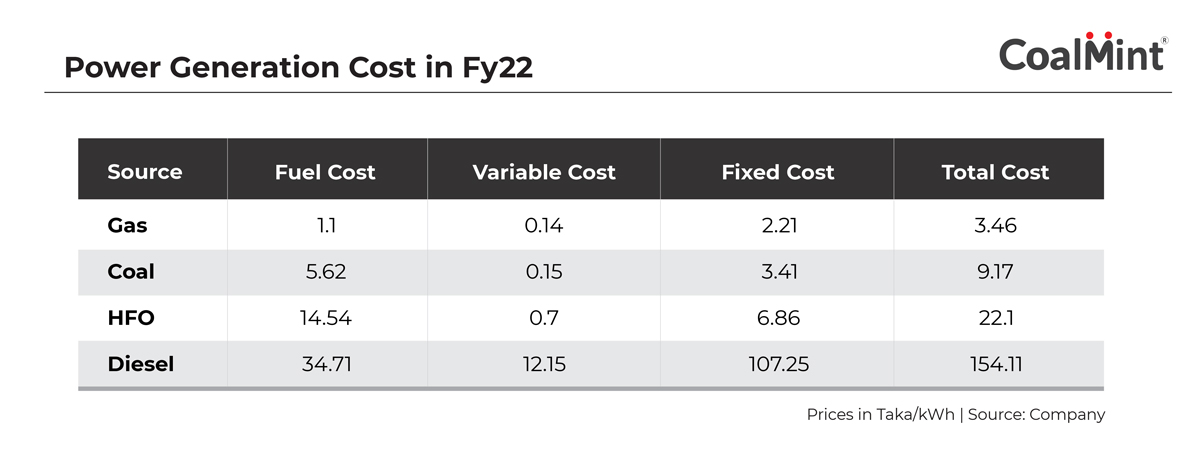
    Total installed capacity of BPDB-owned plants was 22,482 MW in FY22, of which gas-based plants’ capacity was 11,476 MW, whereas capacity of coal plants stood at a mere 1,768 MW. Plants based on diesel, furnace oil, renewables, etc. made up for the remaining share of power capacity.

    A comparative cost analysis indicates that gas is the cheapest source of power generation. However, coal was still economical than other

    alternative power sources – another reason for the country’s growing reliance on coal.

    Coal demand accelerates

    Fuelled by the commissioning of the two 660 MW units of the Payra power station, coal imports have started increasing at Payra port, which was established in order to facilitate coal imports for the power sector.

    Meanwhile, at least six other coal-fired power projects are expected to be commissioned, three of which, with a total capacity of 2,800 MW, are expected to be completed soon.

    As per a study by the International Energy Agency (IEA), coal consumption in Bangladesh declined by 0.8 mnt to 3.8 mnt in CY21 but is expected to grow by 2.8 mnt in CY22.

    The report suggests that the country’s coal power fleet would increase to around 5,000 MW by CY25, boosting annual coal demand to 19 mnt.

    2nd Asia Coal Outlook & Trade Summit

    Is Bangladesh’s energy security at a crossroads with the withdrawal of foreign investments from the country’s power sector? Does the country share this predicament with other emerging economies in Asia that are grappling with energy security concerns amid global inflation and depleting investments in coal-based assets? Want to be a part of the discussion? Check out registration details for CoalMint’s 2nd Asia Coal Outlook & Trade Summit to be held at Grand Hyatt Erawan in Bangkok, Thailand on 24-25 April, 2023.

  • CIL sets production record but supplies still tight for non-power sector

    CIL sets production record but supplies still tight for non-power sector

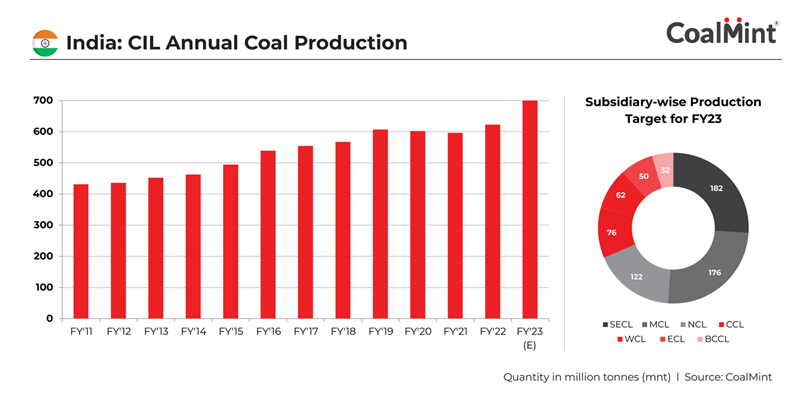
    State-run miner Coal India Ltd. (CIL) has attained new highs in terms of coal production. The company breached the 400-million tonnes (mnt) production mark in the quickest time since its inception. The milestone was attained on 24 November of the ongoing fiscal, 31 days ahead compared to 25 December of last year.

    During April-November 2022, total production reached 412.6 mnt, up 17% y-o-y. The company is striding towards its target of 700 mnt set for FY23, which will be a new production milestone.

    Turning the tides in its favour, the company registered higher sales to keep pace with robust demand which helped it to deliver consolidated profit after tax of INR 14,878 crore in H1FY23 – the highest ever recorded during H1 of any fiscal so far.

    With demand for coal showing no signs of slowing down in the near term, the introduction of latest policy reforms is likely to further boost price realisation from coal sales.

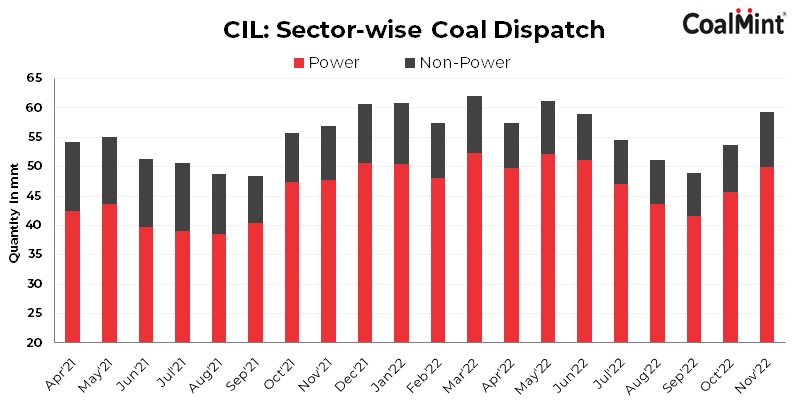
    However, despite the increase in production is CIL being able to cater to all segments of coal consumers?

    Premium on coal supplies

    CIL has decided to charge a premium of 40% over the notified price across the entire range of coal grades supplied under bridge linkage.

    This provision refers to temporary coal supply till the time an end-user company commences operations from an allocated coal mine. This price structure is applicable for existing as well future contracts for both power and non-power customers from 1 June, 2022.

    Similar facility has been kept for coal supplied under flexi utilisation policy, which was the introduced to transfer coal linkages of one power station to another for reducing the cost of power generation.

    However, this revision would be applicable specifically for the thermal power plants lifting coal against this policy that do not have fuel supply agreement (FSA) with individual CIL subsidiaries effective from 22 November, 2022.

     Challenges confronting non-power sector  

    The CIL board has decided not to renew long-term contracts for coal supplies under linkage auctions meant for the non-power sector.

    These auctions are held across various tranches for different sub-sectors namely sponge iron, cement, captive power, steel and others. Till date, five tranches of auctions have been successfully conducted.

    As per policy guidelines, the tenure of FSA against these auctions was five years, which was initially proposed for extension for another five years upon mutual agreement.

    However, the company has informed that the expiring FSA contracts under tranches II and III auctions held during January-November, 2017 would not be renewed beyond five years. Similar instruction was also issued in case of contracts under tranche-I auctions.

    The decision has come as a big blow to the non-power customers who are already facing supply tightness amid CIL’s disparity in coal allocation.

    In a latest development, CIL has come-up with sixth tranche of auctions starting with sales for sponge iron sector in the first phase from 23 December. It is expected that these auctions would witness aggressive procurement as customers will look to secure fresh supplies against their expiring contracts by placing higher bids for the coal being offered.

    The Standard Linkage Committee has decided not to extend nomination-based coal linkage supplies to the thermal power plants that are executed under Letter of Assurance (LOA) route beyond 31 March, 2022.

    This indicates that the power producers would now have to secure coal linkages via competitive bidding under various auctions marked under SHAKTI (Scheme to Harness and Allocate Koyla Transparently in India) policy, instead of procuring coal at fixed notified price in the previous regime.

     Single window auction 

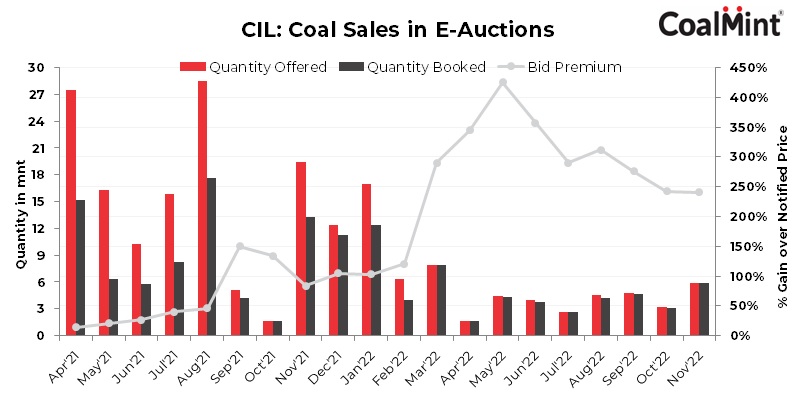
    Apart from FSA contracts, CIL’s coal sales via regular auctions has been the bright spot led by the spurt in bid prices as the buyers are aggressively procuring the limited material put up on sale.

    This comes after the company’s supply prioritisation for the power sector had resulted in drastic curtailment of material offered at auctions.

    The new scheme has ensured a uniform rate for all consumers, thus making the gradual shift from the price discrepancy-based system that was adopted earlier. Besides, it also eliminated the variation seen in allocating coal for sale to different sets of consumers. Wider participation helped CIL to fetch better premiums.

    During April-November 2022, sales via auctions garnered a premium of 308% over the average notified price assessed for the allocated coal grades as against 50% recorded in April-November, 2021.

    CIL has developed a new scheme for conducting coal sales under the auction route by the introduction of a two-stage bidding process.

    The new policy is still under development stage with Eastern Coalfields being the sole subsidiary to have implemented it so far. However, the proceedings of the auction suggest that it will promote competitive bidding amongst the participants for preferential loading points.

     2nd Asia Coal Outlook & Trade Summit 2023  

    CIL has increased production rapidly over the last decade, but is it being able to cater to all segments of coal consumers in India? The non-power sector is facing a supply crunch and buyers don’t have enough material to bid for at CIL auctions. What steps may CIL and the larger policy establishment take to implement import substitution more effectively in India? Sign in for CoalMint’s 2nd Asia Coal Outlook & Trade Summit 2023 to be held in Bangkok, Thailand, on 24-25 April, 2023, where experts will discuss these issues threadbare.


  • How might Asian coal trade dynamics change if China lifts ban on Australian coal?

    How might Asian coal trade dynamics change if China lifts ban on Australian coal?

    Australia’s Foreign Minister Penny Wong met with her Chinese counterpart Wang Yi in Beijing on 21 December, 2022, as the trading partners seek to stabilise their diplomatic relationship. Wong’s visit is the first by an Australian minister since 2019 and the first formal talks in Beijing since 2018.

    It is widely expected that a thaw in the bilateral relationship will have a positive outcome for trade. If market chatter is anything to go by, the possibility of China lifting its informal embargo on a host of Australian exports, most prominently coking coal, is by no means remote.

    China had levied an informal ban on its top coal sourcing destination in the latter half of 2020 as tensions escalated between the two trading partners over a series of issues. China was one of the leading coal importers from Australia till 2019 with the latter exporting about 25% of its total coal (both thermal and coking) exports to China.
    As relations between the two countries are heard to be improving, speculation is rife that coal trade might resume once again.

    China-Australia trade dynamics: how it changed?

    Australia accounts for 58% of global seaborne trade in metallurgical coal, while China, the world’s largest steelmaking hub, accounts for 55% of global steel production.

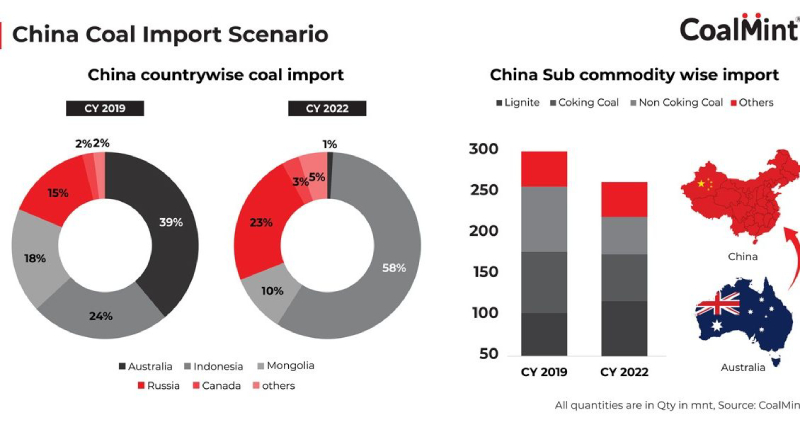
    China imported 197 million tonnes (mnt) of coal in 2019 (before the informal ban), of which 40% was imported from Australia. Commodity-wise, Australia’s share in China’s coking coal imports stood at 40%, while for thermal coal it was 60%.

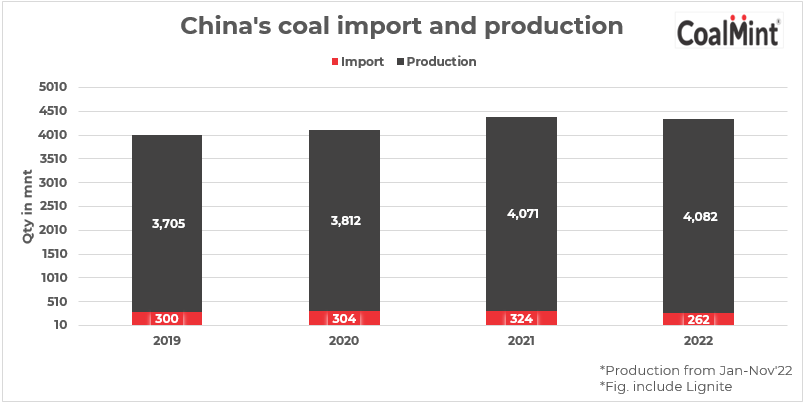
    Post 2020, China focused on increasing its domestic coal production. Compared to 2019, China’s domestic coal production jumped 20% to 4,452 mnt in 2022.

    While imports continue to arrive in China, the absence of Australian cargoes has been filled by met coal imports from the US, Canada and Russia. For thermal coal, imports from Indonesia, Russia and Colombia increased substantially.

    Interestingly, the share of Russian coal in Chinese imports increased noticeably after the Russia-Ukraine war earlier this year and subsequent sanctions imposed by European countries.

    Russia’s share in China’s total coal imports have gone up to 22% this year against 10% in 2019 and 12% in 2022. Chinese buyers favour Russian coal for its high quality and low prices.

    What might happen if China-Australia trade resumes?

    As per CoalMint analysis, even if trade resumes between the two countries the situation is unlikely to revert to what it was in 2019.

    This is because the Russia-Ukraine war has changed global coal trade flows. With sanctions on Russia by a majority of western countries and a few Asian ones too, Russian coal is being diverted to China at much cheaper rates.

    On the other hand, Australian coal has found favour in key economies such as Europe, Japan, and South Korea. This has resulted in Australian coking and thermal coal prices trending at high levels. Australian thermal coal prices are still elevated by about 24% as against January this year.

    While global steel and thermal coal demand remains slow at present due to Covid and recessionary pressure, in the long run if Australian coal miners are hoping for Chinese buyers to make a return to the market, their hopes are likely to be dashed. Given the fact that Australian coal is massively uncompetitive against its rivals coupled with the fact that China is raising its domestic output, it is uncertain whether Australian coal exports to China will resume in a big way.

    Asia Coal Trade Summit 2023

    Keen to attain insights on Asian coal trade flows and the emerging demand-supply dynamics in the continent? How may China’s coal demand pan out in the near term and what factors are likely to shape met coal trade flows in 2023? Sign in for CoalMint’s Asia Coal Trade Summit to be held at Bangkok, Thailand, in April 2023