SteelMint Events

Category: Blog

  • Bangladesh: Ferrous scrap imports witness contrasting trends in CY’23 amid macroeconomic headwinds

    Bangladesh: Ferrous scrap imports witness contrasting trends in CY’23 amid macroeconomic headwinds

    Bangladesh has emerged as one of the top three importers of ferrous scrap in South Asia. Over the last three years (2021-2023), bulk scrap imports have grown from 60% to 67% of the country’s total imports.

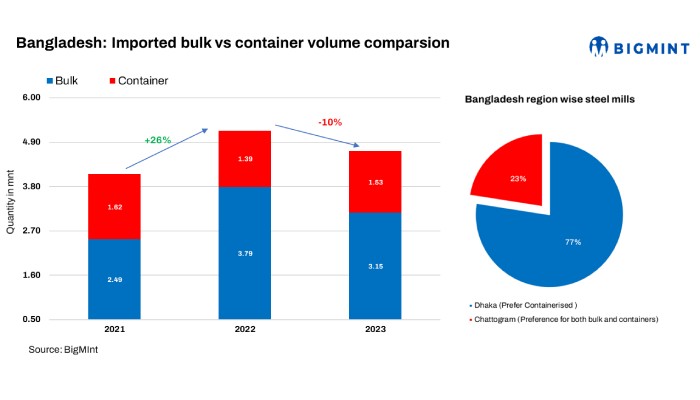
    Overall bulk scrap imports in CY’23 witnessed a significant 17% drop to 3.16 million tonnes (mnt ) compared to 3.80 mnt in CY’22.

    Almost 15-20 bulk scrap vessels are booked every month by Bangladesh, which fell to 9-10 per month during the second half of CY’23. This decrease was attributed to challenges in LC openings and a weaker foreign exchange reserve. The country’s steel sector observed sluggish movement amid weaker sentiments for finished steel, followed by prolonged LC issues and subdued demand from downstream sectors in CY’23.

    Furthermore, shipments from the US and Japan decreased, with Turkish and Indian bulk buyers capitalising on the favourable parity situation.

    In the last two years (CY’22 and CY’23), container scrap volumes have witnessed a fluctuating trend (a 10% rise in container volumes at 1.52 mnt as against 1.38 mnt in CY’22). On the other hand, in CY’22, the container volume saw a 14% drop as compared to 1.61 mnt in CY’21).

    A sharp rise in freight rates, longer lead times, and unavailability have impacted the container market, and the container volume share dropped to 33% from 39% in 2021. The country is lately also exploring newer supplier geographies for container shipments including Singapore, Malaysia, and Hong Kong.

    Currency depreciation: The BDT has depreciated by 25%, and a majority of Bangladeshi importers who rely on usance LC due to the relative stability of the currency are making substantial losses now.

    However, due to a lack of port facilities, unloading at jetties is very slow, and vessels have to be unloaded at anchorages. In the event of imports edging higher, the problem is likely to intensify. Steel decarbonisation goals will raise global scrap demand, while supplies struggle to keep pace.

    Major exporters, such as the EU, are likely to prioritise local consumption and may discourage exports. This could have a major impact on the steel industry in Bangladesh.

    Weaker foreign reserves weigh on LC openings: Amid mounting pressure on foreign exchange reserves and exchange rate volatility, the country’s central bank has implemented measures to tackle the trade imbalance. Interest rates have increased in LC issuance, hampering scrap imports towards the second half of CY’23. The deposit required for LC approvals has also increased to 20% from the earlier 10%. Forex issues and remittances have dropped in the last two years. In response to higher imports compared to exports and remittances, however, some banks still impose 100% LC margins on essential commodities, impacting importers’ competitiveness.

    Price trend: BigMint’s yearly average price assessment for US-origin bulk HMS (80:20) stood at $430/t CFR Chattogram in CY’23 as against $501/t CFR in CY’22, followed by Japanese H2 bulk scrap yearly average assessment which stood at $425/t in CY’23 as against $505/t CFR in CY’22.

    BigMint’s yearly average price assessment for UK-origin containerised shredded and HMS (80:20) stood at $455/t and $430/t CFR Chattogram in CY’23, as against $534/t and $503/t respectively on a CFR basis in CY’22.

    Over the past two years, foreign exchange reserves have steadily declined due to high external payment obligations surpassing inflows from exports and remittances. Reserves plummeted from $40.7 billion in August 2021 to approximately $19 billion towards the end of CY’23. The dollar shortage has resulted in delayed or renegotiated import payments, with banks granted additional time to acquire the necessary foreign currencies.

    To meet IMF loan programme requirements and address the net reserve condition, the Bangladesh Bank introduced currency swaps with banks for the first time, allowing banks to provide foreign currencies in exchange for interest instead of the central bank directly purchasing dollars.

    As of January 2024, Bangladesh’s repo rate stands at 8%, up from 7.75% in December 2023, aimed at curbing inflation to 6%. LC settlements hit a three-year low in December 2023 at $4.53 billion, with the lowest recorded at $4.41 billion in November 2020. Bankers are now issuing two types of LCs: sight and deferred. Economists attribute improved liquidity in banks to increased remittances, foreign loans, and aid. While sight LCs require immediate payment, deferred LCs allow 90-180 days for settlement.

    Outlook

    The projected growth in urbanisation is set to drive new project announcements by 2027, fuelling increased steel demand. Improved infrastructure and a favourable global trade environment may stabilise forex reserves and unlock economic opportunities. Bangladesh’s top steel manufacturers are expanding capacity to meet rising steel demand in construction projects, signalling positive prospects for the steel and ferrous scrap import markets. Optimism prevails for steel mills as they look to stabilise import volumes, potentially boosting scrap trades in the near term.

    4th Bangladesh International Trade Summit

    Bangladesh, a strategically significant country in the Asia Pacific, is emerging as a hotspot of economic growth. The country’s phenomenal economic expansion is fuelled by a buoyant steel sector which is on an expansion spree. This is expected to encourage the participation of more global companies and attract precious foreign reserves for the country.

    BigMint Events will be hosting the 4th Bangladesh International Trade Summit on 14-15 May 2024, at Hotel Pan Pacific Sonargaon, Dhaka, Bangladesh. The two-day conference looks to bring together key stakeholders from the steel, cement, and power sectors, including industry stalwarts, policymakers, traders, and investors. It seeks to provide a network for collaboration and an ideal platform for discussion of prevailing industry trends and challenges.

  • Global tonnage down over 10% in ship recycling; Bangladesh remain on Top spot

    Global tonnage down over 10% in ship recycling; Bangladesh remain on Top spot

    • Eased LC issues help Bangladesh secure vessels
    • Prices of both containers, tankers fall y-o-y
    • Indian prices may increase amid scant inventory

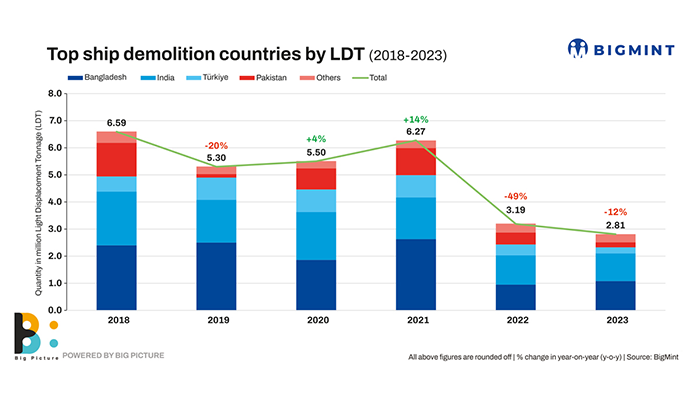
    Morning Brief: The global ship-breaking market remained in deep waters in 2023. Total tonnage sunk 13% to 2.8 million light displacement tonnage (LDT) compared to 3.2 million LDT recorded in 2022.

    Bangladesh had snatched back its position as the largest ship-breaker globally in terms of tonnage earlier last year from India and retained it till the end. It concluded the year with total tonnage rising over 20% to 1.10 million LDT against 0.9 million LDT in 2022. It also led in terms of vessels demolished, at 138 units compared to 128 in 2022, up 39% y-o-y.

    India, on the other hand, slipped 9% to 0.9 million LDT (1.1 million LDT). However, the number of ships demolished rose a modest 8% to 138 from 128 in 2022.

    Pakistan and Turkiye have been neck-and-neck since 2022. Demolition tonnage fell 50% last year for both to 0.02 million LDT from 0.04 million LDT in 2022. Both saw a drop in the number of vessels recycled but Pakistan’s plunged 65% to a mere 15 while Turkiye experienced a modest 8% drop to 44 (48 in 2022).

    Bangladesh, India, and Pakistan set benchmarks as they traditionally command the lion’s share of the global ship recycling market — last year’s was over 80%.

    Price remain underwater y-o-y

    Demolition scrap prices fell y-o-y but Bangladesh still managed to remain slightly more supported than the other two.

    For instance, container prices in Bangladesh dropped the least, by 6%, to $579/LDT in 2023 against $616/LDT in the previous calendar.

    Pakistan’s container prices crashed by 8% to $550/LDT ($601/LDT) while India’s fell 7% to $565/LDT ($606/LDT) in this period.

    Tanker prices showed a deeper drop. As in containers, in tankers too, Bangladesh weathered the storm better than the others, with its recycled rates falling 7% to $561/LDT last year compared to $600/LDT in 2022.

    In Pakistan, the fall was the sharpest, by 10%, to $533/LDT ($590/LDT). India saw a drop of 8% to $546/LDT ($591/LDT).

    Factors impacting ship recycling market in CY’23

    Bangladesh recyclers swim against the tide: Despite the challenges of inflation and a sliding currency, Bangladesh ship recyclers managed to keep their head above the water thanks to a few reasons. One, in early 2023, the country secured a substantial $4.7-billion IMF loan, which bolstered its foreign exchange reserves and helped it open letters of credit (LCs) to secure the much-needed tonnage. In 2023, Bangladesh’s foreign exchange reserves stood at $17.20 billion, falling slightly short of the relaxed minimum target of $17.78 billion. But its recycled ship buyers bid aggressively, upping the competition heat with Indian counterparts. This is essentially because, unlike India, Bangladesh mills are entirely dependent on imported scrap and are willing to pay more to secure the raw material. Thus, average prices of containers and tankers were higher compared to that of India and Pakistan, although these were lower y-o-y. It was also heard that smaller, cost-effective vessels lured buyers.

    Secondly, although LC openings hit record lows in 2023 because of the falling forex reserves, later in the year the government eased rules, benefitting ship-breakers. Because of the higher prices offered, more ships diverted towards Bangladesh, especially from the Far East due to the geographical proximity and lower delivery costs involved.

    Thirdly, tonnage improved amid an increase in recycling yards(PDF). The country got its first green shipyard, PHP Ship Breaking and Recycling Industries Limited, in 2017. Following a four-year gap, three more — SN Corporation, Khwaja Ship Breaking, and Kabir Steel –received the green yard nod. Currently, there are four green yards (among the total 20-25), which are officially recognised as meeting the environmental standards set by the Hong Kong International Convention (HKC).

    Challenges rock the Indian boat: The Indian recyclers swam in choppy waters, particularly in Alang, and not without reason. First, the region faced increased competition as it took on additional recycling activities from competing sub-continental markets, leading to strain on resources and facilities. This surge in activity put pressure on prices for ship owners and cash buyers, reflecting oversupply and intense competition among yards. Secondly, the slight fluctuations in the Indian rupee added to uncertainty and disparity in pricing. Thirdly, regulatory hurdles came in the way. For instance, the UAE ruling, banning its own flagged vessels from’beaching’ in India, further disrupted the flow to Alang. Fourth, a shortage of tonnage hindered operations and contributed to fluctuations in local plate prices. Alang witnessed the lowest tonnage in the last 10-12 years, at around 23,000 LDT.

    The market experienced a lacklustre start in 2024, possibly due to the challenges overhang from the previous year, with some transactions being redirected to Pakistani buyers, indicating a shift in market dynamics. Overall, the Alang market witnessed subdued activity characterised by decreased demand in both the plates and scrap segments amid competing raw materials like sponge iron etc.

    Pakistan unable to make waves: As the third-largest ship recycling country, Pakistan has been finding it increasingly hard to attract sellers. After a prolonged 6-7-month period of inactivity (February-August), caused by severe currency problems, political unrest, and economic crises, buyers re-entered and surpassed India and Bangladesh in average vessel prices in August and also saw some sales. This swift market shift resulted from improved local sentiments and issuance of LC approvals for specific individuals. However, in October, the tonnage again dropped on weaker buyer sentiments amid the ongoing economic crisis. In the initial 10 months of 2023, domestic ship-breaking scrap prices experienced significant volatility, fluctuating between PKR 165,000- 200,000/t because of the PKR’s devaluation, demand from other competing markets, challenges in opening LCs, and scarcity of available vessels for recycling. The ratio of melting scrap to rerolling scrap from vessels is 20:80, underscoring the need for ship-breaking scrap.

    Outlook

    In Bangladesh, seven additional green yards are under process in 2024, which will increase tonnage in the near future. Green ship-yards can attract more customers and generate higher profits.

    In India, prices are not likely to go down from current levels and can, instead, increase as there are few vessels left for demolition amid scant inventories.

    But, overall, with countries adopting stricter carbon emission norms, ship-recycled scrap usage will increase, going forward, in comparison to sponge iron.

    4th Bangladesh International Trade Summit

    Bangladesh, a strategically significant country for Asia-Pacific, is emerging as a hotspot of growth through sustainable practices. The economic expansion is expected to encourage the participation of more global companies and attract forex for the country.

    BigMint Events will be hosting the 4th Bangladesh International Trade Summit on 14-15 May 2024, at Hotel Pan Pacific Sonargaon, Dhaka, Bangladesh. The two-day conference shall bring together key stakeholders from the steel, cement, and power industries, including industry stalwarts, policymakers, traders, and investors. It shall provide a network for collaboration and an ideal platform for discussion of prevailing industry trends and challenges.

  • Bangladesh: Steel demand to surge by CY’27; Infrastructure & Port projects to lead the way

    Bangladesh: Steel demand to surge by CY’27; Infrastructure & Port projects to lead the way

    • Chattogram, Matarbari to ease congestion, boost scrap imports
    • Mills eye production increase to feed additional demand
    • Urbanisation, improved global scenario to support mills

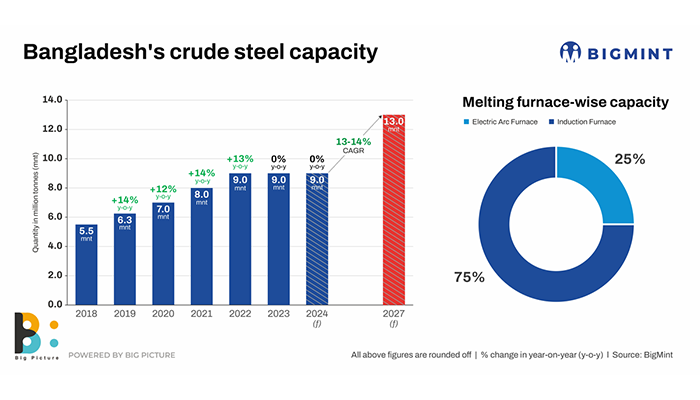
    Morning Brief: Bangladesh, a key South Asian country, is set to see an increase in steel demand in the medium-to-long term. Working towards this end, the country’s steel melting capacity is expected to increase by another 3 million tonnes (mnt) or over 40% to 13 (mnt) by 2027 from 9 mnt in CY’24 and crude steel production is seen rising over 35% to 8 mnt from almost 6 mnt in CY’24.

    A slew of infrastructure projects is nearing completion while a cache of new ones is likely to be announced, which will contribute 25-30% of steel demand. As a result, the country’s steel consumption is slated to increase 25% to around 10.60 mnt by 2027 from 8.5 mnt in CY’24.

    Current steel market overview

    Total crude steel production in 2023 was at 4.9 mnt with an utilisation of 60-65% of the 9 mnt capacity. Steel is produced through the electric furnace route with induction furnaces contributing 75% and electric arc furnaces the balance 25%.Current consumption is at 7.6 mntpa and increasing at 10% per annum. Out of the current consumption, 70% is contributed by government projects.

    Bangladesh was one of the fastest growing economies in the Asia Pacific last year, with a CAGR of 8.5% over 2019-22.

    Expansion plans of key mills

    Keeping future steel demand in mind, Bangladesh’s key mills are looking at expansion.

    Meghana Group of industries : Meghana is coming up with 1 mnt melting capacity is expected to complete it by FY2025.

    Abul Khair to increase melting capacity in 3 years: Abul Khair’s rerolling mills are expected to be completed by FY2025. It is planning to expand melting capacity by FY’27.

    Plans are also afoot to set up a 1.6-mnt rebar capacity by March. Thus, a total capacity of 3 mnt in rolling, and 1.6 mnt in crude steel production is in the pipeline.

    BSRM: Leading steel producer BSRM has announced plans to increase MS rod capacity by 0.5-0.6 mnt. The current melting capacity is 2.2 mnt, and rolling capacity, at 1.8 mnt. BSRM will add 0.6 mnt rolling capacity in the near future.

    It’s notable that other mills like Basundhara, Unitex and Haqeez are expanding their melting capacities, despite the extended completion period to FY27. This reflects the dynamic landscape of the steel industry, with companies strategically positioning themselves for future growth.

    Factors that will support increased steel demand

    Development of port facilities is being undertaken which will not only raise demand, but also facilitate increase in steel-and raw material-related trade. Development of port facilities will address limitations of existing infrastructure, allow entry of larger vessels, ease imports of scrap and boost trade and economic growth.

    These projects cumulatively are expected to increase steel demand by 20-25% over the next three years.

    Chattogram Port expansion: Chattogram Port, the premier seaport of Bangladesh, is undergoing significant development and expansion to meet growing import and export needs. The Bay Terminal is the most significant ongoing project, aiming to increase Chattogram Port’s capacity six times. The project involves constructing four terminals to accommodate larger vessels and handle increased cargo. Construction is expected to start in 2024 with partial operation targeted for 2026. Global port operators like PSA Singapore and Dubai-based DP World are expected to invest in the project, bringing in foreign investment and expertise.

    Matarbari to ease larger vessel movement: The Matarbari Deep Seaport project is progressing well. The channel construction was completed in November 2023. The foundation stone for the first terminal was laid in the same month. Construction is expected to be completed by December 2026.

    Once operational, Matarbari will allow the entry of larger vessels, facilitate easier imports of bulk cargo, and reduce congestion at Chittagong Port. The project is expected to attract new investments in steel and other industries due to improved import capabilities.

    Patenga Terminal to reduce congestion: This newly-built terminal, inaugurated in 2023, aims to reduce congestion at existing facilities with a capacity to handle 2.5 million TEUs of containers annually. The terminal is expected to facilitate faster cargo handling and improve overall port efficiency.

    Expansion of existing terminals: Existing terminals like Chittagong Container Terminal (CCT) are also undergoing expansion and modernization. Projects include upgrading equipment, increasing yard space, and improving automation to handle larger cargo volumes.

    Focus on technology & efficiency: The Chattogram Port Authority (CPA) is focusing on implementing digital solutions to improve efficiency and transparency in port operations. This includes initiatives like online cargo tracking, paperless documentation, and automated gate systems. Such advancements will increase ease of doing business.

    Other infra projects near completion: The Metro Rail and Dhaka Airport expansion projects are ongoing. The former, slated for completion this year, has seen cost and time overruns and may see closure in 2025. The latter will likely see completion of its third terminal by April 2024.

    Scrap import scenario

    Since there are no iron ore mines in Bangladesh, it is solely dependent on imported scrap for producing steel and has emerged as a key price setter in the seaborne scrap trade, along with Turkiye.

    The volume of imported ferrous scrap (both bulk and container) into Bangladesh stood at 4.68 mnt in 2023, down 10% against 5.2 mnt in 2022. The country is lately also exploring newer supplier geographies in containers that include Singapore, Malaysia, and Hong Kong.

    Bangladesh is the second largest destination for ship dismantling in the world and is coming up with four Green ship recycling yards, underscoring that it is active in domestic scrap generation which is at around 0.3 mntpa.

    Current challenges

    The country is currently battling some challenges in the post-Covid and war era.

    Inflation: The average inflation rate of 9.5% in 2023 was the highest in a decade. Rising interest rates have also stymied purchasing power and steel demand at present.

    LC constraints: Interest rates have increased in LC issuance, hampering scrap imports. The deposit required for LC approvals has also increased to 20% from the earlier 10%. Forex issues/remittance have dropped in the last two years. FY’21 saw the highest remittance flow at $24.77 billion but which dropped 18% in FY’22, rising slightly by 2.75% in FY’23.

    Outlook

    Growing urbanisation will see new project announcements by 2027, which will increase steel demand. Improved infrastructure and a global trade environment may also stabilise forex reserves and create room for better economic opportunities.

    4th Bangladesh International Trade Summit

    Bangladesh, a strategically significant country for Asia-Pacific, is emerging as a hotspot of growth through sustainable practices. The economic expansion is expected to encourage the participation of more global companies and attract forex for the country.

    BigMint Events will be hosting the 4th Bangladesh International Trade Summit on 14-15 May 2024,at Hotel Pan Pacific Sonargaon, Dhaka, Bangladesh. The two-day conference shall bring together key stakeholders from the steel, cement, and power industries, including industry stalwarts,policymakers, traders, and investors. It shall provide a network for collaboration and an ideal platform for discussion of prevailing industry trends and challenges.

  • India: What is the status of iron ore blocks auctioned since 2015?

    India: What is the status of iron ore blocks auctioned since 2015?

    • Over 60% of auctioned blocks in Odisha, Karnataka since the MMDR Amendment Act, 2015
    • Average auction premium at over 100%
    • Production to increase as many auctioned mines may come onstream

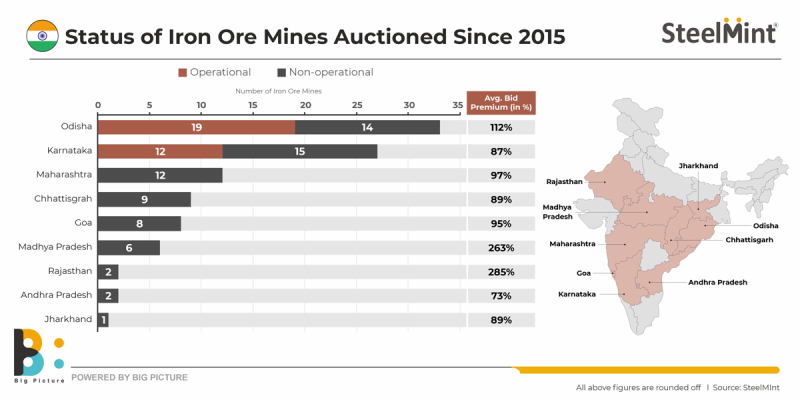
    Around 100 iron ore mine blocks have been successfully auctioned in India since the historic amendment of the Mines and Minerals Development & Regulation Act (MMDR Act) in 2015, as per SteelMint data.

    MMDR Amendment: Key facts

    The landmark MMDR Amendment Act, 2015 paved the way for the introduction of the auctions regime in India’s mining and minerals sector by replacing the older first-come-first-serve system in a bid to ensure transparency in allocation of mineral blocs.

    The reforms undertaken in 2015 have resulted in successful auctions of 273 mineral blocks in different states of the country since 2016. Importantly, the pace of mineral auctions has quickened since the MMDR Amendment Act of 2021, with around 105 iron ore blocks getting auctioned in FY’23.

    This has been possible due to radical reforms in the 2021 Amendment such as the abolition of the ‘end-use’ restriction for auctions and uninterrupted transfer of valid old environmental clearances to the preferred bidder.

    It bears recall that the 2015 MMDR amendment had set forth specific clauses as regards renewal of mine leases. While merchant mines had their leases extended till 2020, the captive iron ore mines were given a timeline till 2030 after which those mines must come under the auction hammer.

    In order to augment domestic iron ore supplies, Section 8(A) of MMDR Act was further amended allowing any lessee of a captive mine to sell minerals up to 50% of the total mineral produced in a year after meeting the requirement of the end-use plant linked with the mine. This, however, would require an additional amount to be paid to the concerned state government.

    Similarly, government companies or corporations whose mining leases have been extended after the commencement of the MMDR Amendment Act, 2015, shall also pay such additional amount for the mineral produced after the commencement of MMDR Amendment Act, 2021.

    The additional amount for extension of mining leases is 1.5 times the prevailing rate of royalty for iron ore mines.

    Auctioned blocks

    Notably, out of the 100 iron ore blocks auctioned thus far, 33 are in Odisha and 27 in Karnataka – India’s leading iron ore producing states. Among the other key producers, 12 blocks are in Chhattisgarh, 9 in Maharashtra and 8 in Goa.

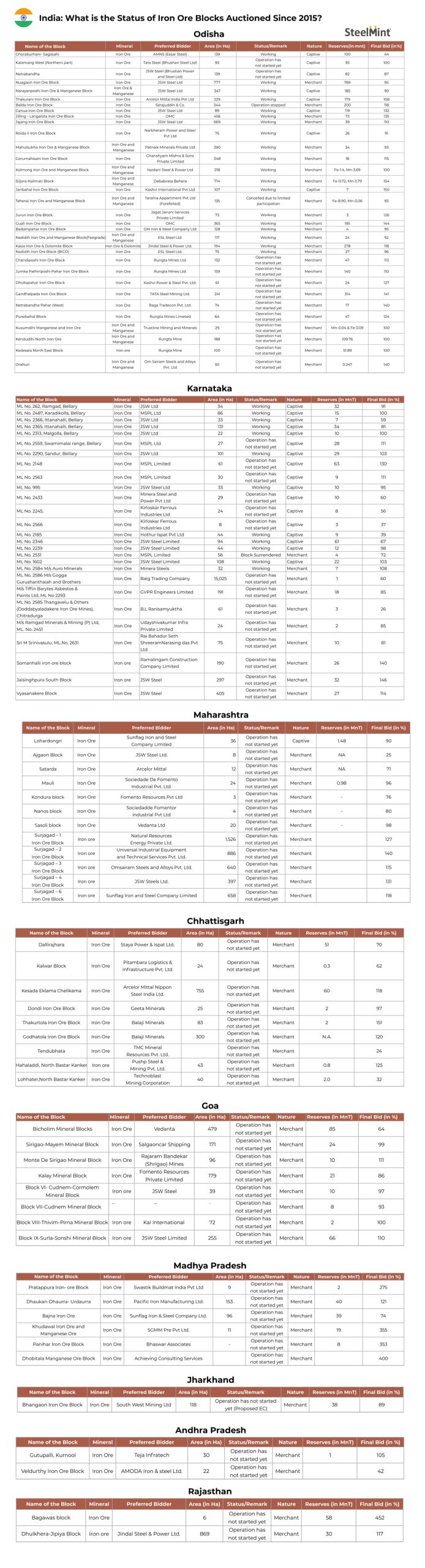
    Details of auctioned blocks

    There are blocks in Madhya Pradesh and Andhra Pradesh, too. However, major iron ore-producing-state Jharkhand has just one block. A lion’s share of that state’s iron ore production is accounted for by captive steel producers.

    In an indicator of over-enthusiastic participation in iron ore auctions – mainly by steel players eager to secure long-term supplies in view of surge in capacity – the general average auction premium quoted stands at over 100%, as per SteelMint estimation.

    Outlook

    India’s iron ore production in FY’23 inched towards 260 million tonnes (mnt). Out of the auctioned blocks, just over 30-odd are in working status which shows that many more mines – especially those auctioned since 2021 – will move towards operationalisation sooner rather than later.

    Therefore, SteelMint’s outlook is positive as regards iron ore production even as domestic steelmaking capacity gathers pace.

    What are the key government policies that may reshape the Indian minerals industry and how long might high premiums sustain for mineral block auctions? Gain cutting-edge insights from experts on these issues and much more at SteelMint Events’ flagship 6th Indian Iron Ore & Pellet Summit to be held from 24-26 August at JW Marriot, Kolkata.

  • India: CIL planning to boost e-auction offerings on higher coal availability

    India: CIL planning to boost e-auction offerings on higher coal availability

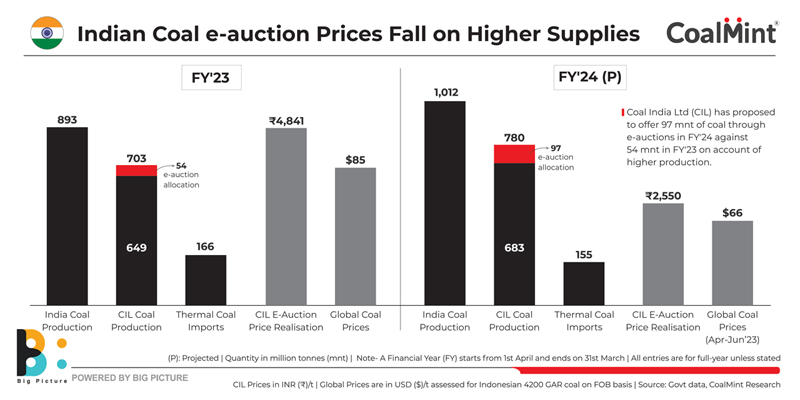
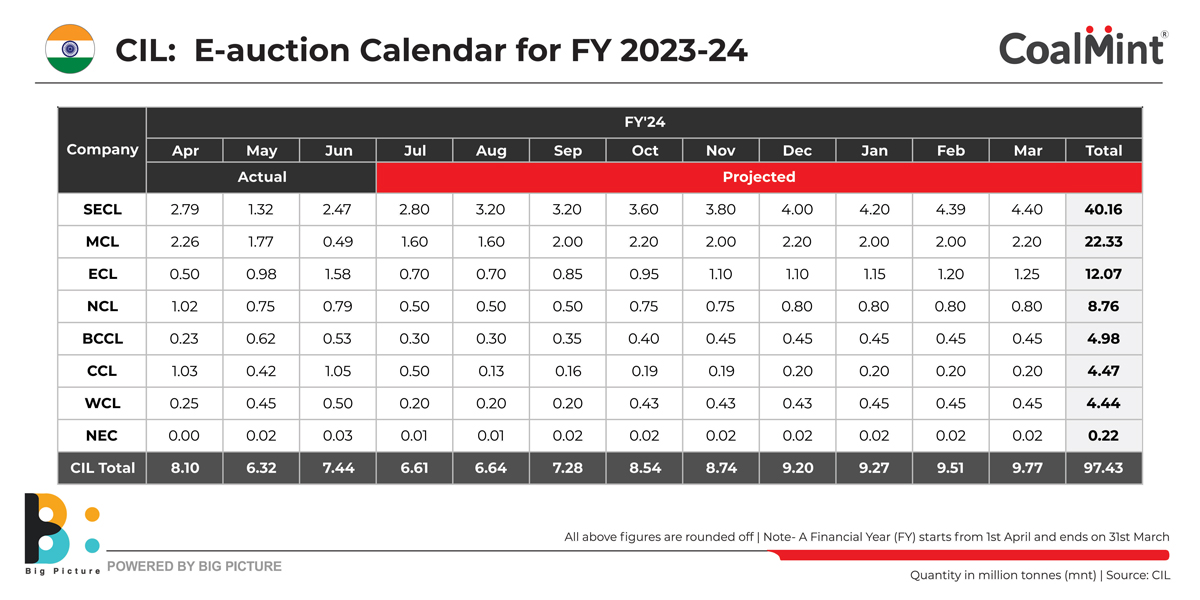
    State-run miner Coal India Ltd (CIL) has floated a calendar outlining the proposed coal volume to be offered under e-auctions during FY’24. The company is planning to sell 97.43 million tonnes (mnt) of coal, which is around 81% higher than 53.91 mnt offered last year of which 52.88 mnt was booked.

    As per policy guidelines, CIL earmarks 10% of its annual production for sale via regular e-auctions based on competitive bidding, whereas the majority of the sale is carried out via fixed price contracts under fuel supply agreements (FSA).

    However, the company has been skewing this norm by regulating the coal offering based upon availability. This year, it has allocated a higher volume for e-auction than the actual norm, based on the projected production of 780 mnt, in view of supply-side improvements.

    The auction calendar highlights that CIL has already offered 21.86 mnt of coal in the first quarter (April-June’23) registering an exponential growth of 115% compared to the year-ago period. The remaining 75.56 mnt will be sold in phases during the final nine months.

    There was also indication of reduced offerings in July-August against June levels on account of expected supply disruption during monsoon. From then on the offered quantity rises progressively on a monthly basis in tandem with the increase in production, with total tonnage peaking in March.

    Production to breach 1 bnt-mark

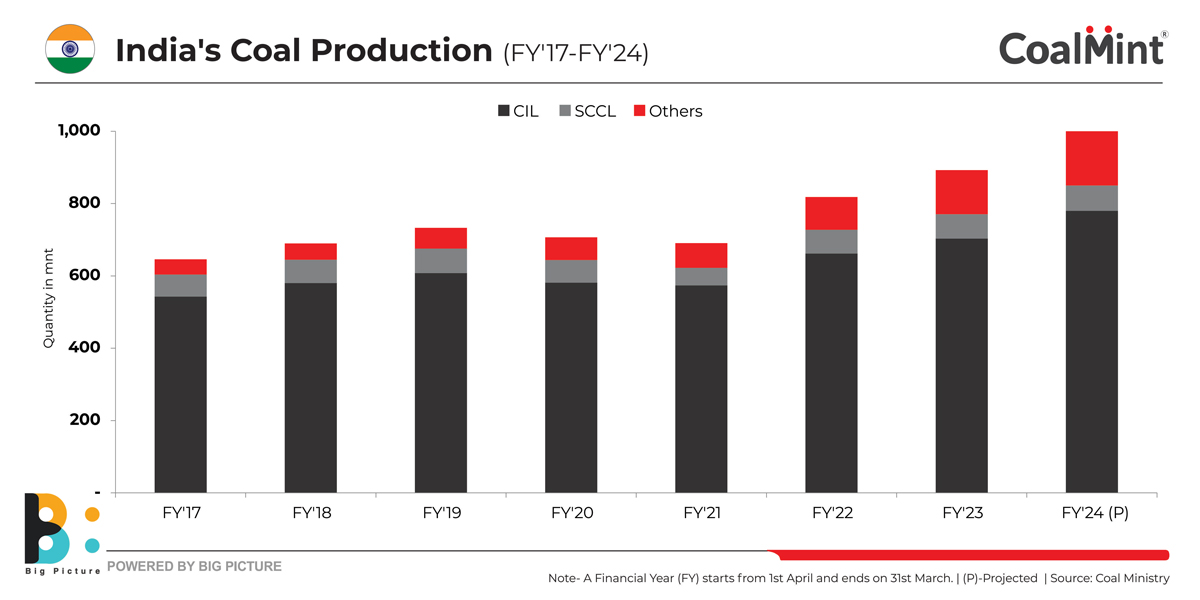
    The government has set a coal production target of 1,012 mnt in FY’24. Of this, CIL’s share has been fixed at 780 mnt, while Singareni Collieries Company Ltd. (SCCL) is expected to contribute 80 mnt. The remaining volume of 162 mnt is expected to come from captive and commercial miners.

    In particular, CIL has set sights on creating a new production milestone by surpassing the previous high of 703 mnt attained last fiscal.

    In Q1FY’24, CIL’s production jumped 10% y-o-y to 175.5 mnt, which is the highest ever production recorded during Q1 of any fiscal year. Dispatches increased 5% y-o-y to 187 mnt in Q1, which was around 7% higher y-o-y.

    The performance trend indicating sharper production growth relative to dispatches has reduced inventory liquidation at mine level. This has helped the miner to accumulate sufficient inventory and also provide a leeway to increase e-auction volumes.

    Besides, substantial growth in contribution from captive and commercial miners also provides new avenues for buyers thereby augmenting domestic availability.

    Recovery in global supplies

    In the aftermath of the Russia-Ukraine war when disruption in trade flows had triggered an unprecedented surge in coal prices, the Indian government was forced to take necessary measures to ensure fuel security at power plants.

    This also forced CIL to curtail its offerings via e-auctions and resort to diverting the additional tonnage meant for sale in order to increase supplies to power plants.

    However, as global supply pressure eases, there is adequate material availability for the imported coal-based plants which has also gradually reduced the pressure on domestic coal-based power plants.

    Subdued coal-fired power generation

    On the demand side, nominal growth in coal-based power generation owing to favourable weather conditions has also reduced the burden on domestic miners.

    As per data provided by the Ministry of Power (MoP), coal-based power generation grew 2% y-o-y to 315.3 billion units (BU) in Q1FY’24 against 308 BU in Q1FY’23. Last year, the growth in generation volume at this juncture was around 20%.

    Rising stockpiles

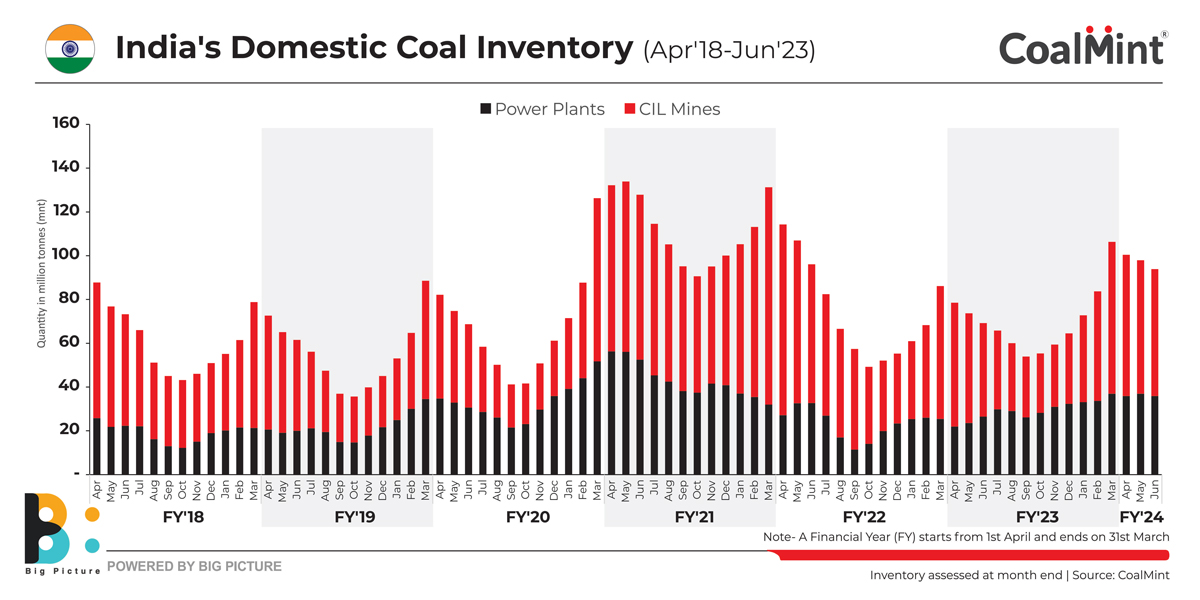
    While, CIL has accumulated sufficient inventory at mine pit-heads, the power plants have also shown encouraging signs with regard to inventory build-up aided by higher supplies and subdued generation.

    Coal inventory at power stations was assessed at 35.88 mnt towards the end of June, which is sufficient for 13 days of power generation. Besides, the number of plants having a critical stock position has reduced to 61 currently from 87 in the year-ago period.

    In all, combined inventory at CIL’s mines and power plants has increased to 93.9 mnt in June, up 36% y-o-y.

    Outlook

    The uptick in e-auction volumes is expected to push coal prices lower which are already reeling under the impact of improvement in supplies both at the domestic and global levels.

    CIL’s price realisation for e-auction sales has dropped nearly 40% to INR 2,950/t in the June quarter from INR 4,841/t recorded in FY’23. Prices are expected to inch down to INR 2,550/t in full-year FY’24.

    There seems to be minimal impact on imports from increased e-auction sales as Indian buyers are reaping benefits of ample material availability at cheaper prices. Presently, thermal coal imports on a monthly basis are assessed at around 16-17 mnt in Q1FY’24 against the average of 14 mnt in FY’23.

    However, in a scenario where there is not much improvement in demand, lower e-auction prices may reduce imports which are expected to drop to 155 mnt in FY’24 from 166 mnt in FY’23.

    3rd India Coal Outlook Conference

    How will CIL’s altered auction dynamics affect domestic buyers? Supplies to the non-regulated sector rose 34% in FY’23 –will the trend continue in FY’24? To hear experts deliberate on these topics and much more, register for SteelMint Events’ 3rd India Coal Outlook Conference to be held at JW Marriott, Kolkata, from 24-26 August, 2023.